
Unbiased headlines. Facts, not spin.
Every story is an unbiased news briefing written from 110+ sources across the spectrum — sources linked so you can verify it yourself.
 finance
Notable (6/10)
July 9, 2026 at 02:49 PM
finance
Notable (6/10)
July 9, 2026 at 02:49 PM
Goldman Sachs Picks Up $70 Billion in Retirement Asset Mandates from Verizon and Lockheed Martin
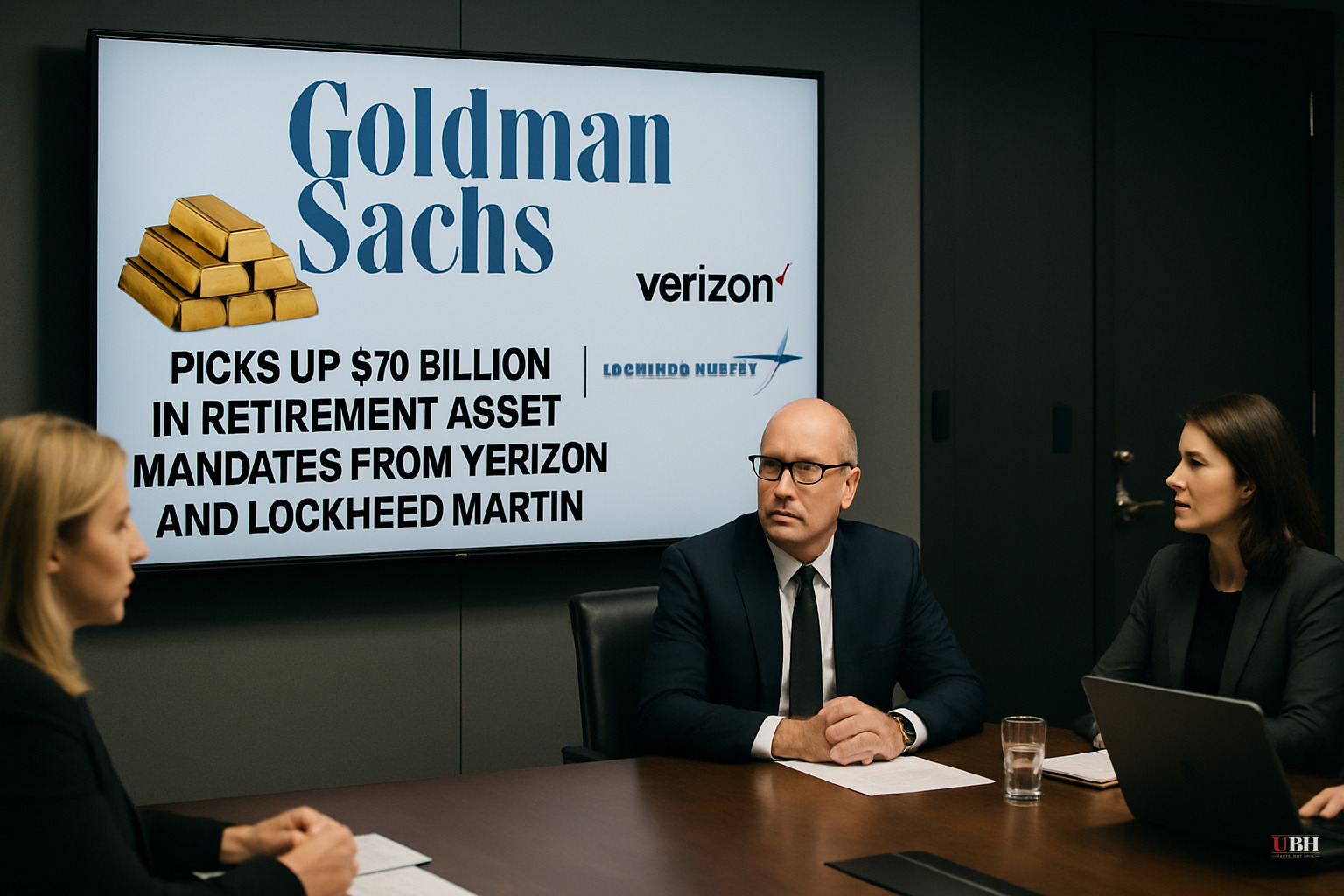
Goldman Sachs announced Thursday it secured mandates to manage a combined $70 billion in retirement assets from Verizon Communications and Lockheed Martin, according to Goldman Sachs.
The breakdown: approximately $30 billion in defined-benefit pension assets split between the two companies, plus $40 billion in Verizon's defined-contribution retirement plan — the kind of accounts most workers know as 401(k)s.
What Goldman Is Actually Selling Here
This isn't Goldman trading stocks on its own account. It's Goldman acting as an outsourced chief investment officer, essentially taking over the day-to-day investment decision-making that Verizon and Lockheed Martin used to handle in-house or through other managers.
The pitch is straightforward: pension portfolios have gotten complicated. Public equities, private credit, real assets, alternatives — running all of that internally requires specialized staff and infrastructure that most corporations, even massive ones, would rather not maintain. So they hand it off.
Marc Nachmann, Goldman's global head of asset and wealth management, framed it plainly in a statement: "Large plan sponsors are consolidating responsibilities with one partner with the investment expertise and depth of platform to manage their bespoke needs."
Goldman's Strategic Play
The timing fits a deliberate internal shift Goldman has been executing for years. Trading desks and investment banking generate big money, but that revenue swings hard with market conditions. Asset management fees are more predictable. They come in month after month regardless of whether Goldman just closed a blockbuster IPO.
As of March 31, Goldman's outsourced CIO business alone held about $480 billion in assets. The firm's total asset and wealth management division oversees roughly $3.7 trillion. Adding $70 billion in new mandates moves that needle, though it's a single data point in a much larger build.
A Crowded, High-Stakes Market
Goldman is not alone in chasing this business. BlackRock, Russell Investments, and Mercer are all competing aggressively for the same institutional mandates, according to CNBC. The multitrillion-dollar market for outsourced retirement management has attracted serious capital and talent because the contracts tend to be long-term and sticky. Once a company hands over its pension infrastructure, switching costs are high.
That competition matters for both Verizon and Lockheed Martin's employees and retirees who depend on these funds. The outsourcing trend is real and the firms chasing it are credentialed, but the transfer of complex fiduciary responsibility to a single outside partner concentrates risk. If Goldman underperforms, misallocates across private markets, or faces its own institutional stress during a downturn, the counterparty exposure for these plan participants grows.
Pension plan sponsors have a legal fiduciary duty to beneficiaries under ERISA, and outsourcing management doesn't eliminate that duty. It delegates execution while the plan sponsor retains oversight responsibility. Whether Verizon and Lockheed Martin will rigorously monitor Goldman's performance on behalf of workers, or whether the consolidation dynamic creates complacency in oversight, is an open question the announcement doesn't answer.
What This Means for Workers
For Verizon and Lockheed employees, the practical impact depends entirely on execution. Their retirement assets are now being managed under Goldman's platform rather than through prior arrangements. The defined-contribution piece — the $40 billion in Verizon 401(k) assets — is particularly direct: investment menu choices, fund selection, and administrative oversight will flow through Goldman.
Goldman did not disclose the fee structures attached to these mandates in Thursday's announcement. That matters. The difference between a 0.1% annual management fee and a 0.4% fee on $70 billion compounds significantly over the life of a retirement account.
The specific performance benchmarks Goldman will be held to and the reporting transparency Verizon and Lockheed have committed to have not been made public as of July 9, 2026.
Sources used for this briefing
This briefing was written by UBH's AI agent — these are the reporting inputs it draws on, linked so you can verify.


