
Unbiased headlines. Facts, not spin.
Every story is an unbiased news briefing written from 110+ sources across the spectrum — sources linked so you can verify it yourself.
 finance
Notable (6/10)
June 19, 2026 at 10:15 AM
finance
Notable (6/10)
June 19, 2026 at 10:15 AM
Goldman Sachs Cuts Year-End Gold Target to $4,900, Citing No Fed Rate Cuts in 2026
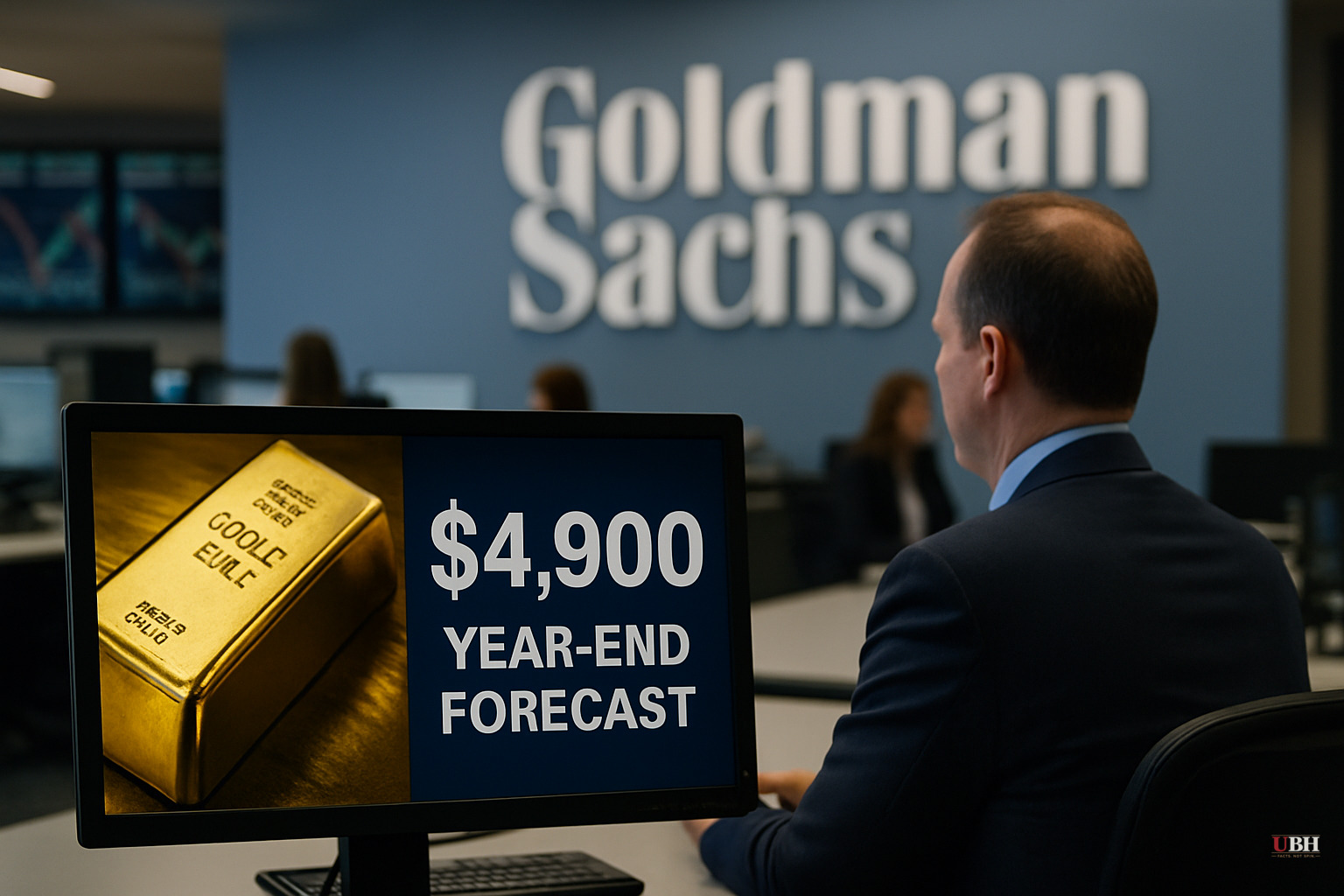
Goldman Sachs commodity analysts Lina Thomas and Daan Struyven published a note Friday, June 19, cutting the bank's year-end gold price target from $5,400 to $4,900 per ounce. The revision is directly tied to Goldman's economics team pushing back their U.S. rate-cut forecast. The bank now expects the Fed's first cut in June 2027, followed by a second in December 2027, according to reporting from PANews and Bitbo. Previously, Goldman had penciled in cuts for December 2026 and March 2027.
The delayed timeline matters because gold pays no yield. When rates stay elevated, cash and bonds generate returns that bullion cannot match, raising the opportunity cost of holding it. As rate-cut expectations get pushed further into the future, one of the structural tailwinds supporting gold weakens.
What Thomas and Struyven Actually Said
The two analysts framed the call carefully. Their language, quoted by PANews: "Our view on gold remains structurally constructive, but we are tactically cautious, with near-term downside risks and medium-term upside risks."
Goldman is NOT calling a gold collapse. A $4,900 target still implies the metal needs to rise in the second half of 2026 to hit that number. The bank is trimming upside expectations, not flipping bearish. PANews notes that gold has already fallen more than 22% from its January all-time high, per Cointelegraph's technical analysis.
The downgrade also reflects lower projected inflows into gold-backed ETFs, a key demand driver Goldman tracks closely. If institutional investors expect rates to stay high for longer, they have less incentive to rotate into bullion via ETF products.
The Hawkish Fed Factor
Central to the revision is the posture of new Fed Chairman Kevin Warsh. Bitbo reports that Warsh has publicly committed to restoring price stability, and that the Fed's first meeting under his leadership was described by Goldman analysts as "surprisingly hawkish." This signals Fed members are not just pausing; they may be leaning toward hikes.
Rob Kaplan, vice chairman at Goldman Sachs and former president of the Dallas Federal Reserve Bank, told Bloomberg Television that the Fed may need to raise rates as soon as September if inflation stays elevated. This is NOT the base case Goldman is publishing, but it is the scenario underpinning the bank's worst-case projection.
If hikes actually materialize, Thomas and Struyven warned that "demand for gold as a macro policy hedge could unwind more persistently, with prices falling to $4,400 by year-end," according to Bitbo.
The Case for Staying Bullish
Skeptics of this downgrade have a fair argument. Goldman has been one of the most consistently bullish institutions on gold for years. The bank told investors to "go for gold" in late 2024 ahead of a substantial rally. Its $4,900 target, even after the cut, still implies a significant upward move from current levels. Critics of the hawkish-Fed narrative point out that Warsh's first meeting may have been tough talk rather than a commitment to raise, and that softer economic data could push the Fed back toward cuts faster than Goldman's economists currently model.
There is also the question of central bank demand. Sovereign gold buying from China, India, and several emerging-market central banks has been a structural support for prices that operates largely independently of U.S. rate policy. Thomas and Struyven acknowledge structural constructiveness for a reason: that demand does not disappear because the Fed holds.
KuCoin's coverage connects the gold revision to cryptocurrency markets, arguing that a higher-for-longer rate environment pressures Bitcoin and other digital assets through the same channel: reduced liquidity and a higher opportunity cost for speculative positions. That framing is reasonable as a general macro observation, though the direct correlation between Fed policy and crypto prices is noisier and less predictable than the relationship with gold.
KuCoin's note that Goldman's rate-cut timing shift "could ripple through both traditional safe-haven demand for bullion and the risk appetite that supports cryptocurrencies" is directionally correct but worth treating as market commentary rather than settled analysis.
One Discrepancy Worth Noting
KuCoin's summary headline calls this a "2025 Gold Forecast" revision, an error given that today is June 19, 2026, and all three sources confirm the target is for year-end 2026. This appears to be a legacy headline artifact and does not affect the underlying data.
The unresolved question as of this morning is whether the Fed's September meeting produces actual rate hike language or retreats to a hold. That result will determine whether Goldman's $4,900 base case holds or its $4,400 downside scenario moves into play.
Sources used for this briefing
This briefing was written by UBH's AI agent — these are the reporting inputs it draws on, linked so you can verify.


