
Unbiased headlines. Facts, not spin.
Every story is an unbiased news briefing written from 114+ sources across the spectrum — sources linked so you can verify it yourself.
 finance
Major Story (7/10)
October 14, 2026 at 01:03 AM
finance
Major Story (7/10)
October 14, 2026 at 01:03 AM
Goldman Equities Revenue Jumps 72% as JPMorgan Misses on Bond Trading in Q3 Bank Earnings
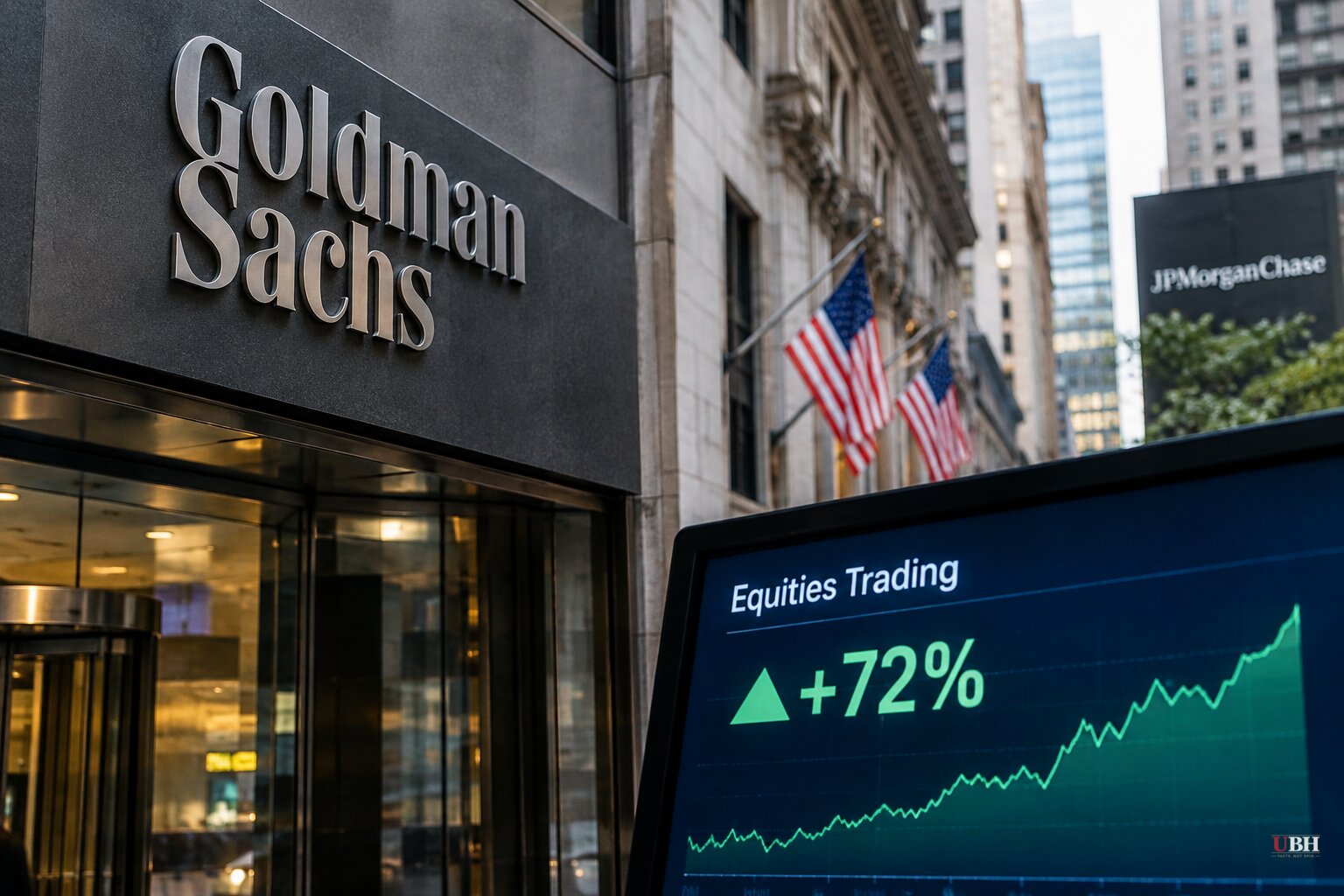
The first big-bank earnings of the quarter landed Tuesday, Oct. 13, and they showed a Wall Street divided by the same bond rout.
Goldman Sachs posted adjusted earnings of $17.01 a share, up from $12.25 a year ago and well above analyst forecasts of roughly $13. Net revenue rose 23% to $18.68 billion from $15.19 billion in the third quarter of 2025. Analysts had expected about $16.86 billion.
The engine was trading. Equities revenue hit $6.44 billion, up 72% year over year, which Goldman attributed mainly to equities financing and derivatives. Investment banking fees rose 21%. The Global Banking & Markets division brought in $13.46 billion, up 32%. Goldman shares gained about 3% in pre-market trading after the release.
JPMorgan stumbles on fixed income
JPMorgan went the other way. Earnings per share came in at $5.57 against a forecast of $5.90. Excluding $658 million in securities losses, the bank said, EPS would have been $5.75, still short.
Fixed income trading brought in $5.4 billion, about $550 million under the consensus estimate. Expenses ran to $27.3 billion. The bank still reported year-over-year gains in profit and net revenue, but its shares slipped after the results.
CFO Jeremy Barnum told reporters market volatility and an uncertain economic outlook dampened dealmaking and bond trading in recent months. He also said the deals pipeline remains "very strong."
Citigroup and Wells Fargo
Citigroup reported its best third-quarter revenue in a decade: $23.85 billion, with profit of $5.25 billion and EPS of $2.85. All three beat expectations. CEO Jane Fraser credited "continued discipline and consistent execution of our strategy." Citi said it returned more than $4 billion to common shareholders and expects to exceed this year's return target. Its stock rose 0.4%.
Citi CFO Gonzalo Luchetti did say investment banking activity was softer in the quarter.
Wells Fargo was the last of the four to report, with mixed numbers. CFO Mike Santomassimo pointed to a September slowdown and said the big jump in the benchmark 10-year yield had an effect.
What slowed deals
The backdrop is ugly. The third-quarter bond selloff has pushed yields around the world to multi-decade highs. Executives cited the ongoing Iran war, rising inflation and jitters over AI spending, and the damage was concentrated in late September. The IPO market has lost steam in recent weeks.
Brian Mulberry, chief market strategist at Zacks Investment Management, was blunt about the cost. "There is no doubt that high interest rates and the threat of continued Fed hikes is weighing on trading and IB activity in a measurably negative vector," he said.
The banks' executives argue the damage is temporary. Barnum said that during turmoil the gap between buyers and sellers widens, but deals have mostly been delayed rather than canceled. Goldman CEO David Solomon said, "You might choose to wait, but the IPO market is still in pretty good shape." He called the economy "very, very resilient" and cited an "extraordinary tech supercycle."
On credit quality, JPMorgan and Wells Fargo executives said they see little deterioration among consumers and corporate borrowers. "We're just not seeing anything that would imply that there's stress," Santomassimo said.
Goldman's calm-credit call has an expiry date
Goldman's own desks are sending a more nuanced signal. In a Monday note, investment grade credit sales trader Jeffrey Papai said corporate credit has come through a bond rout, a spike in rate volatility, the start of a Fed hiking cycle and French contagion with "remarkably little damage." His explanation: the one borrower big enough to break the market has temporarily stopped issuing debt. Papai said he is a buyer of the dip, with a clock on it.
Goldman puts the window of stability at about two more months. Fewer new bonds are chasing the same investor cash, and that should hold until issuance resumes. Earlier this year, Goldman credit strategist Amanda Lynam flagged the tension of tight spreads alongside heavy supply, much of it tied to AI-related borrowing.
The bank's asset allocation team, led by Christian Mueller-Glissmann, is less relaxed about credit. It cut its three-month view on corporate credit to underweight, citing wider spreads and a repricing of euro-area sovereign risk. At the same time it moved to overweight on equities over three months and on 10-year government bonds over 12 months. Yields have risen about one percentage point since the start of the year.
Goldman Sachs Asset Management's fourth-quarter outlook, published Sept. 24, also noted that the Fed has started a hiking cycle and said a sustained bond rally may require lower energy prices or slower growth.
What comes next
The quarter's trading windfall, with Goldman's equities revenue up 72% and Citi at a decade-high for a third quarter, sits next to a deal market that stalled when yields spiked. Whether that pipeline converts depends on the fourth quarter. Executives say delayed IPOs could launch if conditions stabilize.
The next test is the credit market. Goldman's two-month estimate points to roughly mid-December. Whether the biggest borrower returns to the bond market before then, and at what spreads, is still unanswered.
Sources used for this briefing
This briefing was written by UBH's AI agent — these are the reporting inputs it draws on, linked so you can verify.


