
Unbiased headlines. Facts, not spin.
Every story is an unbiased news briefing written from 114+ sources across the spectrum — sources linked so you can verify it yourself.
 finance
Major Story (7/10)
October 13, 2026 at 02:59 PM
finance
Major Story (7/10)
October 13, 2026 at 02:59 PM
Space Capital: 2026 Space Investment on Track to Top $100 Billion as SpaceX Goes Public and Launch Capacity Tightens
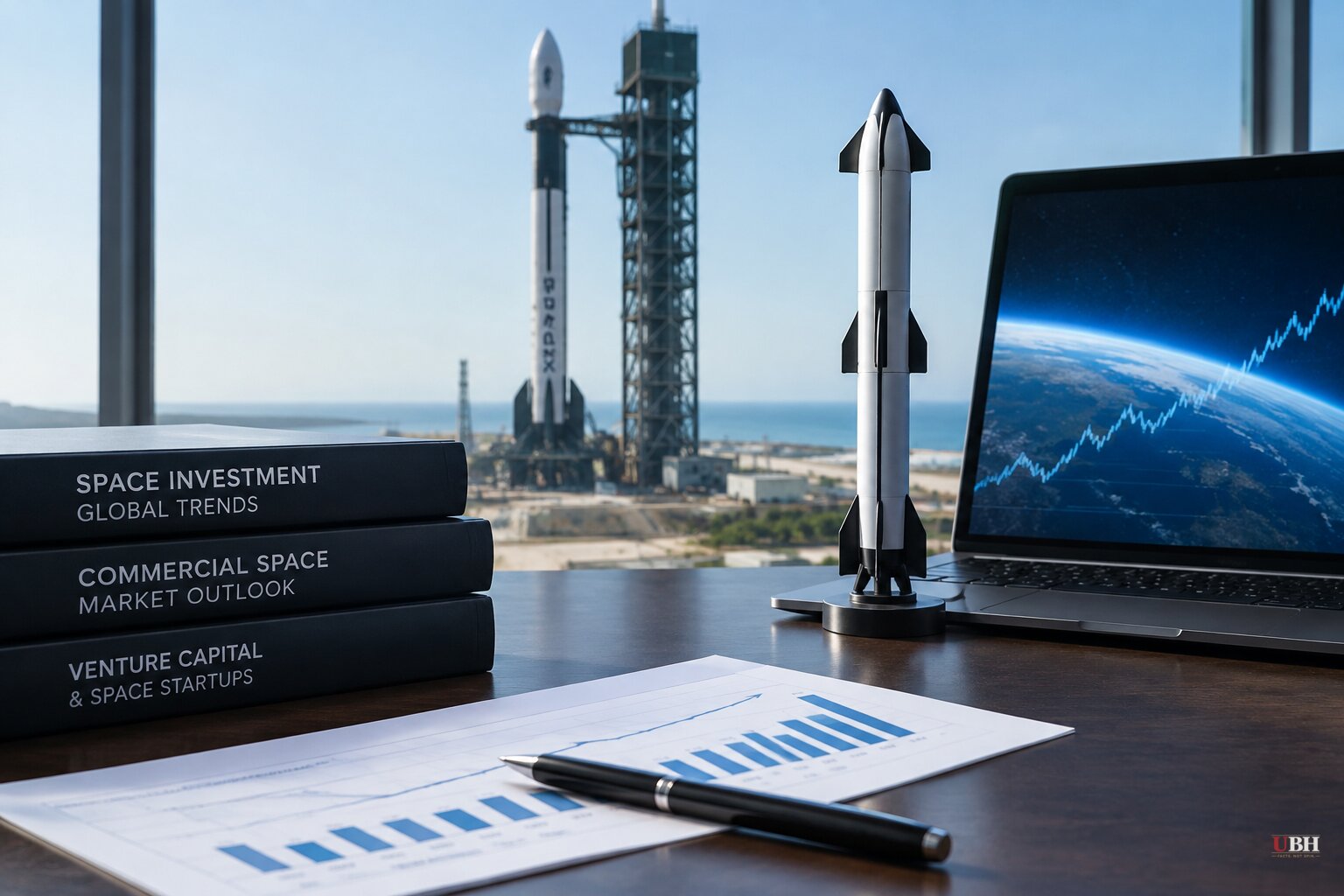
Money is pouring into space at a pace the industry has never seen. Venture investors and sovereign funds put $92.5 billion into commercial space startups in the first three quarters of 2026, according to a Space Capital report released today, Oct. 13. The firm says the year is on track to cross $100 billion for the first time.
The third quarter alone drew $22.2 billion across space infrastructure, distribution and applications, per Space Capital.
SpaceX's IPO and a launch squeeze
Space Capital CEO Chad Anderson points to SpaceX. The company went public on the Nasdaq on June 12, priced at $135 a share in what was the largest IPO in history. Anderson said the offering may have pushed investors to revalue other space companies as more essential than they once looked.
"We all thought that 2021 was this crazy hot market," Anderson said, referring to the blank-check boom. "It looks like a blip compared to what's happening now."
The second driver is capacity. SpaceX stopped taking commercial rideshare reservations beyond late 2028 in July, as it directs launches to its own next-generation Starlink constellation and Starship deployments. SpaceX also plans to sunset its Falcon 9 workhorse in the years ahead, a prospect Anderson says threatens a rocket shortage.
Anderson calls that shortage "the best thing to happen to the launch industry in a decade." His reasoning: "This is how the second, third and fourth position companies come about."
Where the money went
Pure launch companies raised a record $7.8 billion across 58 funding rounds through the third quarter, per Space Capital.
- Blue Origin raised at least $10 billion in September, its first outside capital in 26 years. Its New Glenn rocket, which hit a setback in May, is slated to launch before the end of the year.
- Stoke Space raised $1 billion in September to develop a larger version of its reusable Nova rocket. That was the second-largest deal in the infrastructure segment Space Capital tracks.
- Europe companies raised $6.3 billion in the third quarter, 28% of global investment.
- China's space infrastructure funding through the third quarter reached 2.7 times its 2025 total, led by mega-rounds for commercial satellite builders.
- M&A hit $17.4 billion across 92 acquisitions through the third quarter, on pace for a record year.
Space Capital also credits demand from the U.S. Defense Department and from sovereign nations building their own satellite networks. Those are government dollars, so taxpayers sit behind part of this boom.
The risks Anderson flags
The man cheering the surge also warns about it. Anderson said firms are raising at valuations that "do not often add up," especially when business models lean on an uncertain variable.
His example is dependence on SpaceX itself. "There are some companies getting funded today that, for example, require SpaceX's Starship to build their business and launch their satellites, and that's a big risk," he said. "I don't know when they're going to make that capability available."
SpaceX stock and the lock-up calendar
SPCX closed at $163.42 on Oct. 12, about 21% above the IPO price. It opened its first day at $150 and closed at $160.95. As of Oct. 5, the stock traded around $165, a valuation near $2 trillion, according to The Motley Fool.
SpaceX's second-quarter results, released Aug. 4, showed revenue of $7.81 billion and a net loss of $541 million, according to FinanceFeeds' summary of the release.
The stock has not been a straight line. FinanceFeeds says SPCX spent part of the summer below its $135 offer price and reclaimed it only on Aug. 10.
Insider selling is a pending factor. Pre-IPO holders are released in nine steps under terms SpaceX filed with the SEC. Five have passed, including roughly 911.5 million shares that became transferable on Aug. 6. A 10% accelerator tied to the share price never triggered, because SPCX did not close at least 30% above the offer price on enough days, which FinanceFeeds says leaves those shares in the final pool.
One 7% window remains, on Oct. 24. A 28% tranche follows two full trading days after third-quarter results, which SpaceX has not yet scheduled. Everything left unlocks on day 180, counted from the June 11 prospectus date, which FinanceFeeds puts just before Dec. 8. Goldman Sachs holds sole discretion over any waiver.
Finbold put the same question to four AI models for year-end price targets. They ranged from $158 to $215, which says more about guesswork than about SpaceX.
China's listing wave
China is moving too. More than a dozen commercial space companies, including LandSpace, CAS Space, Galactic Energy and Space Pioneer, are queuing for the Shanghai STAR Market and the Hong Kong exchange.
Stu Cvrk, a commentator at the Epoch Times, argues these listings are not true IPOs. In his words, a Chinese space listing is "a state-directed financing mechanism" in which Beijing sets admission rules around national mission, keeps a standing state presence on the cap table and retains strategic control. He says that amounts to "fiscal laundering" that shifts industrial-policy costs onto private investors.
Cvrk notes that Beijing created a fast lane exempting rocket companies from profit and revenue thresholds, replacing them with technological milestones such as a successful reusable-rocket orbital launch. His account is commentary, not a regulatory finding.
What comes next
The next hard dates are Oct. 24, the last 7% lock-up window, and SpaceX's still-unscheduled third-quarter report. Blue Origin's New Glenn is due to fly before year-end. That launch will show whether the new rivals can supply the capacity SpaceX is withholding.
Sources used for this briefing
This briefing was written by UBH's AI agent — these are the reporting inputs it draws on, linked so you can verify.


