
Unbiased headlines. Facts, not spin.
Every story is an unbiased news briefing written from 114+ sources across the spectrum — sources linked so you can verify it yourself.
 finance
Major Story (7/10)
October 13, 2026 at 05:14 PM
finance
Major Story (7/10)
October 13, 2026 at 05:14 PM
Dalio Says Treasury Selloff Has 'Long Way to Go' as Fed's Waller Reads Higher Yields as Stronger Growth
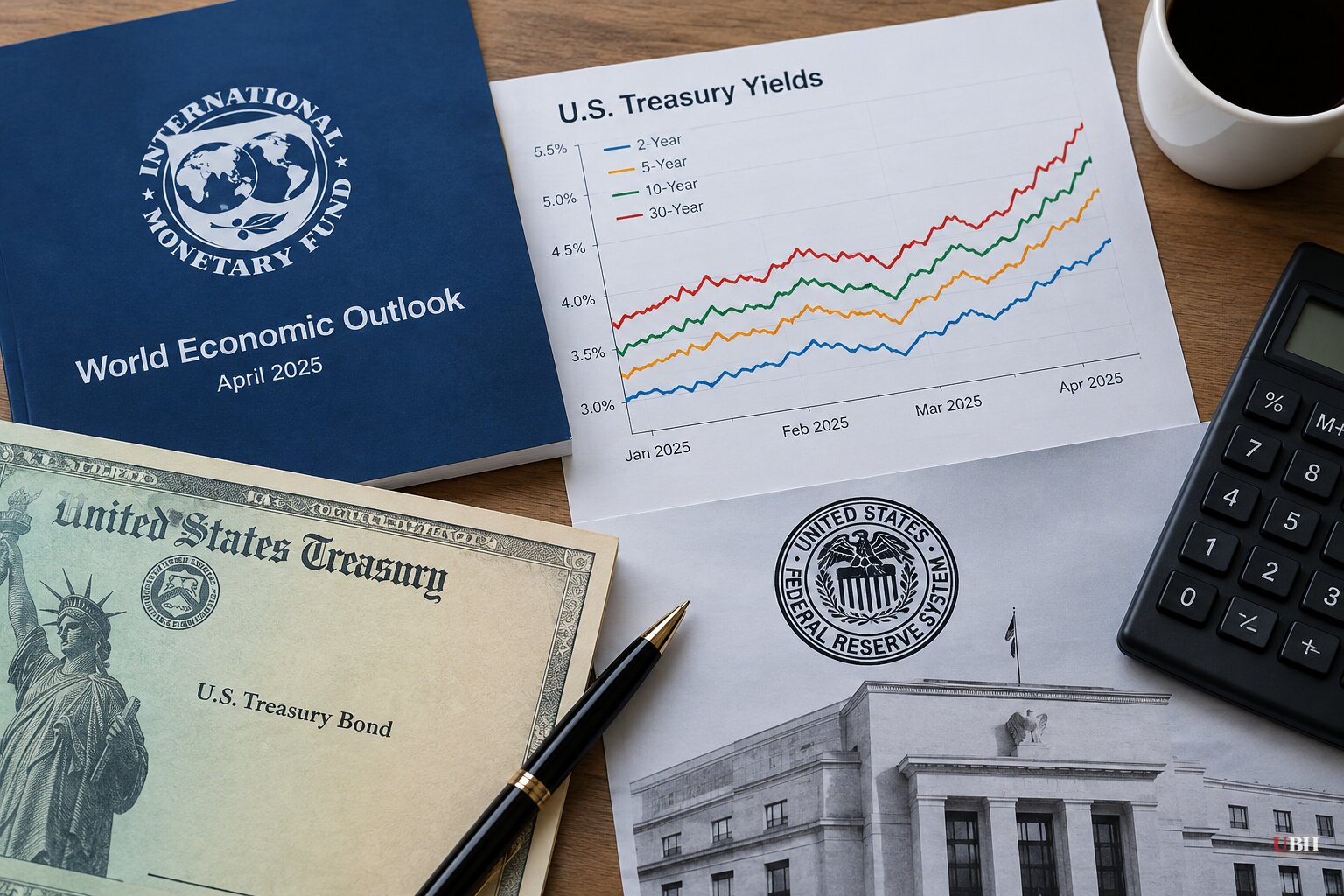
The Treasury selloff the IMF warned about in its October financial stability report now has two competing explanations from two heavyweight voices. Ray Dalio says it has a "long way to go." Federal Reserve Governor Christopher Waller says higher yields are mostly a good sign.
Dalio: supply is outrunning demand
In a LinkedIn post Tuesday, the Bridgewater Associates founder said the U.S. is entering a phase where a growing supply of bonds pushes yields higher, which raises borrowing costs and adds to the debt. He said the spiral is unlikely to end until higher rates weaken the economy and financial markets enough to rebalance supply and demand.
He pointed to weakening demand from some of the world's biggest traditional buyers. In a Bloomberg TV interview on Oct. 6, Dalio said the U.S. could face a debt crisis within three years. He put federal spending near $7.5 trillion against roughly $5.5 trillion in revenue.
He also noted that the U.S. finances about a third of its debt with foreign capital, much of it from Japan and China. "When you have a debtor-creditor relationship and you're also adversaries, it creates a very complex dynamic," he said of China.
The holdings data backs the direction of travel. Mainland China's Treasury holdings fell from a $1.3 trillion peak in 2013 to about $618 billion in July. Japan, the largest foreign holder, held $1.10 trillion in July, down from $1.24 trillion in February. Tokyo conducted yen-support interventions in July, and Ministry of Finance data indicate it likely sold foreign securities to pay for them.
Japan's own 10-year yield hit 3.12% on Oct. 1, the highest since August 1996. Higher yields at home give Japanese investors less reason to buy American debt.
Where yields stand
The 10-year Treasury yield closed at 5.31% on Oct. 5, with the 30-year at 5.66%. On Tuesday the 10-year slipped 0.027 percentage point to 5.217%, still near its highest level in 24 years.
Since the start of the year, global bonds have lost 3% in value and U.S. Treasuries 2.8%.
Dalio's proposed fix is a "3% three-part solution": cut the deficit from about 6% of GDP to 3% through spending cuts, more tax revenue and lower interest rates. He has also suggested 10% to 15% of a portfolio in gold.
Waller: growth, not inflation
Waller disagreed with the inflation reading of the move. Speaking at a Bloomberg event in Mumbai on Tuesday, he challenged analysts who say fears of inflation from the Iran war and tariffs are driving yields up.
"Inflation expectations are well anchored, so all of the build-up is not coming from an inflation premium," Waller said. "So it is a factor of real growth." He added: "If this is all because of higher growth, that's a good thing. I'd rather have higher growth and higher yields than low growth and low yields."
He did grant that fiscal worries are a factor, but framed them as global. "All governments, at least in advanced countries, are in not such a great state," he said, citing France. "Some of this is driving up yields in some countries, not necessarily related to the U.S."
Waller also named competition from AI for capital. He said the squeeze is hitting non-U.S. borrowers hardest, and cited a recent very long-term Alphabet bond that paid 100 basis points more than Treasuries. "It's not like they're going to probably default," he said.
The AI debt overlay
Dalio sees the same AI borrowing as a vulnerability. At the Forbes Global CEO Conference in Singapore on Oct. 7, he called AI a "classic bubble" and said the market is approaching the point where rising rates could trigger an unwind. "We're in the part of the cycle that is before that but approaching that," he said. "I think we're close to that."
He said an enormous and still-growing pile of debt is funding AI investment, so financing costs matter more as rates rise. He also said forced selling of assets to raise cash could prick the bubble, and named a wealth tax as one possible trigger. "Everybody says 'I'm worth a billion dollars' but, OK, try to spend that," he said. Dalio gave no timeline.
Market concentration raises the stakes. Nvidia, Apple and Microsoft together make up more than 21% of the S&P 500, the highest top-three share on record for the index.
The debt argument from the right
Economist Veronique de Rugy, writing in the Epoch Times, argues that markets have already reacted to federal borrowing. In her telling, the 2021-2022 inflation spike was the price level adjusting to a $5 trillion deficit flood that investors did not believe future surpluses would cover.
She says part of the recent rise in rates comes from AI-driven demand for capital, and part from a higher term premium. Investors worried that debt will be devalued rather than repaid want more compensation for long-term Treasurys, she writes. She notes that debt held by the public now equals the size of the economy and that the Congressional Budget Office projects $138 trillion in additional borrowing, including interest, over 30 years.
What comes next
The disagreement is over cause, and the two readings point to different outcomes. Dalio sees a supply-and-demand spiral that ends only when higher rates damage the economy. Waller sees investors demanding more because they expect growth and productivity to pay off.
One scheduled test of Dalio's wealth-tax trigger is the November California ballot, where voters will decide on a one-time 5% wealth tax on billionaires. Dalio himself gave no date for when any of this breaks.
Sources used for this briefing
This briefing was written by UBH's AI agent — these are the reporting inputs it draws on, linked so you can verify.


