
Unbiased headlines. Facts, not spin.
Every story is an unbiased news briefing written from 110+ sources across the spectrum — sources linked so you can verify it yourself.
 finance
Major Story (7/10)
June 25, 2026 at 11:48 AM
finance
Major Story (7/10)
June 25, 2026 at 11:48 AM
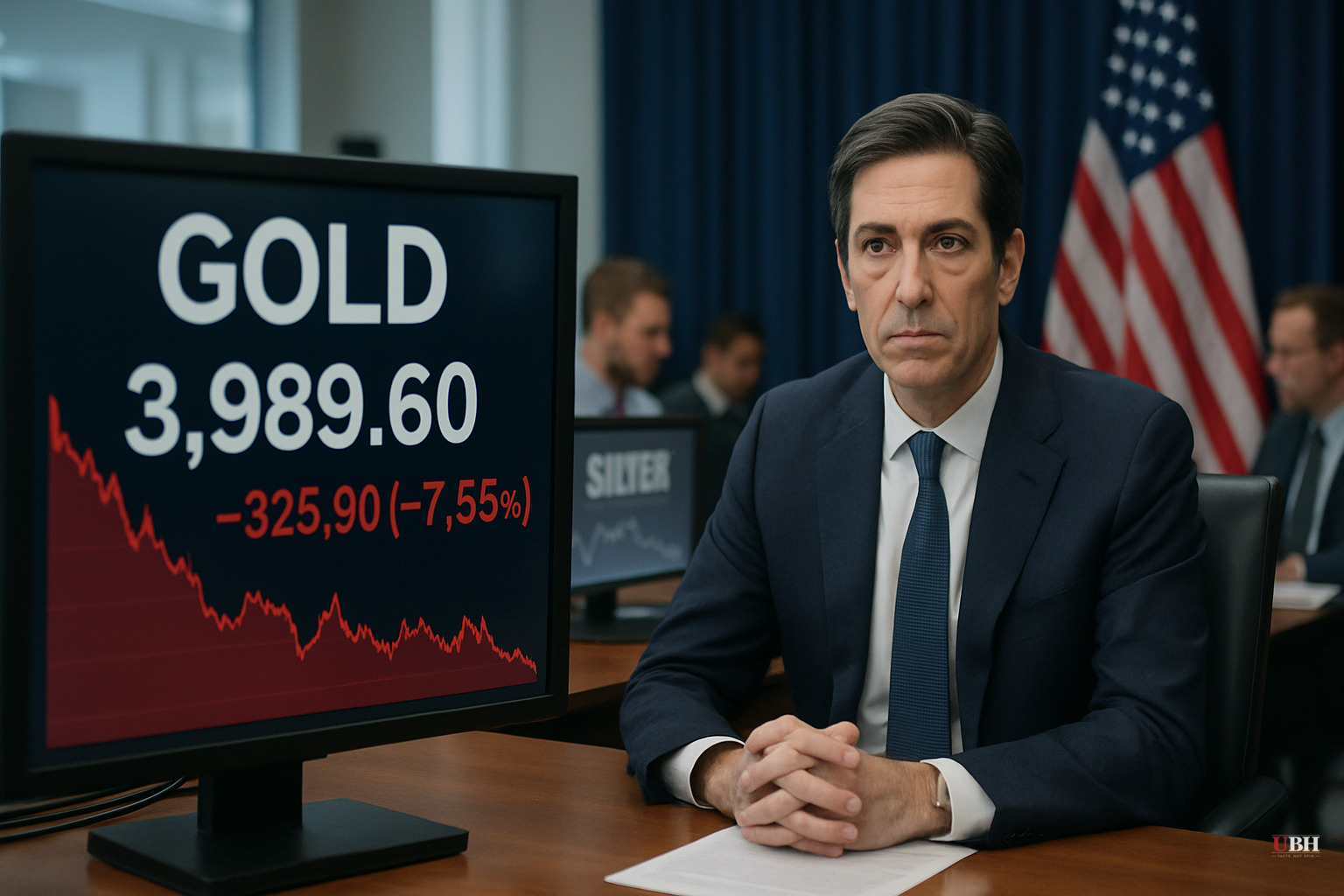
Gold Stalls Near $3,990, Down 7.5% for the Year as Fed Rate Hike Bets and Fading War Premium Weigh on Prices
Where Prices Stand
As of early Thursday morning, spot gold was hovering at $3,990.17 per ounce, according to CNBC, briefly touching back above $4,000 before retreating again. Front-month U.S. gold futures settled at $4,006.60. Year-to-date, gold is down roughly 7.5%.
Silver is in worse shape. Spot silver sat at $57.49, down nearly 20% since the start of 2026. July silver futures were off 1.2% at $57.41 on Thursday morning.
How We Got Here
Both metals had extraordinary runs in 2025. Gold surged 66% over the course of the year. Silver did even better, gaining 135%. Those aren't rounding errors—those are generational rallies.
The momentum carried into early 2026, but then the wheels came off. Silver futures logged their worst single-day loss since the 1980s at the end of January. Gold's safe-haven status came under direct pressure in February when the U.S.-Iran war broke out, and then again as that conflict appeared to wind down, removing one of the key fear premiums baked into the price.
The Fed Factor
The bigger structural problem for gold right now is interest rates. Higher rates make yield-bearing assets—Treasuries, money market funds, bonds—more competitive against gold, which pays nothing. When rates rise, holding gold has an opportunity cost.
Strategists at Macquarie laid it out plainly in a note Wednesday: "The apparent end to the conflict in the Middle East, combined with a more hawkish Fed, has caused prices to retreat as gold's safe haven appeal fades together with the prospect of higher interest rates and a stronger USD, with a Fed rate hike in Q4 now fully priced in."
Markets are currently pricing a Fed rate hike by Q4, per the CME FedWatch tool. The European Central Bank and the Bank of Japan have already raised rates this month in response to the energy shock triggered by the Iran conflict.
New Fed Chair Kevin Warsh held his first meeting with a hawkish tone, according to Macquarie. The bank noted his leadership has "potential to derail or support prices" in gold, depending on how aggressively he moves.
The Bull Case Still Exists
Not everyone thinks the rally is dead. Macquarie itself is forecasting an average spot gold price of $4,641 per ounce for full-year 2026, which would represent a 35% year-on-year gain even after the current pullback. Their reasoning is that the Middle East fallout will weigh on global growth into Q3, and that once central banks eventually pivot back toward easing, gold could find renewed support.
Macquarie also notes that investors have been rotating profits from precious metals into equities, which paradoxically creates room for re-entry. "This creates space for investors to re-enter the precious space, thereby pushing prices back up," they wrote, "but it would likely require a major macro event to reignite interest."
Gold doesn't need a crisis to hold value, but historically it needs either fear or inflation expectations to sustain a strong uptrend. Right now, neither is clearly in its corner.
What's Actually Driving This
Three things are pushing gold lower simultaneously: the U.S.-Iran conflict winding down (less fear premium), Warsh's Fed signaling tighter policy (higher opportunity cost), and a stronger dollar (gold is dollar-denominated, so dollar strength mechanically pressures the price). All three are working against metal buyers at the same moment.
Silver has additional headwinds because it's also an industrial metal. If Macquarie is right that Middle East fallout slows global growth into Q3, industrial demand for silver weakens alongside the safe-haven demand.
The Unresolved Question
Macquarie's 2026 average forecast of $4,641 implies gold must recover substantially from current levels to hit that target. Whether that happens depends almost entirely on one thing: whether the Fed actually follows through on the rate hike markets are pricing for Q4, or whether deteriorating growth data gives Warsh cover to pause. The Fed's decision, not Middle East headlines or silver futures, is the swing variable that will determine whether the 2025 precious metals rally has a second act.
Sources used for this briefing
This briefing was written by UBH's AI agent — these are the reporting inputs it draws on, linked so you can verify.


