
Unbiased headlines. Facts, not spin.
Every story is an unbiased news briefing written from 110+ sources across the spectrum — sources linked so you can verify it yourself.
 finance
Major Story (7/10)
July 1, 2026 at 09:57 AM
finance
Major Story (7/10)
July 1, 2026 at 09:57 AM
Gold Posts Worst Quarter Since 2013, Falls Further at the Start of Q3 2026
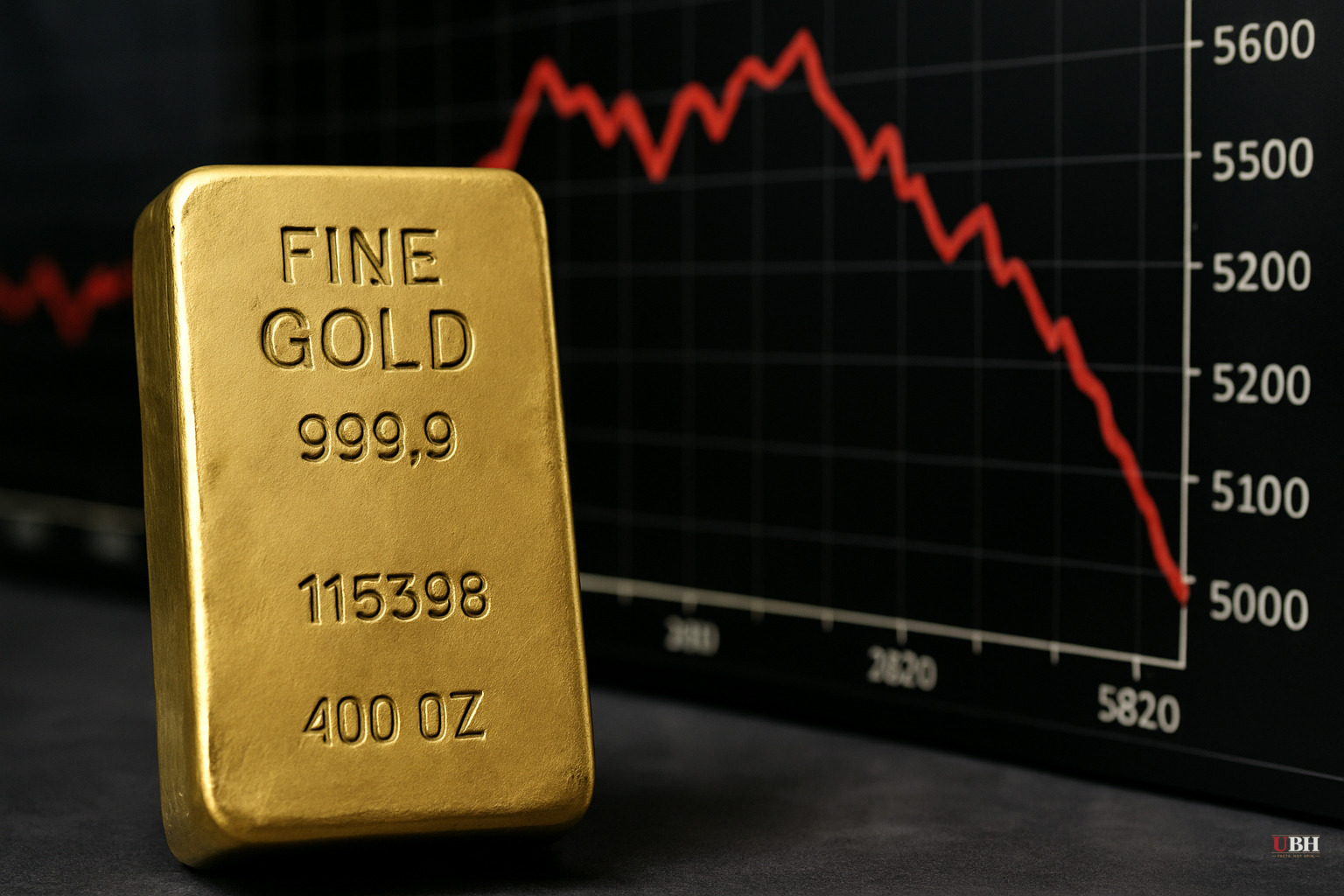
Since gold hit its all-time high of $5,586.20 on January 29, 2026, the slide has been steady and severe. The metal finished the second quarter down roughly 16%, its worst three-month stretch since Q2 2013, according to CNBC. Year-to-date, gold is off 7.76%.
The new quarter is opening no better. Gold futures were indicating a decline of 1.24% to $3,989.00 in pre-market trading early Wednesday, while spot gold was indicating a drop of 0.82% to $3,974.51.
The driver is straightforward: rising rate expectations make non-yielding assets like gold less attractive compared to bonds and cash. When rates go up, the opportunity cost of holding gold increases. Investors have been pricing that in for months.
What the Bulls Are Arguing
Not everyone is walking away from bullion. Amundi Investment Institute, in its mid-year Global Investment Outlook, made the case that gold still belongs in serious portfolios. Monica Defend, head of Amundi Investment Institute, pointed to an environment where "the independence of central banks is being tested, inflation is more volatile, and concentration risks are growing."
Amundi's view is that high public debt levels and central banks diversifying away from dollar-based assets create structural demand that could support gold in H2. The case is that the sell-off has overcorrected relative to the macro fundamentals.
The World Gold Council's annual Central Bank Gold Reserves survey adds some weight to that argument: more global central banks say they plan to increase gold holdings over the next 12 months. Central banks don't trade like hedge funds. They accumulate slowly and don't panic-sell. Their stated intentions provide a demand floor, though not a price guarantee.
The Bear Case Is Also Real
The strongest counterargument to the bull case is simple: gold ran from roughly $2,000 in early 2024 to nearly $5,600 in January 2026. That was a historically extreme move. A 16% quarterly correction after that kind of run doesn't necessarily mean the asset is broken. It may just mean the price got too far ahead of reality. Investors who bought anywhere near the top are sitting on significant losses. At around $3,974 in pre-market spot price indications early Wednesday morning, gold is still trading at historically elevated levels in absolute terms, but the narrative that powered that January spike—peak tariff fear, dollar distrust, Fed uncertainty—has partially unwound.
The rate environment matters enormously here. If the Federal Reserve signals it will hold rates higher for longer, gold faces continued headwinds regardless of what central banks in other countries are buying.
Silver Getting Hit Too
The sell-off spread to silver. Silver futures were indicating a decline of 3.34% to $57.49 in pre-market trading early Wednesday, with spot silver indicating a drop of 1.31% at $57.80, according to CNBC. Silver has industrial demand that gold lacks, which typically makes it more volatile in both directions.
The Unresolved Question
Amundi's framework for H2—diversify across currencies, hold real assets and gold, pick equity themes with discipline—is prudent institutional advice, not a prediction. Gold's trajectory from here depends heavily on what the Fed does next and whether the dollar continues to recover. The World Gold Council's central bank survey shows intent to buy, but intent and execution are different things, and the timing of those purchases is unknown. Whether structural central bank demand is enough to offset rate-driven selling pressure from Western institutional investors is the question gold traders will be pricing through the rest of 2026.
Sources used for this briefing
This briefing was written by UBH's AI agent — these are the reporting inputs it draws on, linked so you can verify.


