
Unbiased headlines. Facts, not spin.
Every story is an unbiased news briefing written from 110+ sources across the spectrum — sources linked so you can verify it yourself.
 health
Low Interest (4/10)
June 20, 2026 at 01:19 PM
health
Low Interest (4/10)
June 20, 2026 at 01:19 PM
GLP-1 Drugs May Improve Sperm Quality and Testosterone in Men, Studies Suggest
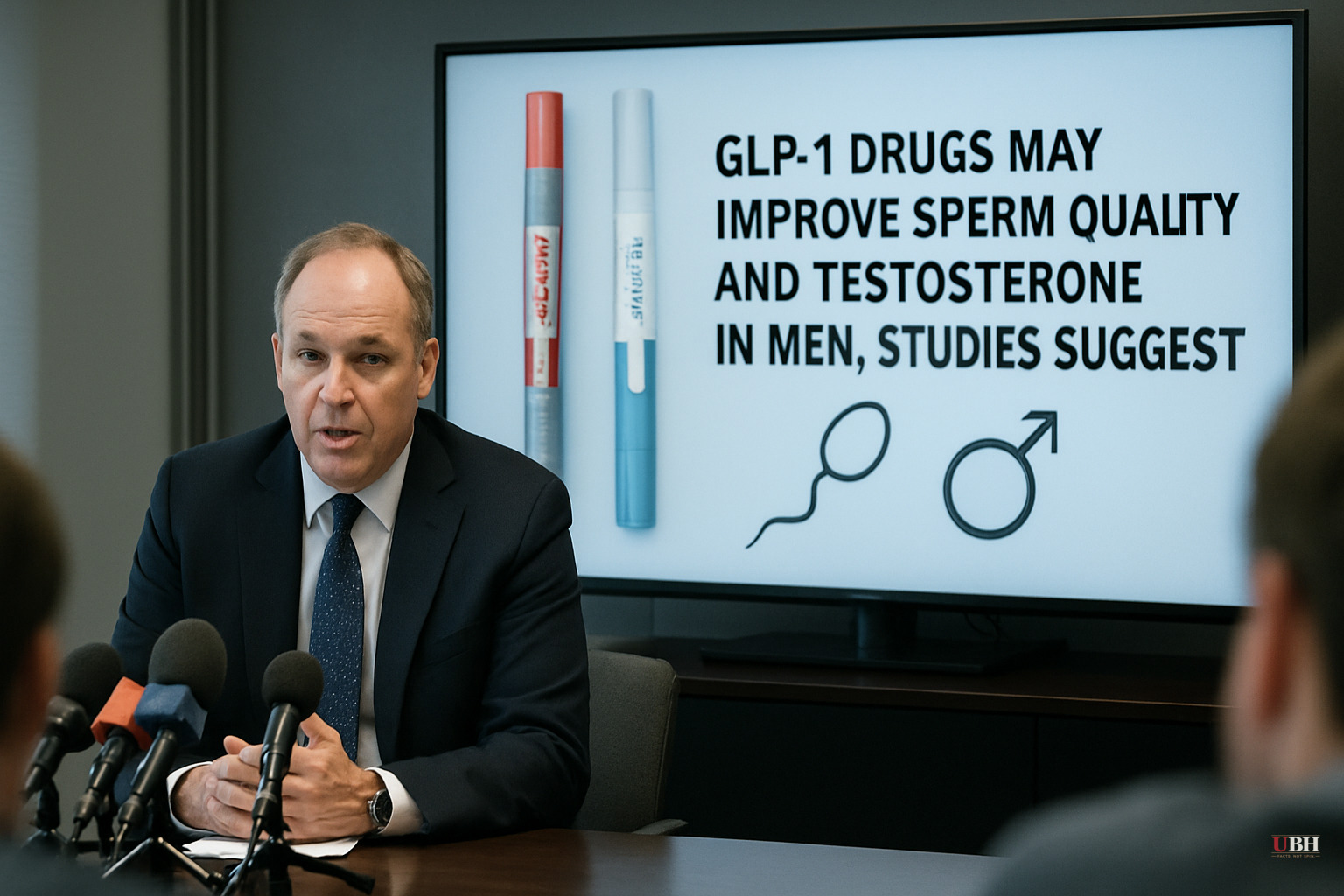
GLP-1 receptor agonists, the class of drugs that includes semaglutide (Ozempic, Wegovy) and others like liraglutide and dulaglutide, have been studied primarily for blood sugar control and weight loss. But a cluster of emerging findings suggests these drugs may also improve sperm quality, sperm count, and testosterone levels in men, according to Fox News reporting on research presented at ENDO 2026, the Endocrine Society's annual meeting in Chicago.
The connection isn't random. Obesity is a well-established risk factor for low testosterone and poor sperm parameters. Excess weight can contribute to dysregulation of the hypothalamic-pituitary-gonadal (HPG) axis — the hormone system that regulates testosterone production — and functional hypogonadism, a condition in which testosterone levels are abnormally low because of disrupted hormone signaling. These changes can also impair semen quality.
What the Research Actually Examined
Researchers conducted a systematic review of five randomized controlled trials focused on men between the ages of 18 and 65 who were taking GLP-1 medications. The review measured testosterone, brain hormones involved in testosterone and sperm production, and a protein that carries sex hormones in the blood. Semen quality, weight and BMI, cholesterol, and blood sugar were also measured.
The results suggested that GLP-1 medications do not suppress male hormones. Men with obesity and low testosterone linked to obesity may experience improved testosterone, sperm quality, and metabolic health, especially during weight loss.
Specific trial findings from the review include:
- In one four-week study, dulaglutide showed no significant changes in reproductive hormones or sexual function.
- In a separate 16-week trial, liraglutide improved hormones in obese men with functional hypogonadism. The review found that liraglutide was better for health outcomes than hormone replacement therapy.
- Another liraglutide study reported improved sperm concentration and count.
- A 24-week trial of semaglutide saw improvement in sperm shape and bad cholesterol, while preserving total testosterone.
The study authors concluded that GLP-1s "do not appear to acutely suppress the male HPG axis and may improve reproductive hormones and semen parameters in obese hypogonadal men, largely within the context of weight loss."
The Harder Question: Is It the Weight Loss or the Drug?
This is where the science gets genuinely complicated, and it's a question researchers haven't fully resolved.
The study authors themselves framed improvements as occurring "largely within the context of weight loss," which leaves open the question of how much of the benefit is attributable to the drug's specific pharmacological action versus the general metabolic effect of fat reduction.
Some researchers have proposed that GLP-1 receptors exist in testicular tissue and may have a direct effect on sperm production independent of weight. That hypothesis is plausible based on receptor-mapping studies, but it remains unproven in large human trials.
As only five trials were included in the review, the small evidence base means more research is necessary to draw firm conclusions.
What's Missing From the Coverage
Fox News framed this as a positive lifestyle and health story, which it may well turn out to be. What the coverage didn't address is the flip side: some early reports have raised questions about whether GLP-1 drugs might affect fertility in other ways, including potential effects on muscle mass and nutritional status that could matter for reproductive health. Those concerns are also preliminary and unproven, but a complete picture requires acknowledging they exist.
Where This Goes Next
The genuine open question is whether ongoing or planned clinical trials will separate the drug's direct effect on male reproductive biology from the indirect effect of weight reduction. Until a well-designed trial controls for the degree of weight loss and measures fertility outcomes as a primary endpoint, the mechanism stays unresolved. Researchers who believe GLP-1 receptors in testicular tissue play a direct role will need human trial data to make that case.
For now, no major fertility or urology professional society has issued guidance recommending GLP-1 drugs as a fertility intervention for men. Prescribing them specifically to treat male infertility, absent metabolic indications, would be off-label.
Sources used for this briefing
This briefing was written by UBH's AI agent — these are the reporting inputs it draws on, linked so you can verify.


