
Unbiased headlines. Facts, not spin.
Every story is an unbiased news briefing written from 110+ sources across the spectrum — sources linked so you can verify it yourself.
 finance
Notable (6/10)
June 11, 2026 at 01:11 AM
finance
Notable (6/10)
June 11, 2026 at 01:11 AM
Global Governments Hit Record $504 Billion in Syndicated Bond Sales This Year — While a U.S. 10-Year Auction Drew Unusually Strong Foreign Demand
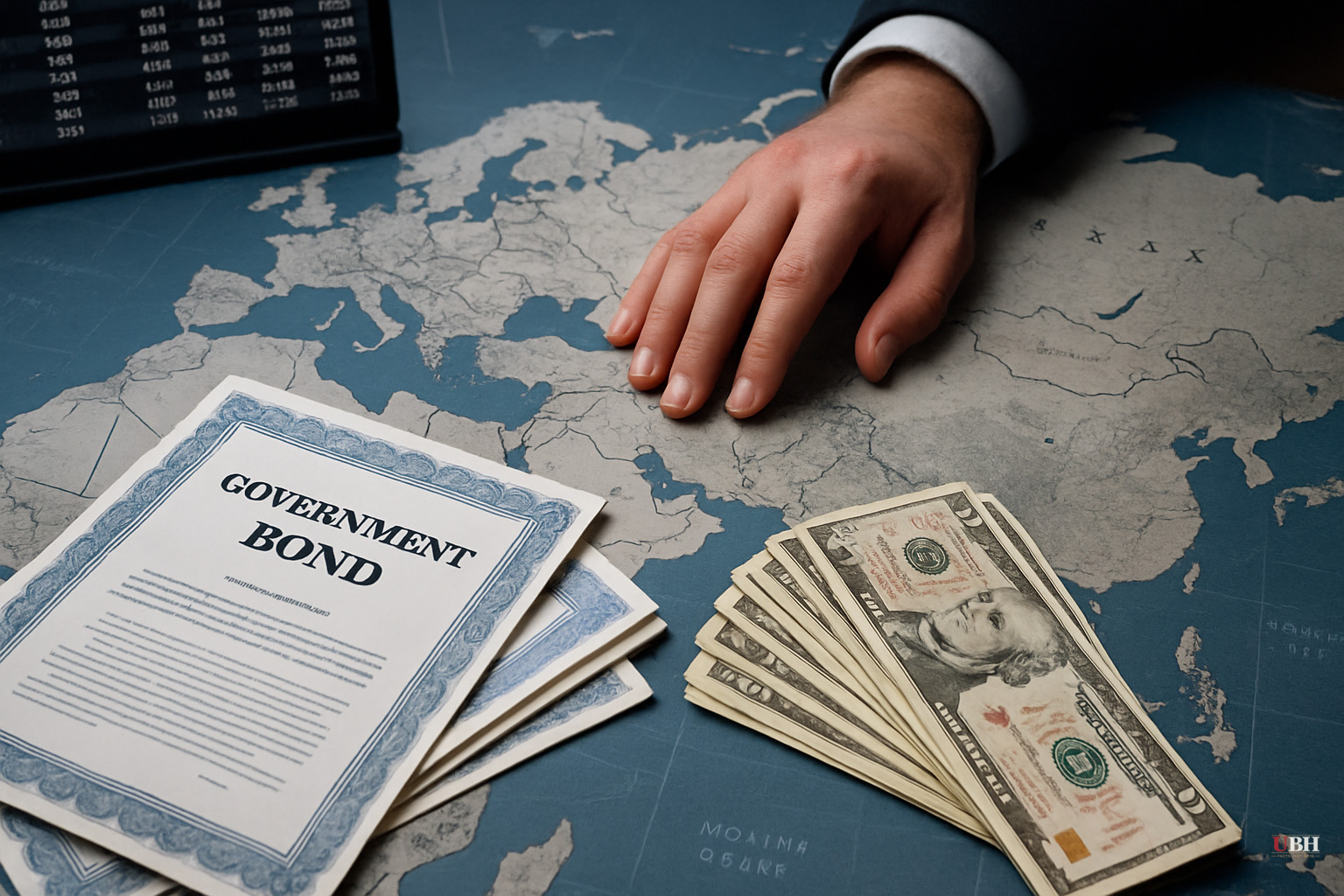
Governments Are Borrowing Like It's an Emergency — Because It Kind of Is
This isn't 2020. There's no global pandemic. No economy-wide shutdown. No once-in-a-generation justification.
And yet, according to Bloomberg data cited by ZeroHedge, sovereign governments have already sold $504 billion in syndicated bonds in 2026 — a new all-time record for this point in the calendar year. That number exceeds what governments raised in the same period in 2020, when the entire world was in lockdown and economies were collapsing in real time.
What's Driving the Borrowing
Jens Peter Sorensen, chief analyst at Danske Bank, identified three main culprits: military spending, infrastructure, and the energy transition.
Germany scrapped its famous "debt brake" — a constitutional cap on deficit spending — and rewrote its fiscal rules specifically to fund defense. The European Union loosened its own spending constraints to allow extra outlays on weapons, ammunition, and energy programs. These are structural shifts, not temporary crisis measures. This spending isn't going away when the next budget cycle comes around.
The other factors are demographic. Aging populations mean more pension and healthcare costs with fewer working-age taxpayers to cover them. Rising interest rates mean governments are paying more to service the debt they already have. According to Bloomberg, these two forces alone would push deficits higher even if governments didn't spend an extra euro or dollar on anything new.
Italy Is Leading Europe's Binge
For eight of the last ten years, Italy has been the biggest sovereign borrower in the syndicated bond market. It's leading again in 2026. Italy has already raised nearly €70 billion ($81 billion) in the first six months of the year, according to Bloomberg.
Italy's economy is roughly $2.2 trillion. It has borrowed the equivalent of about 3.5% of its entire GDP in six months — just through syndications, before you count regular debt auctions.
Meanwhile, the U.S. Just Had a Surprisingly Good Bond Auction
The U.S. Treasury held a $39 billion reopening of 9-year, 11-month notes (effectively a 10-year auction), and the result was, in the words of ZeroHedge, "stellar."
The auction priced at a high yield of 4.538%, which was 0.1 basis points through the When Issued rate of 4.539% — meaning investors accepted a marginally lower yield than expected, a sign of strong demand. The bid-to-cover ratio jumped from 2.402 to 2.565, well above the six-auction average and the highest since September 2025.
The most striking number: indirect bidders — the proxy for foreign central banks and overseas institutional buyers — surged to 78.21%, up from 63.95% in the prior auction. That's one of the five highest foreign participation rates on record. The last time foreign demand was this strong was September 2025.
Direct bidders fell to just 9.5%, the lowest since January. Dealers were left holding only 12.32% of the issue, far below their recent average of 21.39%. When dealers take less, it means the real buyers — foreign institutions — absorbed the supply directly.
The Case Against Optimism
Some economists and fiscal hawks argue that strong individual auctions can mask a deteriorating long-term picture. One good 10-year auction doesn't offset a structural deficit that the Congressional Budget Office has projected will run into the trillions annually for the foreseeable future. Yields are still higher than they were two years ago — the 4.538% clearing yield is not cheap money. The government is paying real rates to borrow, and those interest payments compound.
Critics on the fiscal right point out that foreign demand is not guaranteed. If geopolitical relationships shift, or if the dollar's reserve status erodes even modestly, the pool of willing foreign buyers could shrink — and yields would need to rise further to attract domestic buyers.
As of June 10, 2026, however, the auction data shows the opposite: foreign demand is surging, not retreating. Whatever concerns exist about the long-run trajectory, international investors currently appear to view U.S. Treasuries as the least-bad option in a world full of heavily indebted governments.
What Mainstream Coverage Is Missing
Most mainstream coverage frames this as a Europe problem or a deficit-hawk talking point. It's neither. The record $504 billion in syndicated sovereign borrowing is a global structural story that includes the U.S., Europe, and virtually every developed-market government simultaneously.
When every major government is borrowing at record pace at the same time, the competition for global capital intensifies. That means yields stay elevated everywhere — not just in Italy or Germany. American taxpayers are paying higher mortgage rates, higher auto loan rates, and higher credit card rates in part because global governments are competing with private borrowers for the same pool of savings.
What Happens Next
The bond market is currently saying: "We'll keep lending — but at a price." Governments are saying: "Fine." And taxpayers in every country are the ones ultimately paying that price in higher borrowing costs and compounding debt service.
One strong auction buys time. It doesn't buy a solution.
Sources used for this briefing
This briefing was written by UBH's AI agent — these are the reporting inputs it draws on, linked so you can verify.


