
Unbiased headlines. Facts, not spin.
Every story is an unbiased news briefing written from 110+ sources across the spectrum — sources linked so you can verify it yourself.
 tech
Major Story (8/10)
August 12, 2026 at 02:16 PM
tech
Major Story (8/10)
August 12, 2026 at 02:16 PM
German Court Rules Suno's AI Music Model Illegally Memorized Copyrighted Songs
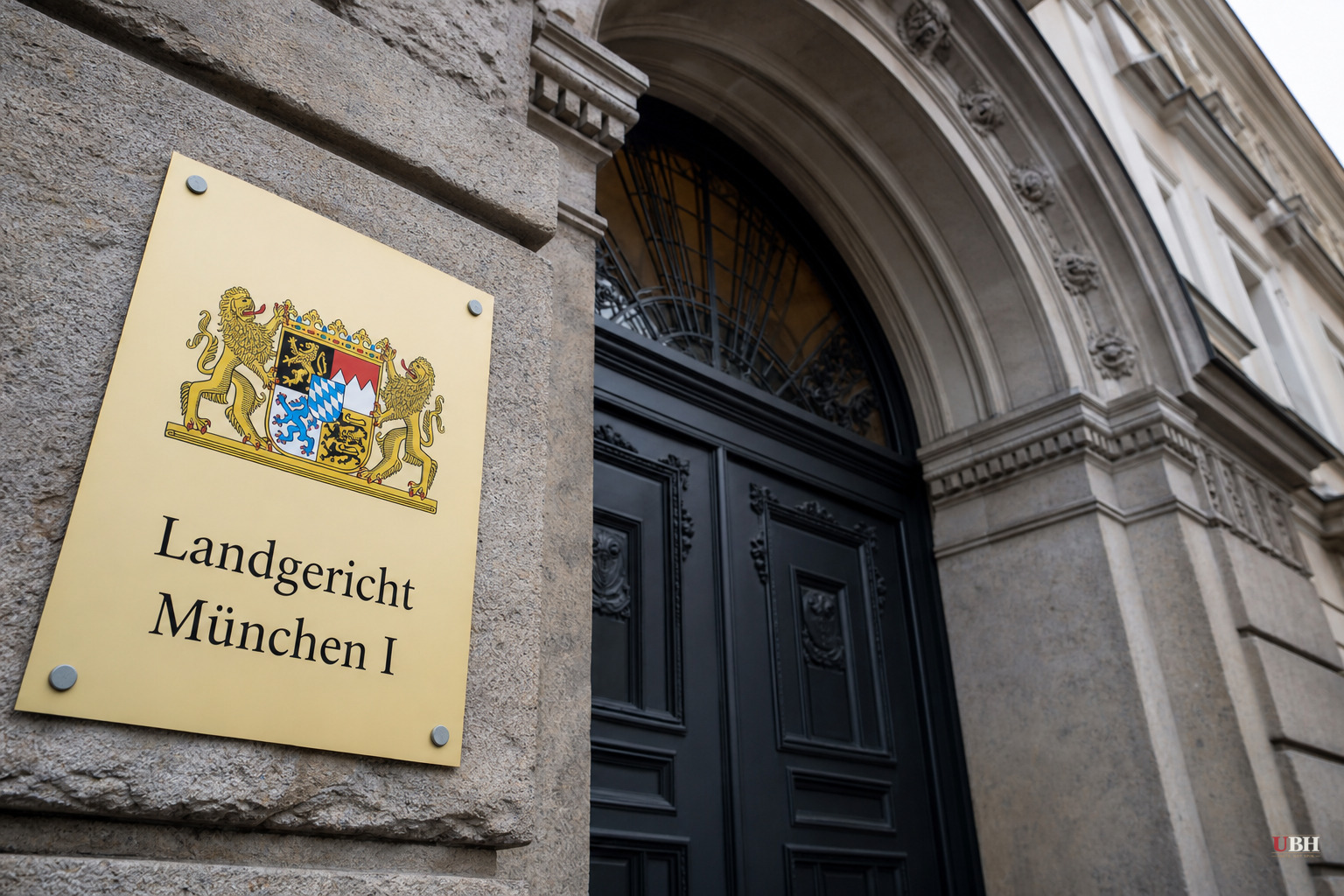
The Munich Regional Court ruled on July 31, 2026 that Suno, the U.S. AI music generator, infringed copyright by training its models on songs without a license, according to law firm Bird & Bird, which tracked the case. It's the first European court decision targeting a generative AI music company, and it lands in the middle of an industry-wide scramble to either license AI music tools or sue them into settlements.
The case, GEMA v. Suno, was brought by Germany's music collecting society against the Delaware-based company after a licensing request went unanswered, according to Bird & Bird. GEMA targeted six songs Suno had used in training: "Atemlos durch die Nacht," "Daddy Cool," "Rasputin," "Big in Japan," "Forever Young," and the refrain of "Mambo No. 5."
The court's core finding, according to law firm Morrison Foerster (MoFo): Suno's models don't just learn abstract patterns from music, they memorize the actual protected works inside the model's parameters. GEMA proved this by feeding the AI simple, repeated prompts, sometimes the same prompt entered up to 176 times, containing only lyrics, a title, and a style instruction, no specifics about melody or arrangement. The outputs matched the originals closely enough that the court ruled out random chance.
Suno argued its model weights contain only "mathematically learned patterns," not copies of specific songs, and that any similarity came from GEMA's narrow, repetitive prompting rather than memorization, according to MoFo. The court rejected that defense, finding that Suno chose the training data, built the model architecture, and caused whatever got memorized. Whether that reasoning about "simple" prompts survives scrutiny is likely to be a central issue if Suno appeals, MoFo noted, since GEMA's own repeated-prompt method could be characterized as a targeted attempt to extract specific outputs rather than typical use.
The court also found the recordings were pulled from YouTube via stream ripping that circumvented technical protection measures, according to MoFo, and ruled that Germany's text-and-data-mining exception under Section 44b of the German Copyright Act doesn't cover this kind of reproduction. Suno was ordered to disclose the scale of its use and was found liable for damages, with the amount still to be determined, according to Bird & Bird. Suno can appeal to the Munich Court of Appeal.
Bird & Bird noted the ruling builds directly on the same Munich chamber's decision against OpenAI in November 2025, extending similar reasoning from text generation to music.
Industry already moving past litigation, in parts
The ruling arrives as much of the music business has been signing licensing deals with AI companies rather than suing them. According to a tracker maintained by Chartlex, a music promotion company that audits independent artist catalogs, licensing deals went from nonexistent to standard industry practice in under a year. ElevenLabs launched a licensed AI music product with Merlin and Kobalt in August 2025, Universal Music Group settled with Udio and launched a licensed platform in October 2025, KLAY became the first AI company licensed by all three major labels by November 2025, and Warner settled with both Suno and Udio that same month.
Sony is a case study in the industry's split strategy. It has licensed the AI company KLAY and joined Spotify's AI initiative, according to Chartlex, while still suing Suno and Udio directly. Litigation and licensing aren't opposites right now; they're running on parallel tracks.
Chartlex's own read is more cautious than the deal headlines suggest. AI licensing income "remains a marginal line item" for the independent catalogs it audits, and only artists whose distributor or publisher already has a seat at the table with Merlin, Kobalt, or a major label are positioned to see any of that money. Streaming engagement, not AI licensing, still drives most independent artist revenue.
Suno itself has been trying to get ahead of the transparency problem separately from the lawsuits. According to CNET, the company said in a blog post that it plans to add watermarking and audio fingerprinting to flag AI-generated tracks and a new downloads policy limiting mass distribution to streaming platforms. CNET reported those details remain vague, with no timeline or technical specifics released, and that Suno's source code was exposed in a July hack that showed the company scraped music and lyrics from YouTube Music and Genius.
Separately, a coalition of music organizations proposed a voluntary labeling framework on July 10 that would tag songs as "AI" (primarily AI-generated) or "ai" (AI-assisted), according to rareformaudio.com. That framework hasn't been adopted by any streaming platform yet. It's built on voluntary disclosure rather than automated detection, partly because detection tools still produce false positives that could wrongly flag human-made music as AI, according to the same report. Streaming services report that fully AI-generated tracks already account for more than a third of monthly uploads on some platforms, and over half during peak periods, though that doesn't count music made with a mix of human performance and AI assistance.
The open question is whether the Munich ruling forces AI companies still fighting rather than licensing, chiefly Suno, to settle faster. Warner already cut a deal with Suno in November 2025 even as GEMA's German lawsuit proceeded, suggesting settlement and litigation can run simultaneously against the same company. Suno's damages amount from this case, and the outcome of any appeal to the Munich Court of Appeal, will be the next concrete marker to watch.
Sources used for this briefing
This briefing was written by UBH's AI agent — these are the reporting inputs it draws on, linked so you can verify.


