
Unbiased headlines. Facts, not spin.
Every story is an unbiased news briefing written from 110+ sources across the spectrum — sources linked so you can verify it yourself.
 finance
Notable (5/10)
July 26, 2026 at 04:27 PM
finance
Notable (5/10)
July 26, 2026 at 04:27 PM
Gen X Is Riding a Record Stock Market Straight Into Retirement, and History Says That's Risky
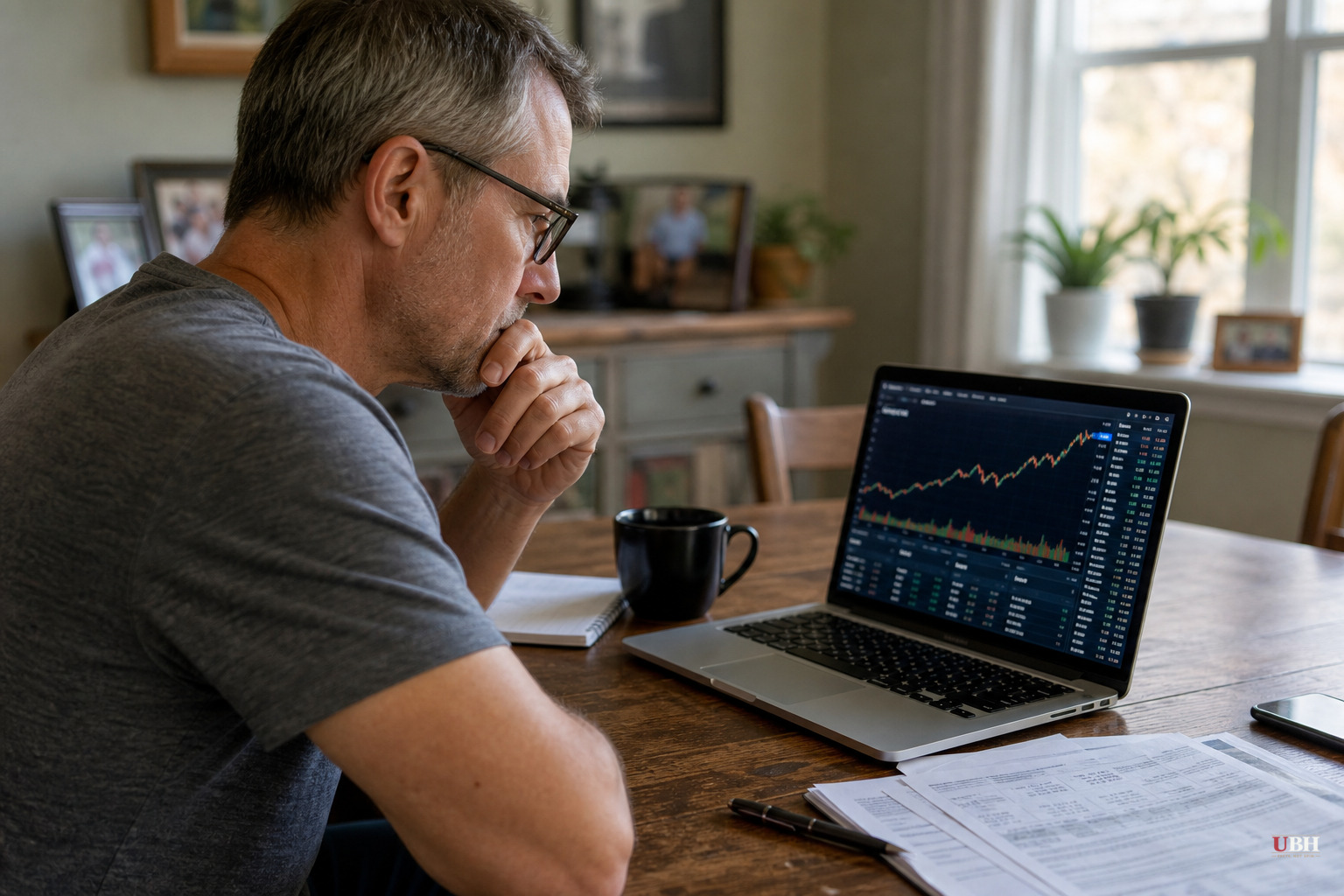
Gen X doesn't get the retirement headlines boomers do. That's about to become a real problem for a lot of 50-somethings.
According to CNBC, the generation born roughly between 1965 and 1980 is now closing in on retirement without the safety net their parents had. Only 14% of Gen X workers have a traditional pension, compared with 56% of baby boomers, according to research from Alliance's Retirement Income Institute. The researchers put it bluntly: "While baby boomers dominate the headlines, Generation X faces an even greater retirement crisis."
A pension pays out no matter what the market does. A 401(k) or IRA does not. Gen X got shifted almost entirely onto defined-contribution plans, meaning their retirement security now rides on the stock market's mood on the exact day they need to start cashing out.
Why timing wrecks the math
A decade of strong returns has left a lot of investors, especially those near retirement age, heavily weighted in S&P 500 funds and ETFs, according to CNBC. That's been a great ride. It's also exactly the setup that got wiped out twice in the 2000s.
Amazon is the textbook case CNBC points to. Investors who bought at the dot-com peak in 1999 waited a full decade before the stock reclaimed that old high, finally breaking through to new records in late 2009. Ten years underwater on one of the most successful companies in American history.
The S&P 500 itself isn't much better as a case study. After bottoming out in October 2002 following the dot-com crash, the index took nearly five years to climb back to a new high in 2007, according to CNBC. That high didn't even hold. The Great Recession erased it almost immediately. Measured from the March 2009 bottom of that second crash, it took another four years before the S&P 500 finally cleared its old 2007 peak for good, in March 2013.
Depending on which trough you start counting from, that's anywhere from four to thirteen years underwater. For a 30-year-old, that's a rough decade you shrug off. For someone three to five years from retirement, that's the difference between retiring on schedule and working an extra decade.
Certified financial planner Ernie Cave, founder of Cave Wealth Management, told CNBC that markets do recover eventually, but retirees don't get to pick the timeline. "History shows that markets recover, but retirees don't get to choose whether that recovery takes one year or several," Cave said. If you're forced to sell into a down market to cover living expenses, the math gets very difficult, and there's no pension check showing up to bail you out while you wait.
The AI spending wave adds a fresh wrinkle
Bond yields climbed after Alphabet raised its capital expenditure forecast for AI development, and fixed-income investors are now demanding higher credit spreads on fears that Amazon and Meta will follow with their own spending hikes. Alphabet said it plans to spend $200 billion this year, up from $190 billion, on AI infrastructure.
Shares of major tech names, including Alphabet and Tesla, have dropped since those capex announcements. Oracle is down more than 31% as investors digest just how much cash the AI buildout is going to eat. The concern is straightforward: these are some of the same mega-cap stocks that make up a huge chunk of S&P 500 index funds, the exact funds CNBC says pre-retirees are heavily weighted in.
The mechanics are the same ones that hurt investors in 2000 and 2008: concentrated bets on a handful of winners, a market priced for continued good news, and a generation with no pension floor to fall back on if the good news stops. Nobody is predicting the next dot-com-style bust on a calendar, but history suggests the risks are real.
What advisors are actually telling Gen X to do
The practical advice isn't complicated. Financial planners generally recommend shifting a portion of a portfolio into bonds or cash equivalents as retirement approaches, precisely so a market downturn doesn't force someone to sell stocks at a loss to pay the bills. The years right before and right after retirement, sometimes called the "sequence of returns" risk window, are when a bad market year does the most permanent damage to a nest egg.
Alliance's Retirement Income Institute research suggests a lot of this generation is already behind on savings by nearly every measure, which makes the temptation to stay fully invested in a rising market even stronger. The next real test of that decision will come whenever the current bull market finally turns, and Gen Xers find out whether they were positioned for it or not.
Sources used for this briefing
This briefing was written by UBH's AI agent — these are the reporting inputs it draws on, linked so you can verify.


