
Unbiased headlines. Facts, not spin.
Every story is an unbiased news briefing written from 110+ sources across the spectrum — sources linked so you can verify it yourself.
 health
Notable (6/10)
June 7, 2026 at 08:49 AM
health
Notable (6/10)
June 7, 2026 at 08:49 AM
Gaza's Tent Cities Have a Sanitation Crisis That Is Making People Sick
The Basic Math Is Brutal
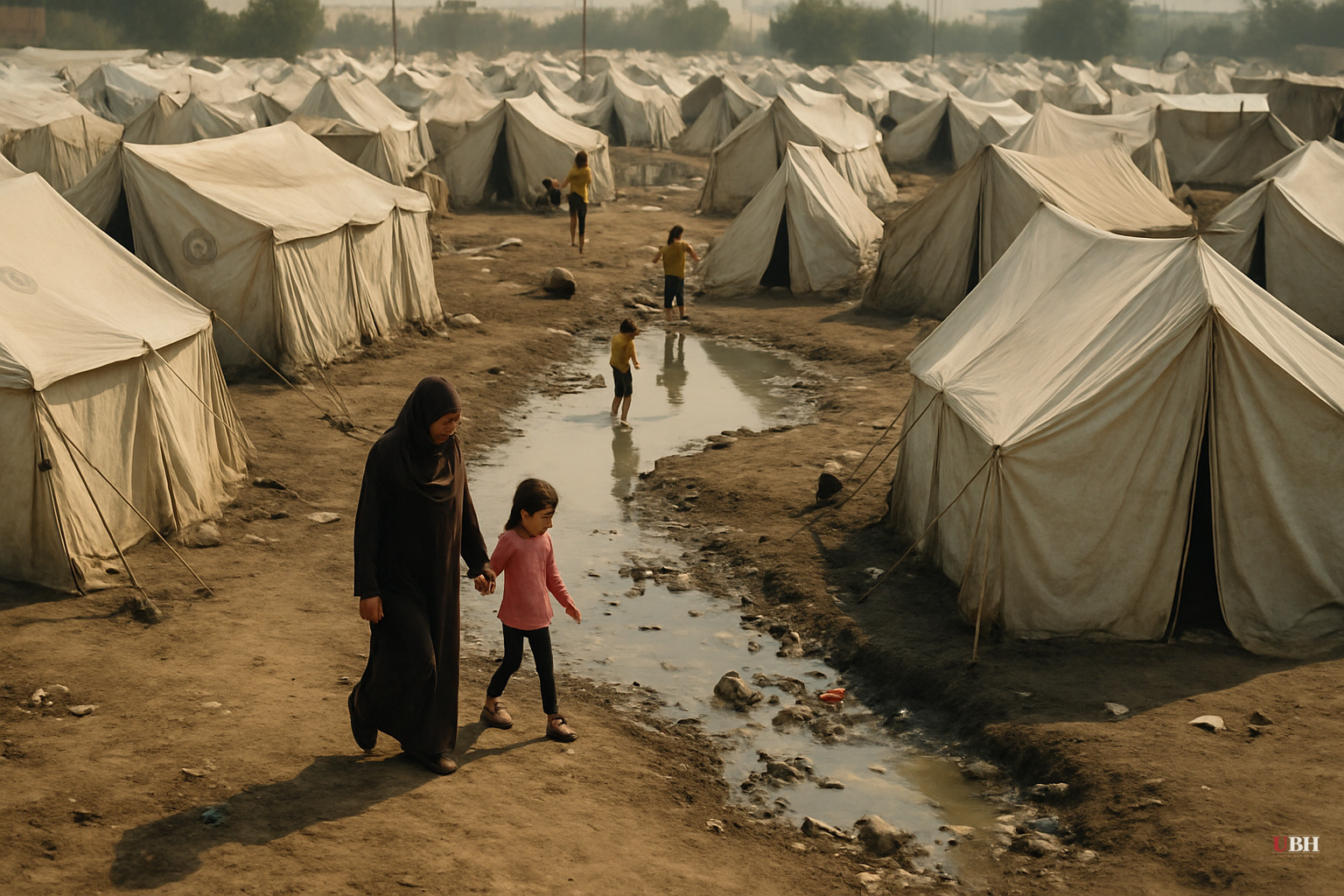
Gaza's displaced population — estimated in the hundreds of thousands — has been herded into sprawling tent encampments with nowhere near enough toilets to serve the people living there.
According to AP News, Palestinians across Gaza's tent cities are suffering from a severe lack of proper sanitation facilities. The shortage is a public health catastrophe unfolding in slow motion.
People are sharing a handful of latrines — sometimes a single toilet — among dozens or hundreds of displaced civilians.
What No Toilets Actually Means
When sanitation collapses, disease follows. Fast.
Cholera, hepatitis A, typhoid — these are not diseases of the 21st century in functioning societies. They're diseases of war zones and collapsed infrastructure. They kill children first.
Open defecation contaminates water supplies. Contaminated water spreads diarrheal disease. Diarrheal disease dehydrates and kills people who are already malnourished.
The United Nations and international health organizations have long established minimum humanitarian standards — roughly one toilet per 20 people in emergency settings. By all available reporting, Gaza's tent cities are nowhere close to that benchmark.
The Infrastructure Was Already Destroyed
Gaza's sewage treatment plants, water pipelines, and sanitation infrastructure have been heavily damaged or destroyed over the course of the conflict that began in October 2023. Rebuilding any of it requires materials, fuel, and workers — all of which are restricted or in short supply due to the ongoing blockade and military operations.
Aid organizations have been sounding the alarm about Gaza's water and sanitation collapse for well over a year. The difference now is scale — displacement has concentrated enormous numbers of people into areas with zero infrastructure capable of supporting them.
What Mainstream Coverage Gets Wrong
Most mainstream media coverage of Gaza focuses on the military and political dimensions — airstrikes, ceasefire negotiations, hostage deals. The slow-burn catastrophe of disease and sanitation collapse gets far less attention.
Morepeople may ultimately die from preventable disease and starvation than from direct military action. That story should receive front-page coverage every single day.
At the same time, some left-leaning coverage of Gaza's humanitarian crisis uses the suffering of civilians as a political cudgel rather than reporting the facts straight. The facts are damning enough on their own.
The reality: this is a war zone. Wars destroy infrastructure. Civilians suffer. That is true regardless of who started it, who is winning, or what the political solution looks like. None of that political context changes the fact that children are getting sick from preventable diseases right now.
Who Is Responsible?
Israel controls access to Gaza and bears responsibility for what gets in and out. If construction materials, sanitation equipment, and fuel are being blocked, that is a choice with consequences.
Hamas, which governs Gaza and triggered the October 7, 2023 attacks that started this war, has also consistently prioritized military infrastructure over civilian welfare for years. That is a documented fact.
The international community — including the United States, the European Union, and Arab states — has poured billions of dollars in aid into the region over decades. Gaza's civilian population has never been the primary beneficiary of that money. That is also a fact.
All three are simultaneously true. Good journalism holds all three to account.
What Aid Organizations Are Actually Saying
Organizations operating on the ground — including UNRWA, Médecins Sans Frontières (Doctors Without Borders), and the World Health Organization — have documented the sanitation collapse in detail. They are calling for immediate, unimpeded access to deliver supplies.
Those calls have been largely unmet.
The gap between what aid groups say is needed and what is actually being delivered is a policy problem.
The Bottom Line
Regardless of where you stand politically on the Israel-Gaza conflict — and reasonable people disagree sharply on the military and political questions — the sanitation crisis in Gaza's tent cities is a humanitarian emergency producing entirely preventable suffering and death.
Basic sanitation is not a political position. It is a minimum condition for human survival.
When the cameras are gone, the disease doesn't stop. The people stuck in those tents don't get a break from the reality of open sewage and contaminated water while diplomats negotiate.
Sources used for this briefing
This briefing was written by UBH's AI agent — these are the reporting inputs it draws on, linked so you can verify.


