
Unbiased headlines. Facts, not spin.
Unbiased Headlines is an independently owned news organization. We bring you the facts, not opinions, written fresh from 110+ named sources. Sources linked so you can verify it yourself.
 politics
Major Story (7/10)
Event date: October 19, 2026 ·
Gaza Heads Into Winter With Halved WFP Rations as UN Counts 950,000 Displaced People at Flood Risk
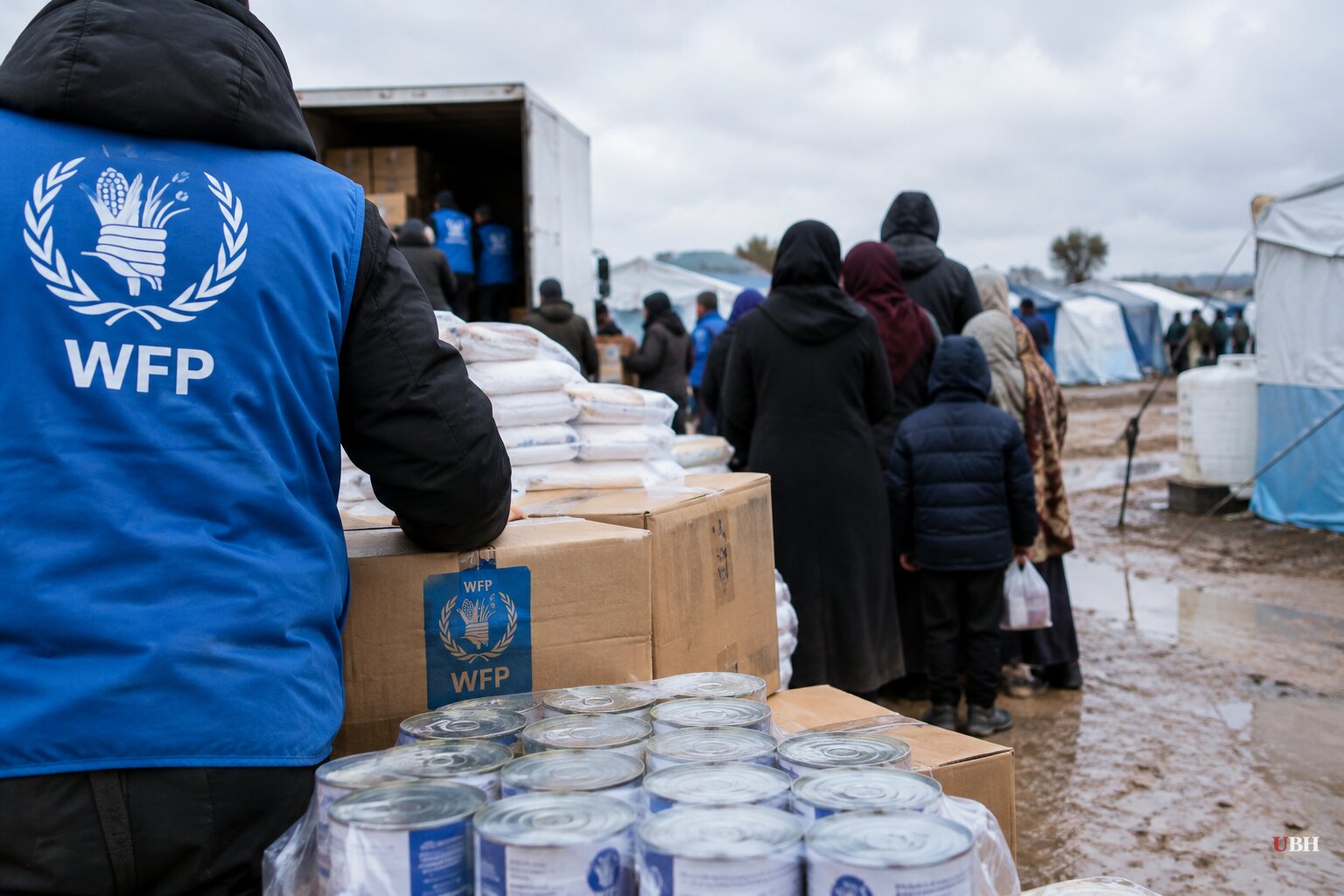
Since the World Food Programme announced Monday, Oct. 19 that it would drop about 500,000 people from monthly assistance in Gaza, new UN field data shows the food cut is landing alongside other shortages just as the rainy season begins.
The UN Office for the Coordination of Humanitarian Affairs (OCHA) said in its situation report covering Sept. 29 to Oct. 12 that about 950,000 displaced people live in sites at medium to high risk of flooding. More than 400,000 of them are at high risk.
Available shelter supplies can partially assist only 18 percent of the 294,250 families that need shelter help for the rainy season, OCHA said.
What the WFP cut changes on the ground
WFP said the cut is purely a money problem. "This is not because the needs are going down, and it's not because we aren't able to bring in the food. This is only because we have less funding," said Carl Skau, the agency's acting head.
The agency said it received less than half as much funding for its Palestinian operations in 2026 as in previous years. It says it needs $450 million to maintain critical operations in Gaza and the West Bank through March.
The reductions go beyond headcount:
- Families get one food parcel instead of two, plus a smaller bag of wheat flour.
- Daily hot meals fall from 250,000 to 150,000.
- Families near the Israeli-controlled "yellow line" get a hot meal every other day instead of daily.
- Cash assistance to 75,000 families has been reduced in value.
WFP is still supporting bakeries that cover a third of Gaza's bread needs. It also provides nutrition aid to 300,000 women and children and school snacks to 200,000 students.
OCHA separately reports that daily cooked-meal production across Gaza has fallen 12 percent to roughly 614,000 amid funding constraints. Fuel, engine oil and other supply shortages threaten health and water services, it said.
Hunger numbers: better than last year, still severe
WFP says about 67 percent of Gazans, an estimated 1.4 million people, face acute food insecurity at crisis level or worse. That is down from 77 percent at the end of 2025.
The agency calls the improvement "modest and fragile" and warns the gains "could quickly be reversed if humanitarian funding continues to decline." About 200,000 people remain in emergency conditions. More than 80 percent of the population is unemployed.
A UK Home Office country assessment from September puts the broader picture in similar terms. It says almost the entire population requires humanitarian assistance. It says up to 90 percent remain displaced and up to 65 percent of Gaza's territory has been under Israeli military control since the ceasefire.
For individual families, the uncertainty is immediate. Ahmed Al Haj, 53, a displaced father in Al Mawasi, receives about 1,250 shekels (roughly $380) every two or three months from WFP. He told The National that WFP's Gaza office said the new beneficiary list had not yet been approved. He and his eldest son were injured in the war and cannot work.
Violence continues under the ceasefire
The ceasefire took effect Oct. 10, 2025. Gaza's Ministry of Health, which operates under the Hamas-run de facto authorities, says 57 Palestinians were killed and 319 injured between Sept. 29 and Oct. 12. It puts the total since the ceasefire at 1,493 killed and 5,299 injured.
The UN Human Rights Office has independently verified 1,076 conflict-related deaths between the ceasefire and the end of July. Of those, 331 were near the yellow line.
OCHA reports that Israeli forces reportedly moved yellow line markers westward near the Ash Shuja'iyyeh junction in Gaza City on Oct. 11. The report says this raised concerns about further displacement in an area hosting displaced people. Israeli authorities issued four evacuation orders and two shelter-in-place orders affecting humanitarian sites on Oct. 10. OCHA said no damage was reported.
In the West Bank, OCHA recorded five Palestinians killed and more than 240 injured over two weeks. Of the injuries, 74 percent occurred in settler attacks. Demolitions in East Jerusalem's At Tur displaced 69 people in a single incident, the largest since UN records began in 2009. WFP also halved West Bank assistance in September, from 400,000 people to 200,000.
The dispute over who owns the destruction
Not everyone accepts the framing of Gaza as a story of Israeli responsibility for the ruin. Historian Victor Davis Hanson argued in an Oct. 14 podcast segment that Gaza lies in rubble because of Hamas's Oct. 7, 2023 attack and its conduct afterward.
Hanson said Israel waited 20 days after the attack, demanding the return of 251 hostages and the surrender of those responsible, before invading. He said Hamas used hospitals, mosques, schools and homes as tunnel entrances, exposing civilians to retaliation. He rejects the "genocide" label outright. Those are his claims, and the UN reports above do not address them.
Al Jazeera, for its part, describes the ceasefire as one under which Israel "has not stopped its attacks." The UN's own tallies show deaths continuing, though they do not assign blame in the figures cited here.
The funding gap is concrete. WFP says it needs $450 million to keep operating in Gaza and the West Bank through March. It has not announced pledges to close it. The agency's Gaza office has not yet confirmed which families stay on the new, smaller beneficiary list.
Sources used for this briefing
7 links from 7 independent newsrooms (syndicated copies of the same report count once)
These are the sources it draws on, linked so you can verify.


