
Unbiased headlines. Facts, not spin.
Unbiased Headlines is an independently owned news organization. We bring you the facts, not opinions, written fresh from 110+ named sources. Sources linked so you can verify it yourself.
 politics
Notable (5/10)
Event date: October 19, 2026 ·
China Opens Corruption Probe of Ex-Chongqing Mayor Huang Qifan, 74, 13 Days Before Party Plenum
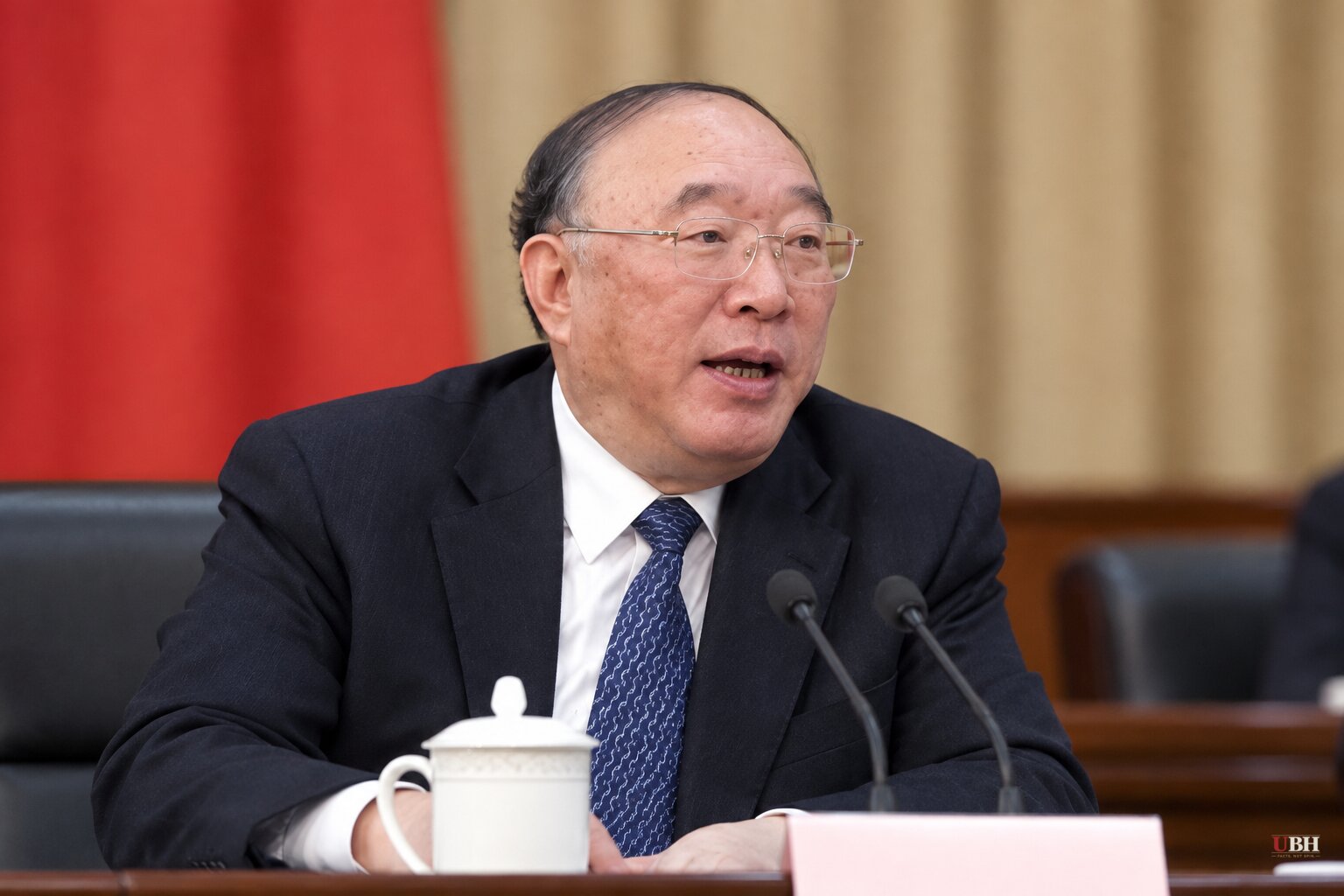
Huang Qifan, the man who outlasted two purged Chongqing party bosses, is now under investigation himself.
The Central Commission for Discipline Inspection and the National Supervisory Commission said on Oct. 13 that Huang, 74, is suspected of "serious violations of party discipline and law." The statement was brief. It named no specific allegations.
A survivor of two purges
Huang is a Zhejiang native who spent almost two decades in Shanghai's political and economic administration. He moved to Chongqing in 2001. In the early 1990s he was deputy secretary-general of the Shanghai Municipal Party Committee under Wu Bangguo, a senior figure tied to former leader Jiang Zemin's network.
He became Chongqing's mayor in January 2010, serving beside party secretary Bo Xilai. Huang described the pairing publicly: "My cooperation with Bo is seamless, like a fish in water."
Bo was removed in 2012 and sentenced to life in prison. Huang stayed on and worked under Bo's successor, Sun Zhengcai, who was purged in 2017. Huang had stepped down as mayor in December 2016.
After retirement he stayed visible as an economic commentator. He lectured, joined academic forums, held a distinguished professorship at Fudan University and served as vice chairman of the China Center for International Economic Exchanges.
Hong Kong's Ming Pao reported on the day of the announcement that Huang had pulled out of an Oct. 26 business forum in Hangzhou, organized by the Bank of Ningbo's Hangzhou branch, where he had been advertised as a keynote speaker. The reason given for the cancellation was "unforeseen circumstances."
The timing
The announcement came 13 days before the Fifth Plenum of the 20th Central Committee, scheduled for Oct. 26 to 29. The meeting is expected to center on tightening party discipline. No official source has tied Huang's case to the plenum agenda.
Xi Jinping's rhetoric is already running hot. In a speech to the discipline watchdog, aired in state media weeks ahead of the conclave, Xi pledged to "uproot sick trees" and warned that the anti-corruption campaign remains a difficult and complex struggle. He urged vigilance against officials who are disloyal in their thinking or inconsistent in word and deed. The watchdog followed on Oct. 17 with its own warning that corrupt officials have nowhere to hide.
On Oct. 19, People's Daily ran a piece comparing Mao's leadership during the Long March with Xi's role today, arguing the party needs strong leadership.
The military purge in the background
Huang's case lands after a heavy cull at the top of the armed forces. On Sept. 21, a former vice chairman of the Central Military Commission, identified only as Zhang in reporting by The Epoch Times, was stripped of party membership and removed from the army. Liu, a CMC member and former chief of staff, was also expelled from the party and the military.
U.S.-based commentator Wang He told The Epoch Times the purge shows that "Xi Jinping's sense of insecurity has become more pronounced and more serious than before." He named Cai Qi, director of the party's General Office, and Public Security Minister Wang Xiaohong as the two figures Xi most needs to keep. "If these two people remain in place, Xi Jinping will still hold power firmly," Wang He said.
Analyst Li Linyi told the paper that both men approach or pass age 70 by the next congress. He said controlling the military may be harder than controlling the police or the Central Guard Bureau, because many serving officers remain connected to purged figures and new appointees' loyalty is not guaranteed.
The opposing read
Not everyone sees weakness. In a paper released Oct. 19, the Asia Society Policy Institute's Center for China Analysis says "Xi remains politically dominant and is likely to win a fourth term" in 2027. Authors Neil Thomas, Lobsang Tsering and Shengyu Wang write that Xi "is signaling further escalation" and sees corruption as the "greatest threat" to the party's survival.
They argue the question is how Xi will run the party, not how it would look without him. They also write that Xi's concentration of authority leaves Beijing ill-prepared for his eventual departure. They compare him to Logan Roy in the TV drama "Succession."
The authors estimate that just over 77 percent of Central Committee members and alternates will attend the plenum. That could be the lowest share at any plenum since Mao Zedong's death. They add that the fall of so many officials chosen at the last congress gives Xi reason to scrutinize the next cohort more closely. They consider steps toward a succession plan at the plenum possible but unlikely.
What comes next
The discipline commission has not said what Huang is accused of. Nor has any court filing or charge been announced. In past cases, the commission's first statement has been the only public detail for months.
The plenum opens Oct. 26. The attendance count, any personnel changes and the language on discipline in the closing communiqué will show how far Xi's campaign extends ahead of the 21st Party Congress in 2027.
Sources used for this briefing
4 links from 4 independent newsrooms (syndicated copies of the same report count once)
These are the sources it draws on, linked so you can verify.


