
Unbiased headlines. Facts, not spin.
Every story is an unbiased news briefing written from 110+ sources across the spectrum — sources linked so you can verify it yourself.
 health
Notable (6/10)
June 18, 2026 at 02:13 PM
health
Notable (6/10)
June 18, 2026 at 02:13 PM
Gas Station Pills Sold as Herbal Supplements Contain Undisclosed Drugs, FDA Warns
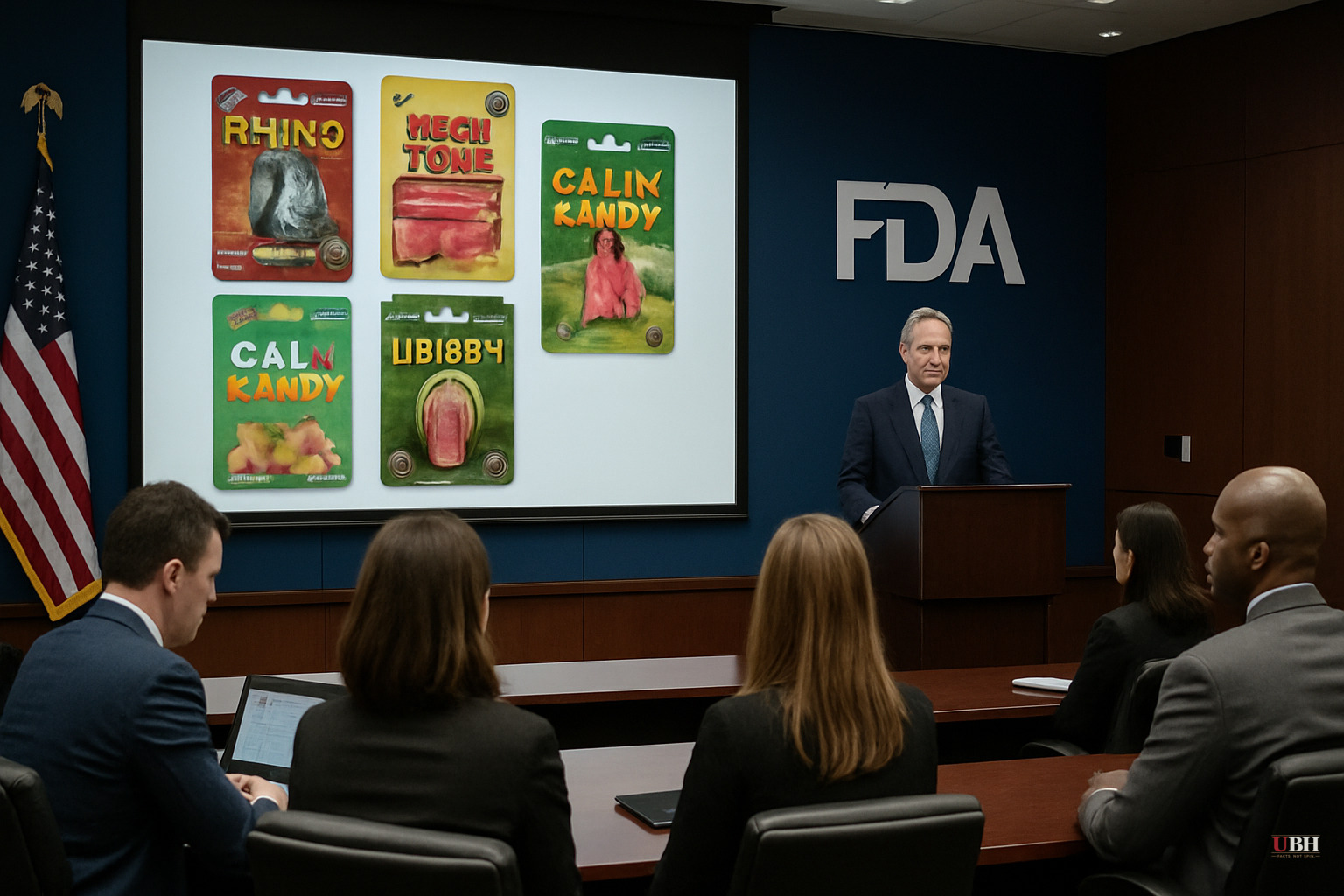
What's Actually in the Package
Grant Harting, a Pennsylvania pharmacist, opened a capsule sold at a gas station branded with an African rhino and promising "TIME. SIZE. STAMINA." The label listed goji extract, deng sen extract, and cinnamon bark. The powder inside tested positive for sildenafil, the active ingredient in Viagra, according to Harting's account covered by the New York Post.
"This is super illegal and super dangerous," Harting said in his social media video.
He's right on both counts. Sildenafil requires a prescription in the United States for a reason: it can interact with nitrate medications and cause dangerously low blood pressure. When it comes through a licensed pharmacy, the dose is controlled and consistent. When it comes from a gas station capsule, neither of those things is true.
The FDA Already Knows. The Pills Are Still on the Shelves.
The FDA has issued multiple warnings about these products. According to the New York Post's reporting, the agency flagged multiple specific products in a single month alone: Pink Pussycat Brand, Hard AF!, and Erectus Plus all contain unlisted combinations of sildenafil and tadalafil — the active ingredient in Cialis. Both drugs together amplify the blood pressure risk.
Two other products, Business Pill and Branch Manager for Men, contained yohimbine. That compound was phased out of legitimate erectile dysfunction treatment because safer options exist. According to Urology Specialists of Austin, yohimbine can cause severe high blood pressure, irregular heartbeat, and heart attacks.
The FDA also warned that the Rhino product line contained undeclared ingredients, per Urology Specialists of Austin. Rhino is one of the most widely distributed gas station pill brands in the country.
Warnings have been issued. The products remain available at convenience stores nationwide.
The Opioid Angle: "Gas Station Heroin" and 7-OH
Erectile dysfunction pills aren't the only problem category.
Tianeptine — street name "gas station heroin" — is sold under brand names like Tianaa, Zaza, Neptune's Fix, and TD Red, often marketed as a nootropic or dietary supplement. According to VCU Health, it has opioid-like properties and is NOT approved by the FDA for any medical use in the United States.
John Downs, M.D., director of the Virginia Poison Center at VCU Health, said his center saw a notable increase in tianeptine-related calls in 2024. "About a third of patients reported to our center required intensive care unit level monitoring for conditions associated with tianeptine toxicity or withdrawal," Downs said.
Virginia banned tianeptine in 2025, classifying it as a Schedule I drug. Ten other states have also banned it, including North Carolina.
A separate compound — 7-OH, a concentrated derivative of kratom — has followed a similar path. According to InvestigateTV, 7-OH products are sold at gas stations as fruit-flavored gummies and pills, often marketed as natural supplements. The FDA says 7-OH products are "often falsely marketed as kratom," and warns the compound could drive the next wave of the opioid crisis.
Brendon Burke, a South Carolina man, bought 7-OH tablets from a wellness shop because he had insomnia. The packaging featured a tangerine picture and positioned the product in the "sleeping, anxiety, focus" section. Less than nine weeks later, Burke was in the ICU after seizing during withdrawal, according to InvestigateTV. "I wasn't really prepared for how strong it had a hold of me," he said.
The Counterargument Worth Taking Seriously
Adult consumers have a right to make purchasing decisions for themselves, and the supplement industry has long argued that over-regulation creates barriers for products that genuinely help people. Kratom advocates in particular have pushed back against FDA warnings, arguing the agency's hostility to the plant is driven by pharmaceutical industry interests rather than public health data. Some peer-reviewed research has examined kratom's potential in opioid withdrawal treatment.
That argument has more merit when applied to raw kratom leaf than it does to 7-OH concentrates or gas station sex pills that secretly contain prescription drugs. The core problem isn't that consumers are choosing supplements. It's that the labels are false. A consumer who knowingly takes sildenafil can weigh the risks. A consumer who thinks he's taking goji berry extract cannot. The fraud issue undermines the personal-responsibility defense.
What's Keeping This Legal
Under the Dietary Supplement Health and Education Act of 1994, supplement manufacturers don't need to prove safety or efficacy before selling a product. The burden is on the FDA to prove harm after the fact. That structure gives bad actors a significant window to sell adulterated products before enforcement catches up.
The FDA can issue warning letters and request voluntary recalls, but it doesn't have the same pre-market authority over supplements that it has over prescription drugs. Unlisted sildenafil in a gas station capsule technically violates federal law, but enforcement is slow and the distribution network for these products is fragmented across thousands of small retailers.
In July 2025, the FDA issued warning letters to seven companies it said were illegally marketing 7-OH products and pushed for a ban on 7-OH. The question is whether the FDA's escalating warning cadence signals a move toward formal enforcement action or whether it remains, as it has for years, a series of notices that the industry largely ignores.
Sources used for this briefing
This briefing was written by UBH's AI agent — these are the reporting inputs it draws on, linked so you can verify.


