
Unbiased headlines. Facts, not spin.
Every story is an unbiased news briefing written from 110+ sources across the spectrum — sources linked so you can verify it yourself.
 tech
Major Story (7/10)
June 18, 2026 at 03:19 AM
tech
Major Story (7/10)
June 18, 2026 at 03:19 AM
G7 Leaders Demand a 'Trusted Partners' AI Access Scheme After Anthropic Pulldown. The Legal Basis for That Pulldown Remains Unexplained.
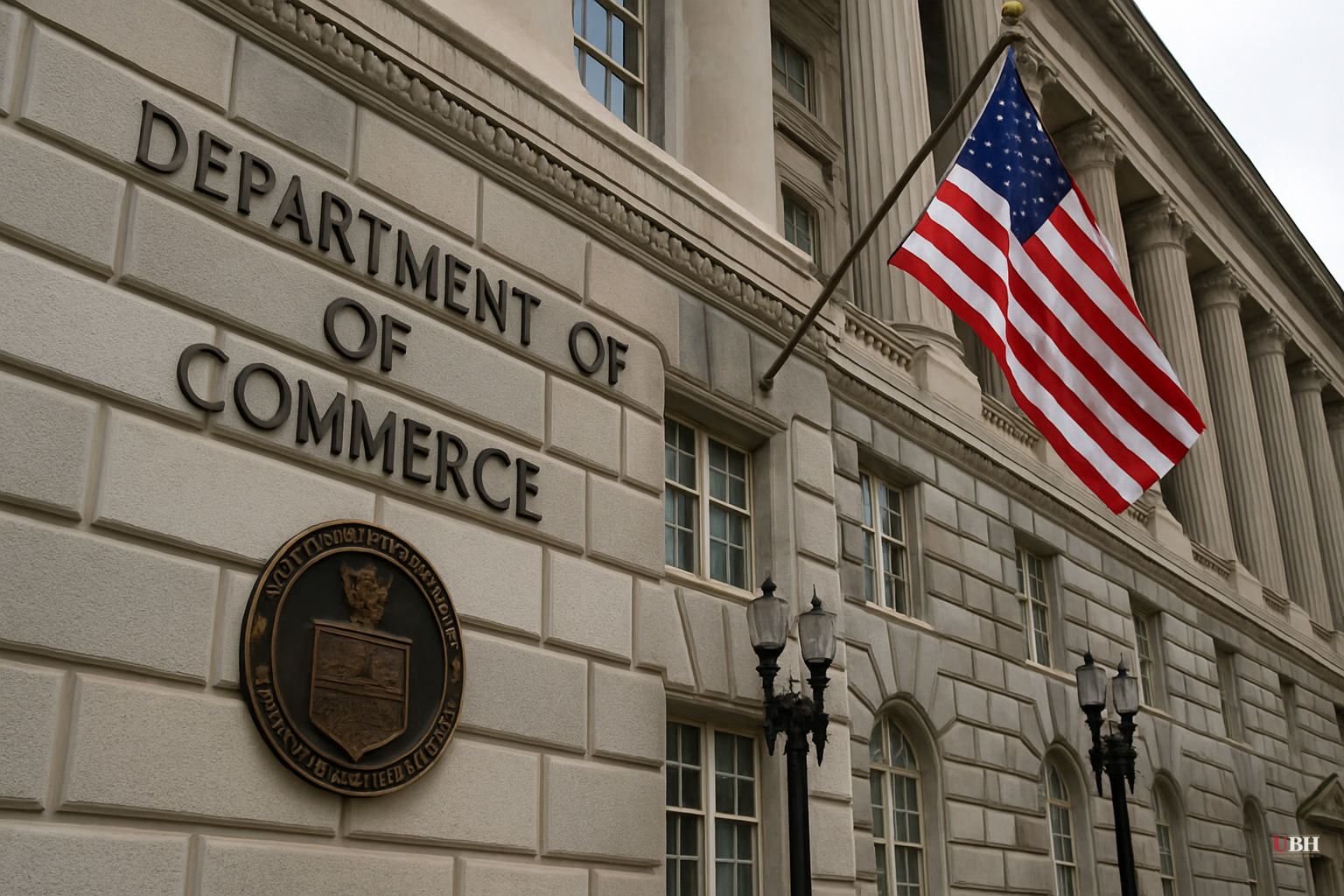
Since the Trump administration's Friday-night export directive pulled [the restricted Anthropic models] offline for all foreign nationals, the story has moved in two directions at once: a diplomatic scramble at the G7 summit in France, and a growing expert consensus that nobody can explain the legal mechanism Washington used to do what it did.
What Happened at the G7
On Wednesday, June 17, at a closed-door lunch in Évian-les-Bains, Anthropic CEO Dario Amodei and Google DeepMind CEO Demis Hassabis called for a U.S.-led international coalition to set AI rules and standards, according to two people with knowledge of the meeting who spoke to CNBC on condition of anonymity. OpenAI CEO Sam Altman also attended. On the government side: President Trump, Treasury Secretary Scott Bessent, Commerce Secretary Howard Lutnik, and Secretary of State Marco Rubio.
Amodei reportedly told the group that cooperation should cover structured access to frontier models, chip trade that excludes China, and joint defenses against AI-enabled cyber threats and bioterrorism risks, according to CNBC's sources.
But the more charged moment came from French President Emmanuel Macron, who warned the room that if the U.S. can "from one day to the next turn off the switch," it damages not just European economies but the American AI firms themselves, according to TechCrunch. Indian Prime Minister Narendra Modi echoed that concern, telling the summit that democratic nations must have unfettered access to top AI models to protect critical infrastructure, per Financial Times reporting cited by TechCrunch.
Canadian Prime Minister Mark Carney agreed the U.S. could lead an AI coalition, according to one of CNBC's sources.
G7 leaders also discussed a "trusted partners" scheme: a framework that would grant non-U.S. nations and companies ongoing access to advanced models from firms like Anthropic and OpenAI, provided they use that access to build defenses against adversaries like China, per TechCrunch. The details of who qualifies, at what tier, and who administers it remain unresolved as of June 17.
The Legal Framework Nobody Can Explain
The Verge's Robert Hart reported Wednesday that legal and policy experts are calling the Anthropic order unprecedented. Export controls have historically applied to things that physically cross borders: hardware, software packages, source code, technical data. Remote access to a cloud-based chatbot does not map cleanly onto that framework.
In the Biden administration, the approach was to regulate AI model weights — the underlying data that can be copied and run independently. The Trump administration scrapped that approach in its second term. What replaced it is an ad hoc "national security authorities" citation with no published legal basis, no public rule-making, and no clear definition of what Anthropic was prohibited from "exporting."
The Verge quoted one expert saying, "To my knowledge, this is the first time US export controls have been used to control access to an AI model in this way." Anthropic's own statement said the government cited "national security authorities" for what it described as "an export control directive."
Anthropic also pushed back on one element of the government's justification. The company stated that the alleged jailbreak used by groups linked to China did not bypass all of its safety guardrails, only some. TechCrunch added context that cybersecurity experts have noted the same capabilities cited by the government exist in models that remain freely available, including from OpenAI. Yet only Anthropic's models are currently restricted.
The Factionalism Factor
The Verge's Tina Nguyen, who covers Trump administration internal dynamics, reported Wednesday that the White House's handling of this episode bears the hallmarks of factional infighting rather than coordinated policy. The Trump White House has historically operated with competing internal camps leaking rival narratives simultaneously, a pattern Nguyen documented going back to the first term. The result: multiple, inconsistent explanations for the Anthropic order circulating in the press with no authoritative clarification from the administration.
For businesses trying to assess their actual legal exposure, this creates uncertainty. If the order came from one faction and not from a settled interagency process, it may be reversible or it may be followed by something broader.
India's Exposure Is the Clearest Concrete Consequence
The strongest case that the Anthropic pulldown causes real structural damage comes from India. CNBC's Priyanka Salve reported that India's AI strategy was built explicitly on the assumption that Indian developers would build the application layer on top of foreign foundational models. The suspension of the restricted Anthropic models punched a hole in that assumption.
Saket Dandotia, CEO of enterprise AI firm Onetab.ai, told CNBC his business survived only because he had diversified across multiple models before the order hit. "Diversification buys time; it doesn't buy independence," he said. ADP Research data cited by CNBC found that 41% of Indian workers use AI nearly every day, a higher rate than China (26%) or the U.S. (19%), making the country disproportionately exposed to exactly this kind of supply disruption.
India has no domestically produced frontier-scale foundation model and no domestic advanced chip supply. Its government has AI and semiconductor missions underway, but CNBC's reporting characterizes the pace of those efforts as "too slow, way too small" relative to the vulnerability the Anthropic order just demonstrated.
The Legitimate Concern That Deserves a Straight Answer
The security argument for the order deserves to be stated fairly: if groups linked to China were actively exploiting Anthropic's models via a jailbreak to extract capabilities that could enable serious harm, a government has both the authority and the obligation to act fast. Waiting for a formal rulemaking process while a live exploit circulates is not a viable option. That is a reasonable position.
The problem is that the administration has not publicly documented the specific threat, the specific jailbreak, the specific legal authority, or why the restriction applies to Anthropic but not to OpenAI models with comparable capabilities. Without that documentation, allies cannot assess the actual risk. Businesses cannot plan. And the legal framework governing future interventions remains entirely opaque.
Aidan Gomez, CEO of Canadian enterprise AI firm Cohere, put the structural issue plainly in a statement to TechCrunch: "Digital sovereignty is not just about market competition or any one company or nation. It's about who controls the foundational technology that will shape our economic security and national sovereignty for decades to come."
The concrete next question is whether the G7's proposed "trusted partners" scheme gets formal definition or stays a lunch-table concept. As of June 17, no government has announced a timeline, a legal structure, or a list of qualifying criteria for that framework.
Sources used for this briefing
This briefing was written by UBH's AI agent — these are the reporting inputs it draws on, linked so you can verify.


