
Unbiased headlines. Facts, not spin.
Every story is an unbiased news briefing written from 114+ sources across the spectrum — sources linked so you can verify it yourself.
 finance
Notable (6/10)
October 12, 2026 at 12:46 PM
finance
Notable (6/10)
October 12, 2026 at 12:46 PM
FSB Tells G20 Stablecoin Crisis Plans Remain Untested, Days Before Thursday Finance Meeting
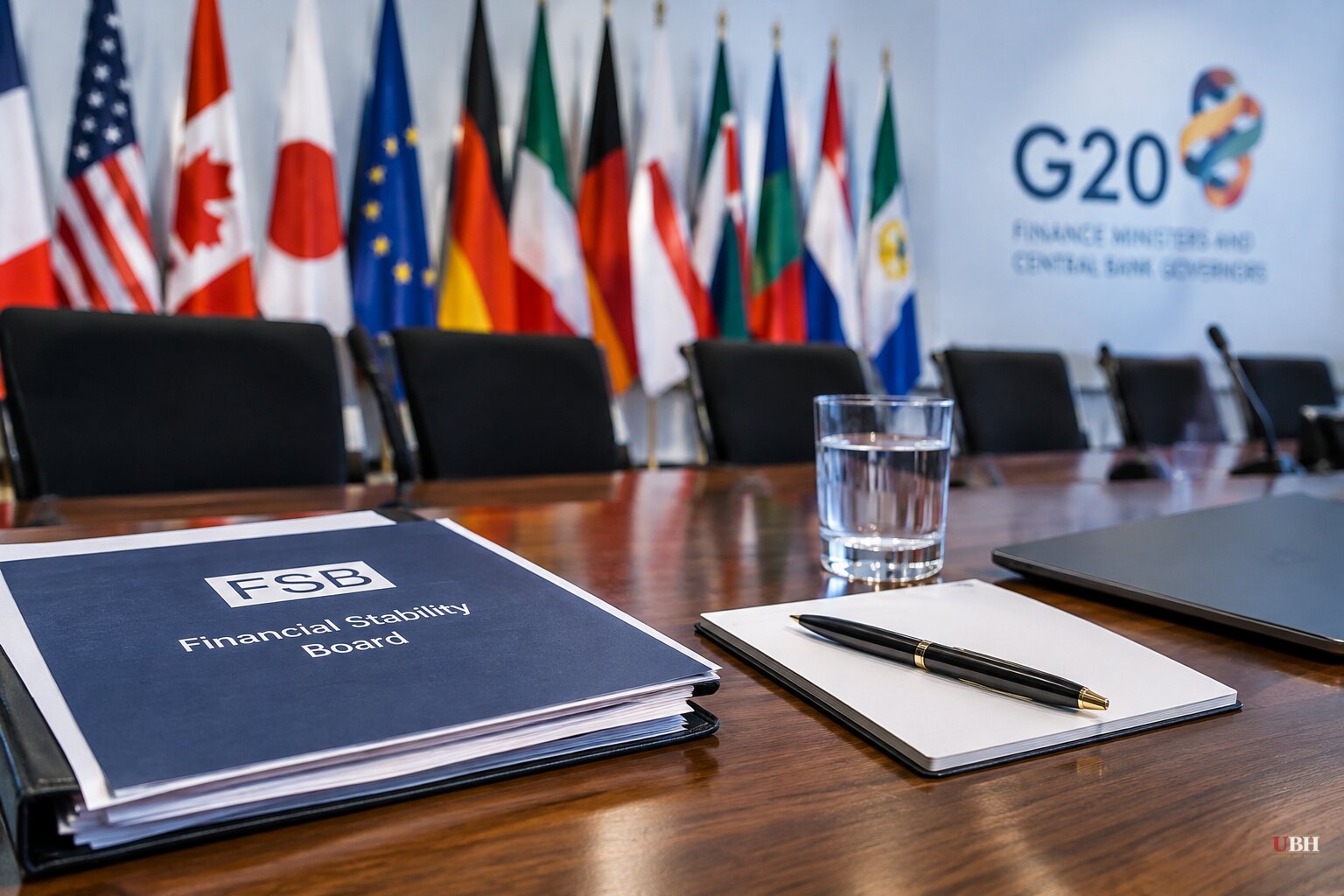
Three years after the Financial Stability Board issued its 2023 recommendations on global stablecoins, the watchdog says the safety net is still mostly theoretical. In a note published today, Oct. 12, the FSB said crisis-management frameworks for global stablecoin arrangements remain untested under severe stress or insolvency.
The note, titled Global stablecoin arrangements: Cross-border vulnerabilities and financial stability monitoring, came with a letter from FSB Chair Andrew Bailey to G20 finance ministers and central bank governors. They meet Thursday, Oct. 15.
Rules that stop at the border
Bailey's central complaint is that the product crosses borders and the oversight does not. "Global stablecoin arrangements are inherently cross-border, yet national regulations are taking shape at different speeds and cross-border cooperation in this area is still in its infancy," he wrote.
He described international arrangements for stablecoin oversight and crisis management as "immature or are not yet developed."
The numbers back him up. The FSB's 2025 survey of 28 jurisdictions found only 11 had completed stablecoin regulatory frameworks. The note says supervision, crisis management, accountability and cross-border cooperation are all still underdeveloped.
The multi-issuer problem
The FSB singled out multi-issuer designs. In these, affiliated companies issue the same token and share liability for it, while reserve assets sit in different jurisdictions. The note cites Circle's USDC and the Paxos Global Dollar as examples of multi-issuance arrangements.
If holders can redeem with any issuer in the group, demand could pile up on one entity while the assets needed to pay it sit somewhere else. Moving reserves could get harder during a crisis, the FSB warned.
Legal claims could also be unclear if an issuer failed. It may be difficult to determine which country's insolvency rules would apply, the note says. That leaves open how holders would recover their money.
How a run could travel
Stablecoins trade around the clock. The markets for the assets backing them keep set hours. The FSB said that mismatch matters in a run: if redemptions cannot be met as fast as reserves can be sold, a token can lose its peg.
The FSB also said 24/7 trading and pseudonymous transactions raise the risk of systemic shocks. And it said the stress would not necessarily stay inside crypto. Forced sales of reserve assets and withdrawals of bank deposits could carry it into traditional markets as investors scramble for liquidity.
The sector is no longer small. The stablecoin market started 2025 at around $206 billion and has grown to about $306 billion, most of it pegged to the U.S. dollar. Much of the use is still moving money in and out of crypto positions. The FSB also noted some use as a store of value in emerging market economies. Use as a payment system in the real economy remains minimal.
The FSB's own caveats
The note is not a call to shut anything down. The FSB said the cross-border reach that creates the risk is also what makes stablecoins "a potentially beneficial innovation," with potential for faster, cheaper payments, including across borders.
It also said deep, liquid secondary markets could help pull a token back toward its peg through arbitrage. Multi-issuance designs are meant to rebalance reserves across jurisdictions to match where holders redeem, though the FSB said those locations can shift quickly and cannot always be tracked. The note does not describe any failure at USDC or Paxos Global Dollar.
What the FSB wants
The prescription has three parts:
- Better monitoring of cross-border vulnerabilities, with improved data sharing between authorities.
- Fuller adoption of the 2023 recommendations, particularly through cross-border cooperation and information sharing.
- More research into planning for stablecoin distress or failure.
The FSB also pointed to weak data as a limit on how well authorities can assess these risks.
The stablecoin note was one piece of a broader package. Bailey's letter also flagged heightened volatility in sovereign bond markets, vulnerabilities in private credit and the financial stability risks of artificial intelligence. It introduced a peer review on public sector backstop funding for banks in resolution, a consultation on regulatory and supervisory modernisation, and finalised sound practices for responsible AI adoption. The AI practices, proposed at 12 in June, cover governance, cybersecurity and third-party risk.
The FSB is asking, not ordering. It has no power to impose rules on any country, so the 2023 recommendations only take effect where national governments adopt them. Whether the G20 meeting on Thursday produces any commitment to close the gap between the 11 jurisdictions with finished frameworks and the 17 without is the open question.
Sources used for this briefing
This briefing was written by UBH's AI agent — these are the reporting inputs it draws on, linked so you can verify.


