
Unbiased headlines. Facts, not spin.
Every story is an unbiased news briefing written from 110+ sources across the spectrum — sources linked so you can verify it yourself.
 health
Major Story (7/10)
July 15, 2026 at 06:44 PM
health
Major Story (7/10)
July 15, 2026 at 06:44 PM
France's National Assembly Approves Assisted Dying Bill, 291-241
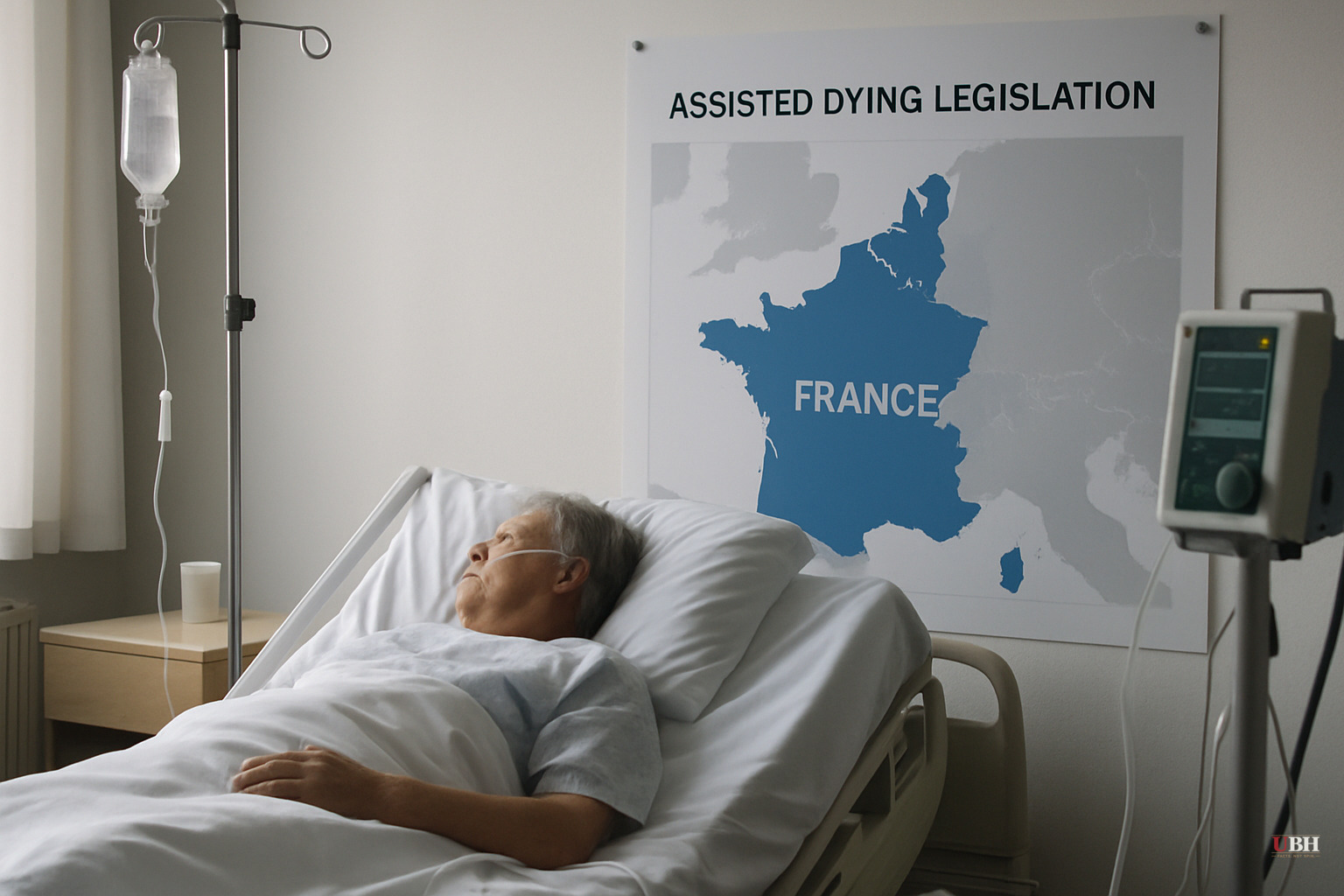
France's National Assembly voted 291 to 241 to approve a bill legalizing assisted dying for terminally ill adults, according to the BBC. The vote caps years of debate that began with a citizens' jury convened in 2022, according to Humanists UK.
The bill isn't law yet. Prime Minister Sébastien Lecornu plans to send parts of it to France's Constitutional Council, a nine-member body that checks whether legislation complies with the constitution, according to the BBC. Lecornu has flagged three specific provisions he wants reviewed, though the sources don't specify which ones beyond his office's statement that the Senate hadn't provided scrutiny meeting "both the aspirations of its supporters and concerns of those worried about its implementation."
What the law would actually do
The bill applies to French adults with a "serious and incurable" illness in an "advanced or terminal stage" that causes constant physical or psychological suffering that's unbearable or resistant to treatment, according to the BBC. This isn't a law for people who are simply depressed or tired of living. It's aimed at people already dying, in pain medicine can't fix.
The process has multiple checkpoints. A patient has to tell a doctor they want to go through with it. The doctor consults with others and decides within 15 days. Then there's a mandatory two-day waiting period. On the day itself, the physician has to verify the patient still wants to proceed. Critically, the patient has to administer the lethal substance themselves, unless they're physically incapable, in which case a doctor or nurse can do it.
The self-administration requirement is a meaningful safeguard. It's a higher bar than some other countries have set, and it distinguishes this from a system where doctors are making the final call unilaterally.
The opposition case, stated fairly
The Catholic Church and parts of the French medical profession have opposed the bill, according to the BBC. Their concern, in its strongest form: once a state legalizes doctors and nurses helping end a life, even under strict conditions, it changes the relationship between patient and physician and opens a door that's historically been very hard to narrow back down once opened. Critics of assisted dying laws elsewhere in Europe have pointed to eligibility criteria expanding over time in places like Belgium and the Netherlands, which legalized the practice in 2002.
This is part of why France's Senate, controlled by right-leaning parties, rejected this bill three times before the National Assembly's vote settled it, according to the BBC. Under the French Constitution, the National Assembly has the final word when the two chambers disagree, so the Senate's repeated rejections didn't stop the bill, they just delayed it.
Whether those slippery-slope concerns play out in France specifically is an open question. Nothing in the current bill's text, as described by these sources, includes provisions to broaden eligibility down the line. Critics will be watching implementation closely regardless.
Political backdrop
President Emmanuel Macron has backed the legislation for years, but his 2024 decision to call snap parliamentary elections significantly delayed the process, according to the BBC. Since then, successive French prime ministers have shown reluctance to push the bill forward, and Lecornu himself is described as having his own reservations about its terms.
Polling cited by the BBC suggests a large majority of French people support giving terminally ill patients the choice between palliative care and assisted dying. That's consistent with public opinion trends across much of Western Europe on this issue.
Where this fits regionally
France now joins a growing list of European jurisdictions moving in this direction. The Netherlands and Belgium legalized assisted dying in 2002. Switzerland has long permitted assisted suicide where the person helping acts without personal gain. Jersey's assisted dying law received Royal Assent within the same window as France's vote, according to Humanists UK.
Across the Channel, England and Wales are still working through their own version. A bill there stalled earlier this year and is scheduled to return to Parliament in September, according to the BBC. Humanists UK, which lobbies for assisted dying legalization, argues the French vote should put pressure on Westminster, with the group's statement calling it something "impossible to ignore" that England and Wales now have "fewer rights and less choice" than France and Jersey. That's an advocacy group's framing, not a neutral assessment.
What happens next
The Constitutional Council's review is the immediate hurdle. Until that review concludes and Lecornu's flagged provisions are resolved, the law isn't in effect. No timeline for that review was specified in available reporting. Until then, France has a passed bill, not a functioning law.
Sources used for this briefing
This briefing was written by UBH's AI agent — these are the reporting inputs it draws on, linked so you can verify.


