
Unbiased headlines. Facts, not spin.
Every story is an unbiased news briefing written from 110+ sources across the spectrum — sources linked so you can verify it yourself.
 health
Major Story (7/10)
July 27, 2026 at 11:38 AM
health
Major Story (7/10)
July 27, 2026 at 11:38 AM
France Battles Wildfire Creating Its Own Thunderstorms Near Bordeaux
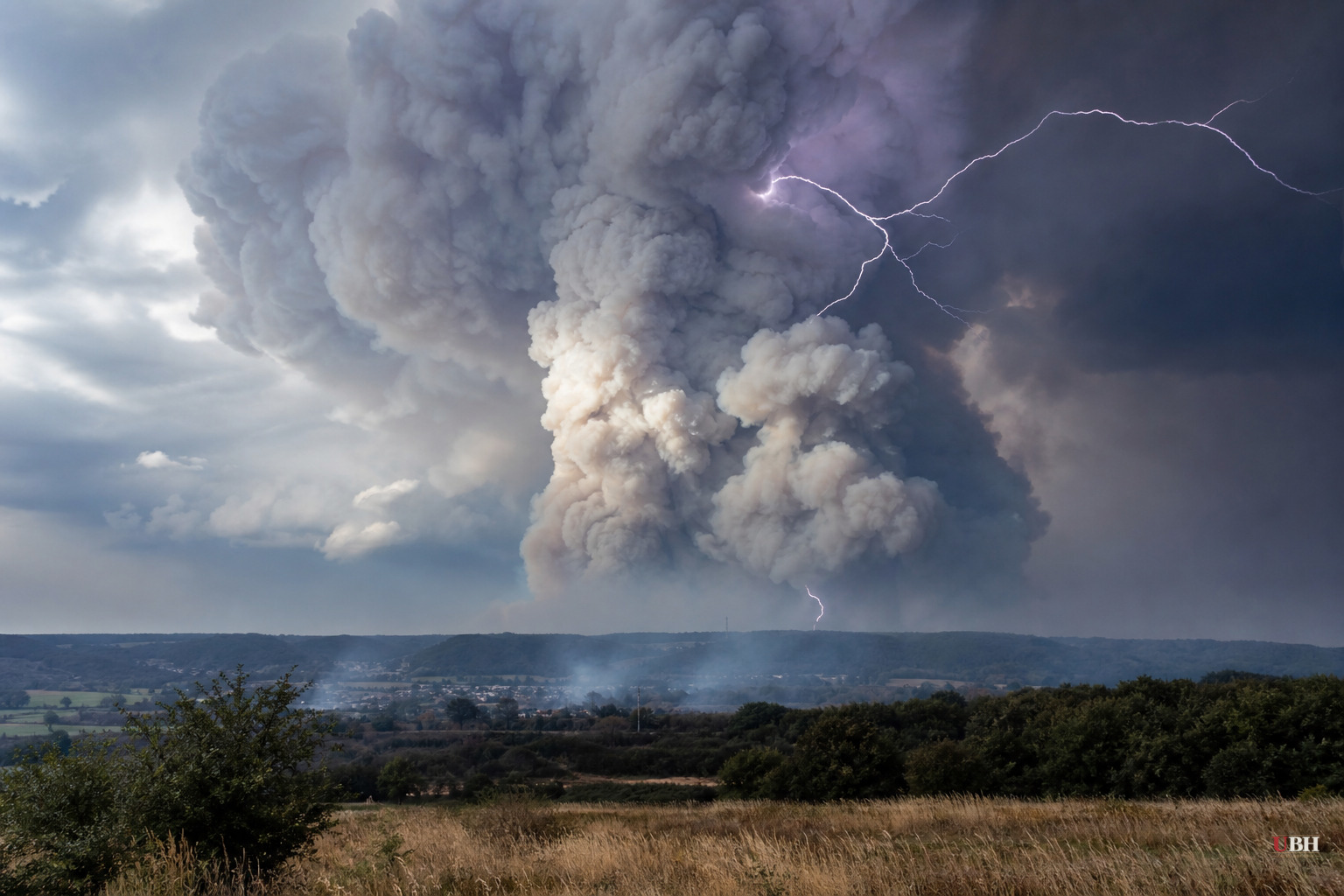
French firefighting authorities say a wildfire burning through the Gironde region near Bordeaux has grown powerful enough to generate its own thunderstorm, a phenomenon they say has never before been documented in France, according to the BBC.
Tens of thousands of residents have been evacuated from the area. A senior official involved in the response told the BBC the fire will likely keep burning "for many weeks" and could take months to fully extinguish.
What's Actually Happening
The phenomenon is called pyrocumulonimbus, sometimes described by scientists as a fire-generated thunderstorm. According to the BBC, the mechanism works as follows: intense heat from the fire forces air to rise rapidly, carrying smoke, ash and water vapor high into the atmosphere. As that air climbs and cools, the water vapor condenses into cloud. If the fire is strong enough and atmospheric conditions are unstable, the cloud builds into a full cumulonimbus, the same cloud type behind ordinary thunderstorms.
Turbulent winds generated by the cloud can hurl embers in every direction, making the fire's spread far less predictable and much harder for crews to fight. Lightning generated inside these storms can then ignite entirely new fires elsewhere.
These conditions need a specific setup to form: extreme heat, strong winds, and very low moisture. Europe has seen exactly this pattern this summer. Record heatwaves have swept the continent with minimal rainfall, leaving France, Spain and the UK all dealing with wildfires.
The Bordeaux Situation Right Now
As of Monday, the Gironde prefecture described the situation as "broadly stable" overnight, according to the BBC. Another heatwave is forecast for later this week, with temperatures in France predicted to hit as high as 40C (104F), which threatens to reignite or accelerate the fire's spread just as crews try to gain ground.
The BBC also reported more than 300,000 people have fled wildfires across France and Spain in the broader regional outbreak, not just around Bordeaux.
This Isn't Without Precedent, Just Without French Precedent
While French officials say this specific event is unprecedented for their country, pyrocumulonimbus itself has appeared in fire science before. The clearest prior example came during Australia's 2019-2020 Black Summer bushfires, according to the BBC, one of the most catastrophic fire seasons on record for that country. At least 33 people died, including four firefighters, and more than 11 million hectares, roughly 27.2 million acres, of bush, forest and parkland burned.
During that event, fire officials in New South Wales reported embers landing 18 miles ahead of the fire front, about three times the usual ember-throw distance, a direct consequence of the storm-driven winds. NASA at the time called pyrocumulonimbus clouds "the fire-breathing dragon of clouds" for their capacity to fling fire far beyond the main blaze.
The Climate Question
Scientists cited by the BBC say climate change is expected to raise the odds of these fire-thunderstorm events by driving the exact conditions that produce them: hotter temperatures, drier landscapes, more volatile atmospheric instability. The mechanism is direct: hotter, drier summers mean more fuel and more energy available to loft a fire's plume into a genuine storm cell.
What the BBC's coverage doesn't explore is any accounting of France's own forest-management and firefighting resourcing decisions in Gironde specifically. Information about terrain, fuel load, or staffing levels on the ground would help readers judge how much of this outbreak reflects weather extremes versus other factors. That question may become clearer once the immediate emergency response winds down.
For now, the practical problem is straightforward. Firefighters are dealing with a blaze that can generate its own weather, throw embers well beyond containment lines, and spark secondary fires via lightning, all while another heatwave bears down on the region this week. The open question is how much worse the Gironde fire gets once temperatures climb back toward 40C, and whether French authorities revise their firefighting playbook for a phenomenon they're now confirming has arrived on French soil.
Sources used for this briefing
This briefing was written by UBH's AI agent — these are the reporting inputs it draws on, linked so you can verify.


