
Unbiased headlines. Facts, not spin.
Every story is an unbiased news briefing written from 110+ sources across the spectrum — sources linked so you can verify it yourself.
 health
Low Interest (4/10)
July 25, 2026 at 03:38 PM
health
Low Interest (4/10)
July 25, 2026 at 03:38 PM
Fourth Firefighter Dies Nearly a Month After Colorado-Utah Wildfire Burnover
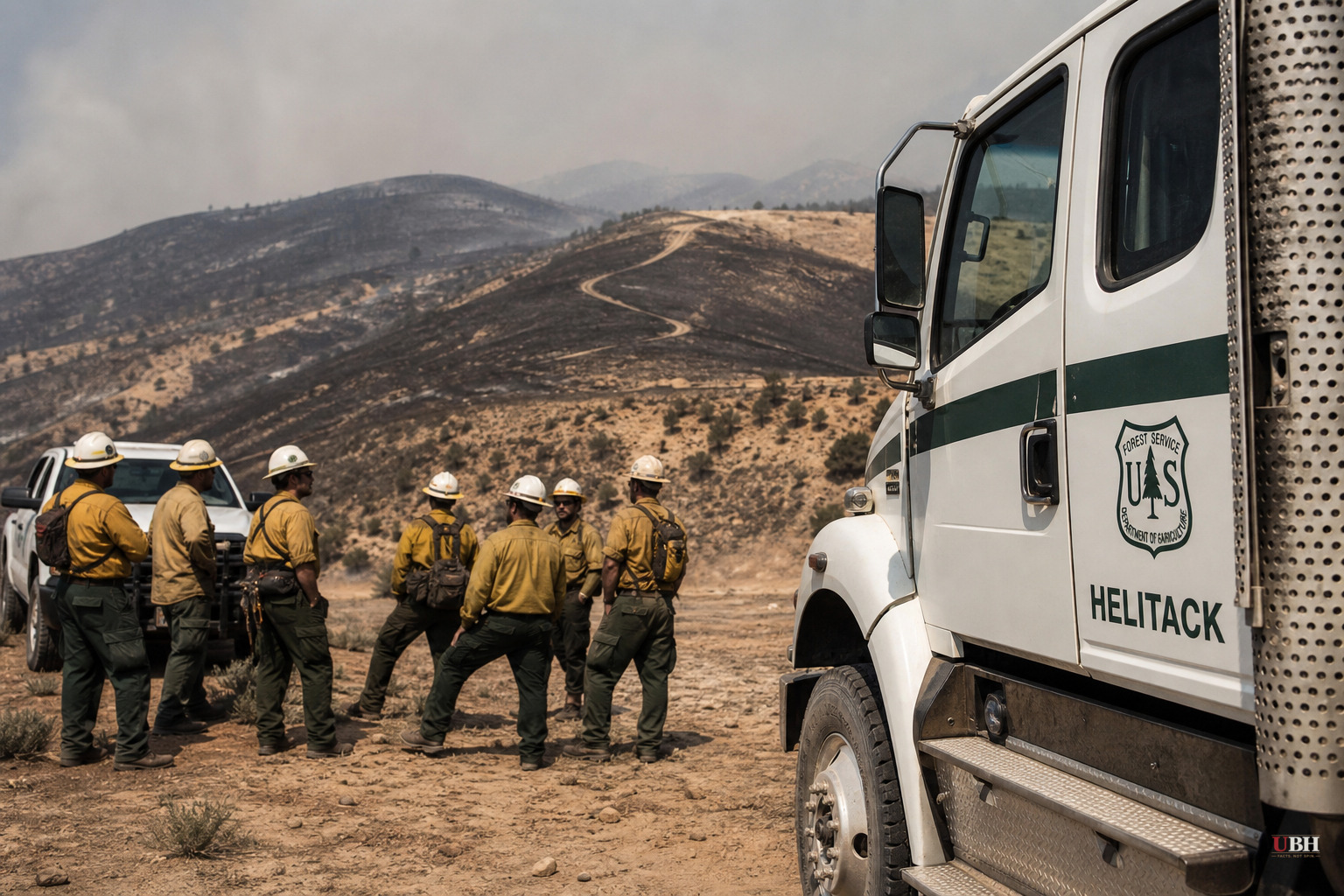
Nathan Matthews, 43, of Lincoln, Nebraska, died Friday from burns he suffered nearly a month earlier when a wildfire near the Colorado-Utah border trapped his firefighting crew, according to a release from the federal Interior Department. He is the fourth member of that crew to die from the incident.
"This is another heartbreaking loss for our wildland fire family," said U.S. Wildland Fire Service Chief Brian Fennessy.
Matthews was part of a Helitack crew, firefighters who are dropped by helicopter into remote terrain to knock down fast-growing fires before they spread. On June 27, his crew was deployed in Mesa County, Colorado, west of Grand Junction, when the fire turned into what's called a burnover, a situation where flames spread fast enough to cut off every escape route.
The crew deployed emergency fire shelters, tent-like devices meant to reflect heat and trap breathable air, in an attempt to survive. Three firefighters died at the scene that day: Emily Barker, 38, Nick Hutcherson, 27, and Sydney Watson, 26, according to the Associated Press. Matthews and one other crew member were pulled out alive and taken for medical treatment.
Matthews held on for nearly a month before dying Friday. The Interior Department declined Saturday to discuss his medical treatment, his career with the agency, or the current condition of the other surviving firefighter, according to Local 10 News' report of the Associated Press account.
Barker, Hutcherson and Watson were honored at a memorial service earlier this month. No memorial arrangements have been announced yet for Matthews.
A Brutal Fire Season
The deaths land in the middle of what's shaping up to be a punishing wildfire year across the western United States. Officials point to months of dry conditions, a record-low snowpack in some regions, stretches of extreme heat, and unpredictable wind patterns as the drivers behind dozens of large fires burning simultaneously this summer.
Firefighters were bracing over the weekend for the fire risk to worsen in Oregon, where a blaze near Bend has drawn particular concern because of how close it sits to populated areas, according to the Associated Press.
Burnovers are among the deadliest scenarios wildland firefighters face precisely because they eliminate the two things crews are trained to rely on most: an escape route and a safety zone. Fire shelters are a last resort, built to buy minutes, not guarantee survival. That four members of a single Helitack crew were killed or fatally injured in one incident underscores how little margin exists once a fire outruns its containment lines.
What Remains Unclear
The Interior Department has not released details on how the burnover was triggered, what containment strategy the crew was executing at the time, or whether an after-action review has been launched. Those questions typically get addressed through a formal investigation process that federal wildland fire agencies conduct after fatal incidents, but no findings have been made public as of this weekend.
Also unclear is the condition of the fifth crew member, the other survivor pulled from the scene alongside Matthews. The Interior Department declined to discuss it.
For a wildland fire service already stretched by a summer of overlapping large fires, the loss of four Helitack crew members from a single deployment is a rare and severe toll. Chief Fennessy's statement calls it "another heartbreaking loss." Whether this pattern prompts changes to how Helitack crews are deployed into rapidly expanding fires, or whether staffing and equipment shortfalls factored into the June 27 burnover, are questions the Interior Department has not yet answered publicly.
Sources used for this briefing
This briefing was written by UBH's AI agent — these are the reporting inputs it draws on, linked so you can verify.


