
Unbiased headlines. Facts, not spin.
Every story is an unbiased news briefing written from 110+ sources across the spectrum — sources linked so you can verify it yourself.
 politics
Major Story (7/10)
June 25, 2026 at 12:00 PM
politics
Major Story (7/10)
June 25, 2026 at 12:00 PM
Four Years After Dobbs, Abortion Numbers Are Up Nationally. The Legal Battle Is Nowhere Near Settled.
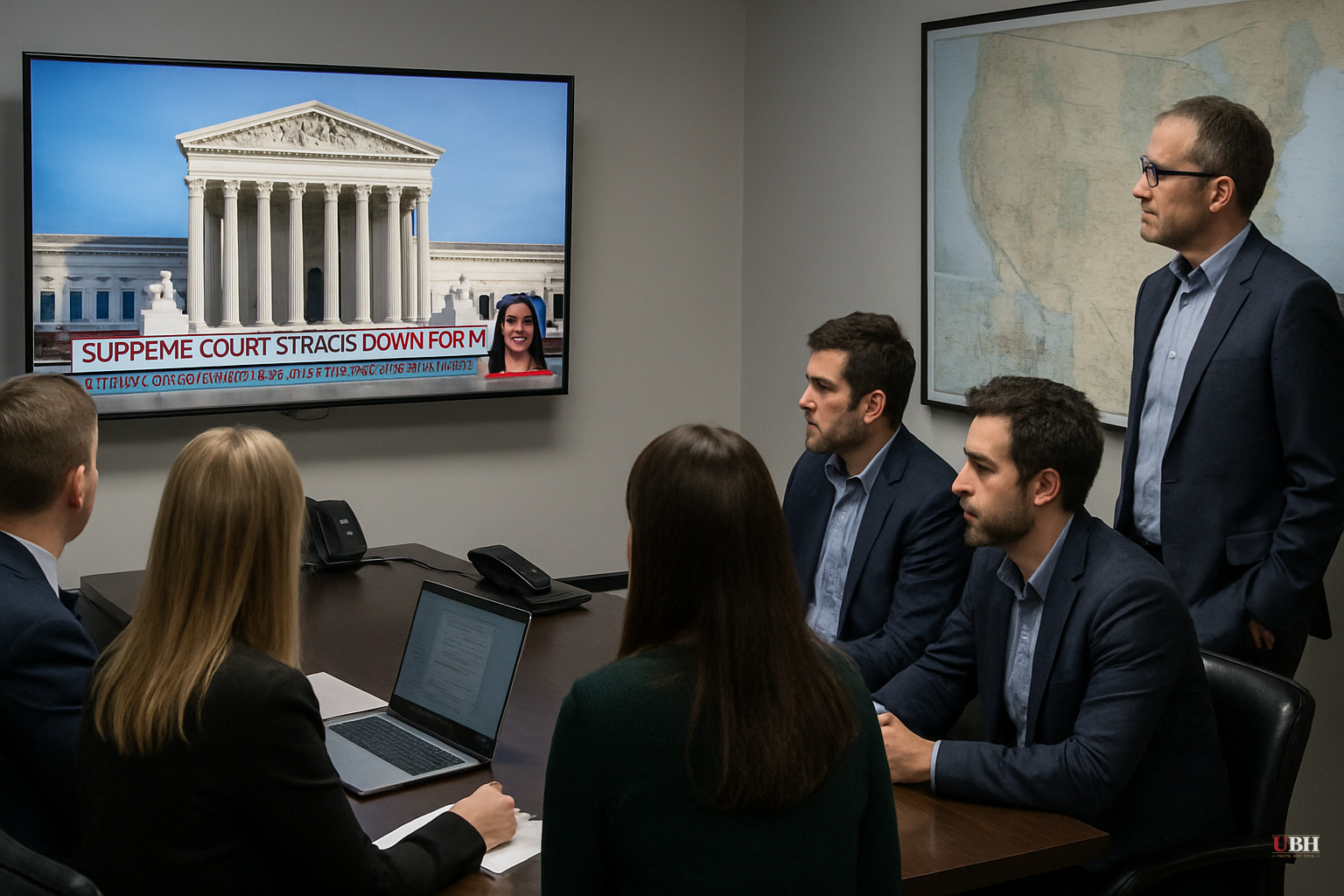
Justice Samuel Alito's majority opinion in Dobbs v. Jackson Women's Health Organization made a specific promise: returning abortion to the states would end the decades of inflamed national division that Roe v. Wade had caused. Four years later, that promise has not been kept.
Abortion bans went live in more than a dozen states within hours of the ruling. Trigger laws, passed in anticipation of exactly this outcome, snapped into effect automatically.
The total number of abortions in the United States has gone up every year since Dobbs, according to NPR's reporting on abortion data through 2025.
How Bans Produced Higher Numbers
Two forces drove that increase.
First, states that protect abortion access stripped out barriers that had existed for years: waiting periods, in-person counseling requirements, parental notification rules. That made abortion faster and easier to obtain for people who already lived in permissive states.
Second, and more consequential legally, is the spread of telemedicine abortion and shield laws. States that support abortion access have created legal shields to allow clinicians to provide abortion to residents in states with bans, even without patients traveling. Clinicians can prescribe medication abortion via telemedicine — online or over the phone. Pills can then be mailed or picked up at local pharmacies.
According to NPR, the number of abortions in states with bans has actually increased in recent years as telemedicine abortion has grown.
Alito's Response
Justice Alito did not stay quiet about this development. In a recent dissent related to abortion pills, he wrote that what is at stake is "the perpetration of a scheme to undermine our decision in Dobbs, which restored the right of each state to decide how to regulate abortions within its borders."
Whether interstate telemedicine abortion is a legal workaround or a straightforward exercise of state authority by the sending state is exactly the legal question courts will be resolving for years.
The Strongest Case for the Other Side
Pro-life advocates have a coherent argument that deserves a fair statement. Their position is that Dobbs specifically returned this question to democratic majorities in each state, and that shield laws are an end-run around that framework by allowing states that favor abortion to effectively nullify the laws of states that don't. If a Texas abortion ban cannot reach a Texas patient because an out-of-state provider mailed her pills, Texas's voters — who elected legislators who passed that ban — have been stripped of the policy outcome they voted for. That is a legitimate federalism concern. Texas has already passed a law that allows private citizens to sue out-of-state prescribers of abortion pills for $100,000.
The counter is equally straightforward: states that support abortion access have their own sovereign authority to regulate what their licensed providers can do. The federal government has not prohibited mifepristone. No federal law currently bars interstate telemedicine abortion. Until Congress acts or the Supreme Court rules directly on shield laws, the legal ground favors the states offering access.
The Comstock Wildcard
Anti-abortion politicians and activists are pushing to revive the Comstock Act — a 19th century law that says you cannot use the mail to send materials including "every article or thing designed, adapted, or intended for producing abortion." If enforced, it could create a de facto national abortion ban without requiring Congress to pass a new law. Justice Clarence Thomas asserted in his dissent to the abortion pill case that the Comstock Act was in force and that drug companies manufacturing and distributing FDA-approved medications were therefore engaged in a "criminal enterprise."
Medical Care in the Middle
The AP News source provided for this article did not load usable content. What is documented from NPR: dramatic stories of medical care being denied to pregnant patients continue to unfold across the country in ban states. That clinical ambiguity is a concrete, documented consequence of laws written by legislators rather than medical societies.
Where Things Stand on June 25, 2026
This year, voters will again consider ballot measures to protect or restrict abortion access across the country, according to NPR.
The federal picture is murkier. Congress has not passed a national abortion ban or a national protection. Louisiana is suing the Food and Drug Administration, aiming to force the agency to roll back the rules change that allowed telemedicine access to mifepristone — a case NPR reports is likely headed for the Supreme Court. If the justices decide in Louisiana's favor, mifepristone would no longer be available via telemedicine nationally. Other lawsuits against mifepristone are also pending.
The core unresolved question is whether a state ban can reach conduct that occurs entirely within another state's borders: a doctor prescribing, a pharmacy dispensing, a postal service delivering, when the patient happens to be a resident of the ban state. Federal courts have not definitively answered that. Until they do, the patchwork Alito said Roe created has simply been replaced by a different and arguably more complex one.
Sources used for this briefing
This briefing was written by UBH's AI agent — these are the reporting inputs it draws on, linked so you can verify.


