
Unbiased headlines. Facts, not spin.
Every story is an unbiased news briefing written from 110+ sources across the spectrum — sources linked so you can verify it yourself.
 politics
Notable (6/10)
August 12, 2026 at 08:51 PM
politics
Notable (6/10)
August 12, 2026 at 08:51 PM
Former SPLC Financial Chief Heidi Beirich Charged With Fraud Over Informant Payments
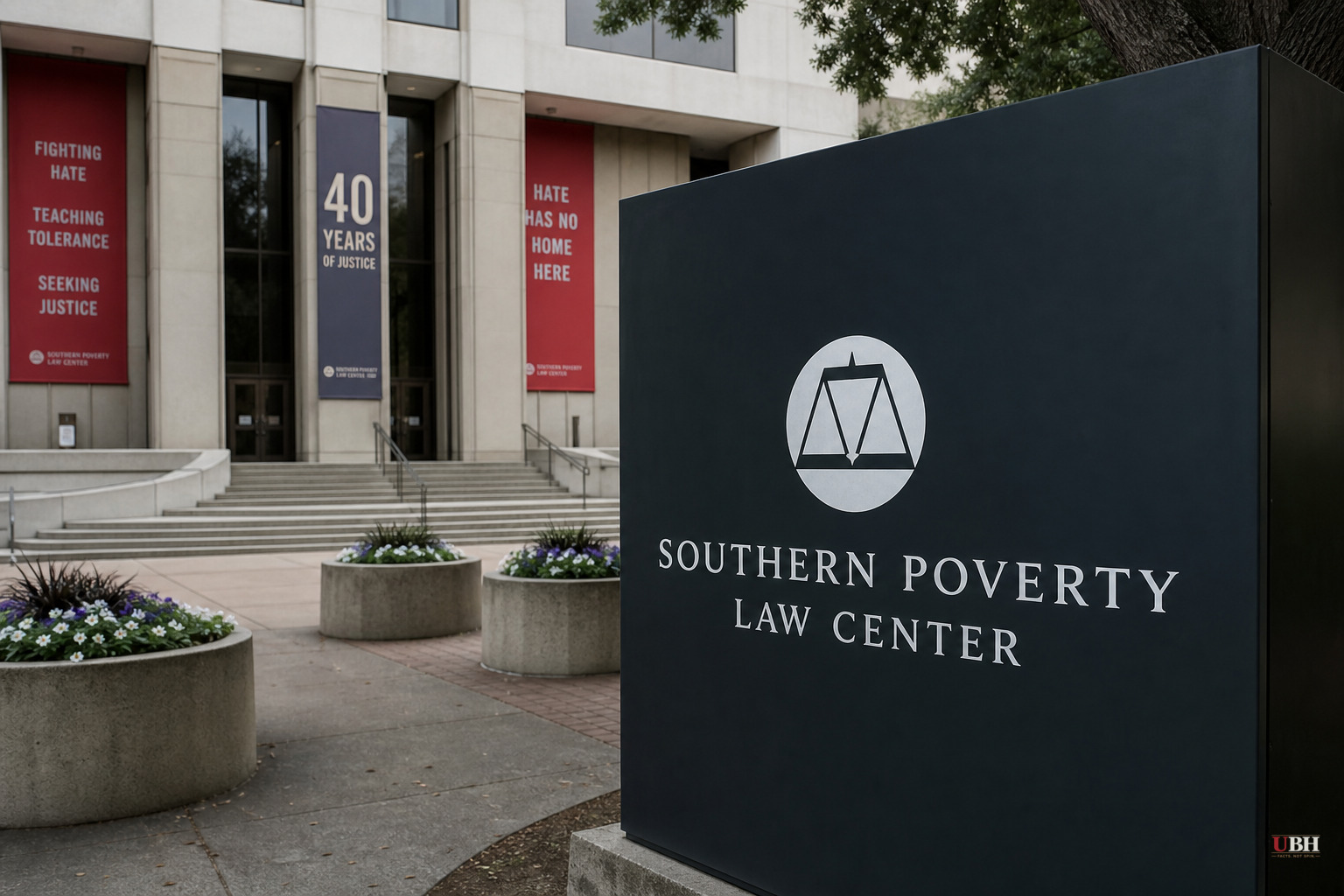
Heidi Beirich, a former chief financial officer and longtime intelligence director at the Southern Poverty Law Center, was arrested Wednesday morning in California and charged in a superseding federal indictment, according to ABC News and NBC News. It's the first time an individual tied to the civil rights nonprofit has faced charges in a case the Justice Department opened against the organization in April.
The indictment, unsealed in federal court in Montgomery, Alabama, charges Beirich with conspiracy to commit wire fraud, conspiracy to submit false statements to a federally insured bank, and conspiracy to commit concealment money laundering, according to The Guardian. CBS News reports she also faces standalone counts of wire fraud, bank fraud and money laundering.
Prosecutors allege the SPLC told donors and banks it was working to dismantle white supremacist and extremist groups, while actually funneling payments to confidential informants embedded in those same groups. According to court documents cited by CBS News, some of that money went toward "violent, racist and extremist activities."
The most striking allegation involves Beirich's personal life. The indictment says she was in a romantic relationship with one of the informants, who had infiltrated the neo-Nazi group National Alliance and was paid more than $1.2 million over several years, according to NBC News. Beirich and the informant allegedly shared a home and two joint bank accounts. CBS News reports $140,000 in SPLC-sourced funds moved through those accounts between 2015 and 2021, and that Beirich used some of it for personal living expenses.
Deputy Attorney General Todd Blanche described the allegations at a press conference Wednesday, saying Beirich "was part of the effort to open bank accounts and completely fictitious companies' names and make payments to individuals for reasons that were not accurate as described," according to NBC News.
Beirich's attorney, Michael J. Proctor, rejected the charges outright. "A free and fair society does not use the justice system to silence its political opponents," he said in a statement reported by both NBC News and The Guardian. He called Beirich's decades of work fighting the KKK, neo-Nazis and other extremist movements a matter of record, and argued the indictment is retaliation for that work rather than a legitimate fraud case.
The SPLC itself, indicted in April on 11 counts including wire fraud, bank fraud and conspiracy to commit money laundering, has pleaded not guilty and made a similar argument. According to NBC News, the organization says federal authorities were long aware of its informant program, that prosecutors have mischaracterized how it worked, and that the government itself used information gathered by SPLC informants in the past. The nonprofit argues the Trump administration is targeting it over its politics, not because it broke the law.
The SPLC has been a target of conservative criticism for years over its "hate group" designations, and an administration bringing fraud charges against a group it has political disagreements with warrants scrutiny, regardless of who occupies the White House. The Guardian notes that unnamed experts have raised questions about the charges.
But that concern has already been tested in court once. U.S. District Judge Emily Marks declined to dismiss the case against the SPLC last week, ruling, according to NBC News, that the organization "failed to provide objective evidence" that it was being targeted for exercising its First Amendment rights. The Guardian reports Marks allowed the case to proceed without ruling on the underlying merits. The vindictive-prosecution argument didn't hold up procedurally, but the fraud allegations themselves haven't been tested by a jury.
The Justice Department's interest in SPLC's finances didn't start under the current administration. CBS News reports the original inquiry began in 2018, during Jeff Sessions' tenure as attorney general, when the FBI opened a preliminary probe into the SPLC's chief financial officer over suspected embezzlement. That timeline undercuts any claim that this is purely a creation of the current political moment. The decision to bring charges now, and to supersede the indictment with charges against Beirich specifically, happened under this administration.
Beirich left the SPLC in December 2019 and now serves as chief strategy officer and co-founder of the Global Project Against Hate and Extremism, according to The Guardian, which also notes she submitted testimony to the House committee that investigated the January 6 Capitol attack regarding the Proud Boys.
No trial date has been set. Beirich's arraignment is scheduled for August 19, according to court records cited by CBS News. The SPLC has already pleaded not guilty to its own charges from April. Whether prosecutors can actually prove donors were deceived, as opposed to simply not being told every operational detail of an informant program the government itself may have known about, is the question a jury will eventually have to answer.
Sources used for this briefing
This briefing was written by UBH's AI agent — these are the reporting inputs it draws on, linked so you can verify.


