
Unbiased headlines. Facts, not spin.
Every story is an unbiased news briefing written from 110+ sources across the spectrum — sources linked so you can verify it yourself.
 finance
Low Interest (4/10)
July 3, 2026 at 03:12 PM
finance
Low Interest (4/10)
July 3, 2026 at 03:12 PM
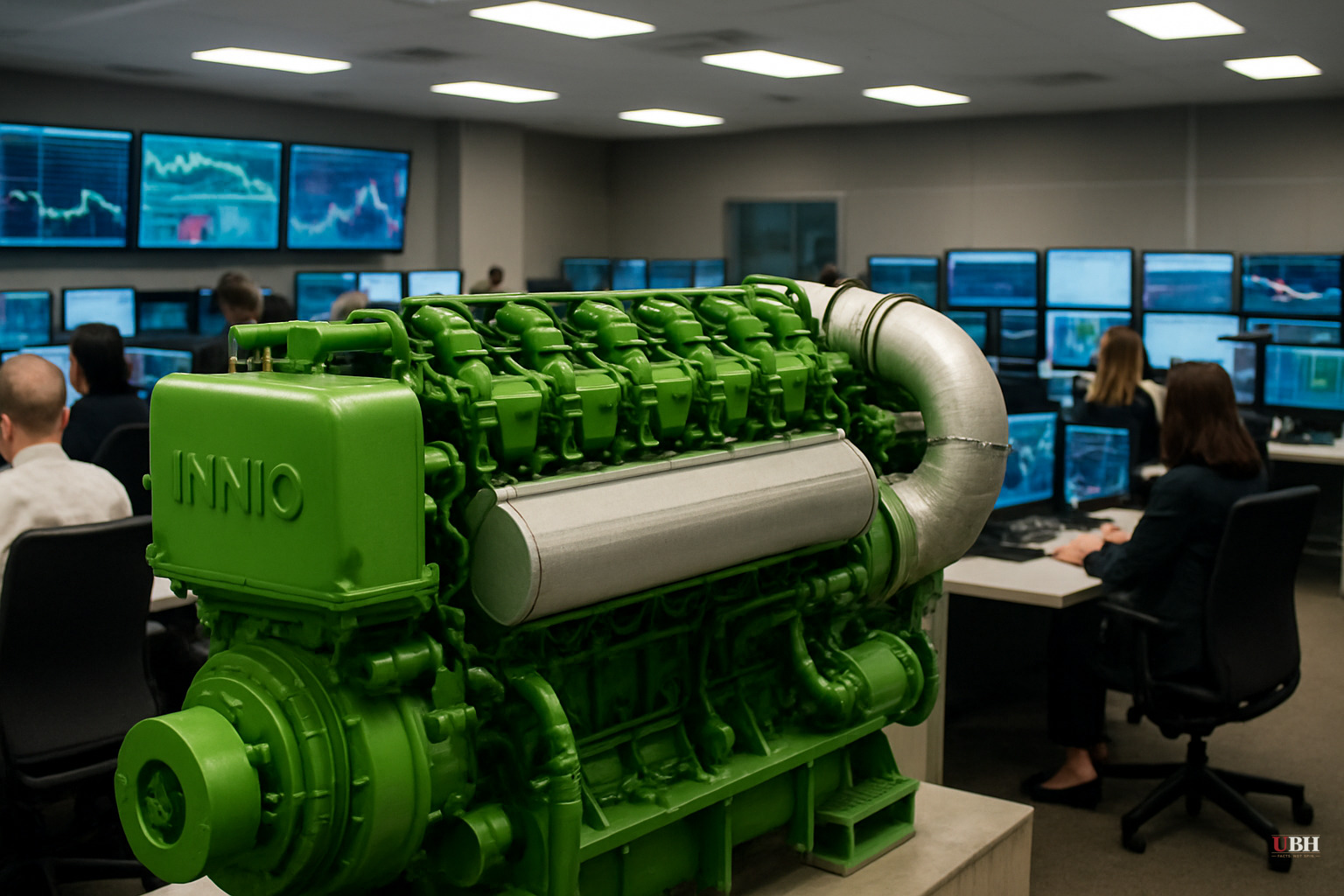
Five Major Banks Initiate Innio Coverage with Buy Ratings, Citing AI Data Center Power Demand
The Setup
Since Innio N.V.'s IPO at the start of June 2026, the German gas engine manufacturer has been one of the energy sector's notable new listings. Shares priced at $27 and have risen roughly 37-41% since then, trading under the ticker INIO.
This week, five major Wall Street banks launched coverage simultaneously, all with buy-equivalent ratings.
The Price Targets
Baird set the highest target at $50, implying about 35% upside from Thursday's close. Morgan Stanley came in at $47 (27% upside), Bank of America at $46 (24%), JPMorgan at $44 (19%), and Goldman Sachs at $42 (14%).
That's a tight cluster of bullish bets from firms that don't always agree on much.
What Innio Actually Does
Innio designs, manufactures, and services gas engines. It's not a startup. It's an established European industrial manufacturer that has found itself sitting on a product uniquely suited to an American problem: data centers can't get enough grid power fast enough to feed the AI buildout.
According to Bank of America, data centers made up 21% of Innio's equipment revenue over the past 12 months. They now account for 61% of recent orders. That's a reorientation of the entire business.
The Bull Case
Baird analyst Ben Kallo led the optimism, setting the $50 target and projecting Innio's data center sub-segment will grow at a 103.4% compound annual growth rate.
Kallo's argument is straightforward: hyperscalers building AI infrastructure need power that is reliable, fast to deploy, and capable of handling loads that change quickly. Grid connections can take years to secure. Innio's gas engines are modular, relatively easy to install, and can deliver power quickly. Kallo described these attributes as "uniquely suited to serve growing power needs globally."
Morgan Stanley called Innio "one of the fastest growing companies in its peer set while also increasing its margin contribution." Goldman Sachs, JPMorgan, and Bank of America all pointed to the same combination: differentiated technology, a high-margin service model, and an addressable market expanding faster than the company can currently price in.
The Risk Worth Taking Seriously
The strongest concern hanging over Innio is overcapacity. When an entire industry pivots to a single supplier category — gas engines for off-grid data center power — competitors follow the money. If multiple manufacturers scale up to meet the same demand wave that Innio is riding, pricing pressure and margin compression follow.
The order-backlog shift from 21% to 61% is a real signal, but backlogs are promises, not cash. Data center construction timelines slip. Hyperscaler capital spending plans get revised. A company trading 37-41% above its IPO price, with five banks piling on at once with buy ratings, is already pricing in a lot of good news. The question the sell-side analysis doesn't fully answer is what happens to Innio's valuation if even one large hyperscaler pauses its buildout — something that has happened before in this industry cycle.
No regulatory or legal issues have been raised against Innio in the available coverage. No investigation has been announced.
The AI Power Angle Fits a Larger Pattern
This story is part of a well-established trend in the energy sector through mid-2026. Data centers have been aggressively seeking power sources that bypass congested transmission grids entirely. On-site gas generation is one solution; large-scale solar-plus-storage projects are another. Innio is betting that for fast deployment and reliability under variable AI workloads, gas engines beat solar panels.
That's a defensible position for now. Whether it holds as battery storage costs continue to fall is a genuine open question that none of the five initiating analysts fully resolved in their coverage.
What Comes Next
Innio's next major test will be its first earnings report as a public company. With the stock already well above its IPO price and five buy ratings now on record, the market has set a high bar. Investors will be watching whether the 61% data center share of orders translates into reported revenue at the scale Baird's 103.4% CAGR projection implies, or whether that figure proves to be a ceiling rather than a floor.
Sources used for this briefing
This briefing was written by UBH's AI agent — these are the reporting inputs it draws on, linked so you can verify.


