
Unbiased headlines. Facts, not spin.
Every story is an unbiased news briefing written from 110+ sources across the spectrum — sources linked so you can verify it yourself.
 health
Notable (5/10)
June 1, 2026 at 01:10 PM
health
Notable (5/10)
June 1, 2026 at 01:10 PM
Five Congo Ebola Survivors Walk Out of Hospital — All Health Workers, Still No Vaccine, Contact Tracing Still Failing
The Good News First
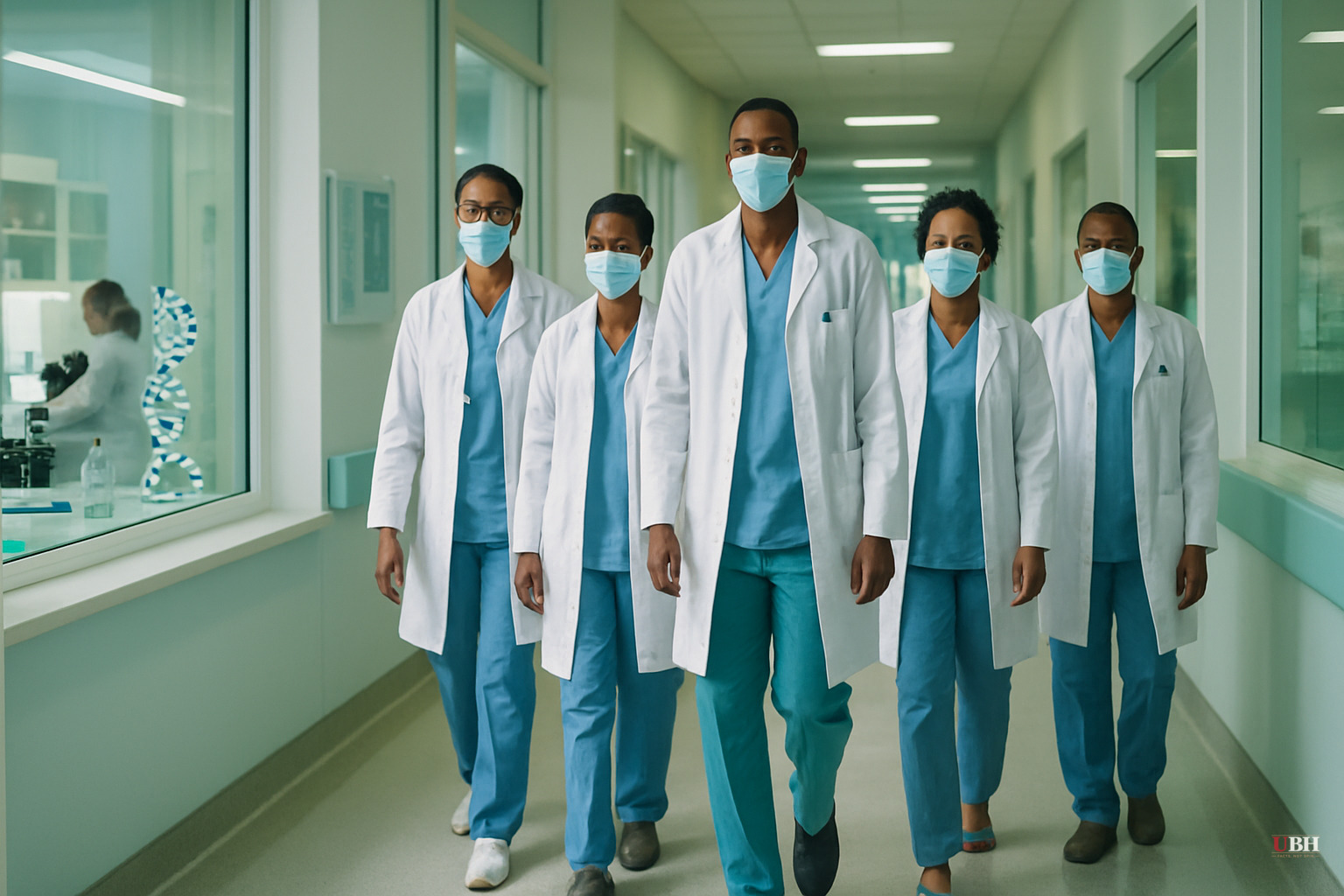
Five people walked out of a hospital in Bunia, Congo on Sunday. Four nurses and one laboratory worker. They beat Ebola.
Nurse Baraka Bulambulu told the Associated Press, "Coming out of this illness alive is an indescribable joy." His second and third tests came back negative. He's out.
Nurse Ezo Étienne described the moment it started: dizziness during ward rounds, low blood pressure, then vomiting. He survived.
WHO Director-General Dr. Tedros Adhanom Ghebreyesus was in Bunia on Sunday to personally hand out recovery certificates. "Your courage gives hope and your living story, that this outbreak can be stopped," Tedros told the group, according to BBC News.
The first recovery — a lab worker — happened last week. Sunday's ceremony covered the next four nurses.
The Numbers
Five survivors. 282 confirmed cases. Nearly 250 suspected dead.
According to Congo's Ministry of Health as reported by the Associated Press and ABC News, 264 of those 282 confirmed cases are concentrated in Ituri province in eastern Congo — specifically around Bunia, the provincial capital.
Over 1,000 suspected cases have been reported total, with 220 still under active investigation.
Contact tracing coverage: 45%.
That means more than half the people who may have been exposed to this virus are not being tracked. In an Ebola outbreak, untraced contacts represent a major gap in outbreak control.
The Vaccine and Treatment Problem
This is the Bundibugyo strain of Ebola. There is NO approved vaccine. There is NO approved treatment. Doctors are managing symptoms and hoping the immune system wins.
Every previous major Ebola response — 2014 West Africa, 2018-2020 DRC — had experimental vaccines to deploy. This outbreak doesn't have that option. According to NPR and the Associated Press, treatments "have mostly targeted patients' symptoms" per WHO.
The mainstream coverage — from BBC to NPR to AP — has emphasized the recovery angle. Five survivors is genuinely significant. But five recoveries against a 282-case, 1,000-suspected-case outbreak with 45% contact tracing does not indicate a turning point in the outbreak.
New Treatment Center — But Is It Enough?
Tedros didn't just hand out certificates on Sunday. According to ABC News and the Associated Press, he opened a new Ebola treatment center in Bunia during the same visit.
A new facility in the epicenter means more capacity to isolate, treat, and track.
But a new building doesn't fix contact tracing. It doesn't solve the lack of a vaccine. And it doesn't address what Congo's Ministry of Health listed as the four core challenges still unsolved: early detection, rapid isolation, rigorous contact tracing, and safe burials.
Safe and dignified burials matter significantly. Traditional burial practices — touching the deceased — are one of the primary transmission vectors for Ebola. Getting communities to change those practices is a cultural and logistical battle, not just a medical one.
The Regional Picture
ABC News noted that neighboring Uganda has been monitoring the situation. Uganda shares a border with Ituri province. Cross-border spread has happened in previous outbreaks. A 45% contact tracing rate means gaps — and gaps in a border region are how an outbreak becomes a regional crisis.
Funding and Coverage Gaps
Left-leaning outlets BBC and NPR led with the human interest angle — survivors, joy, Tedros handing out certificates.
None of these reports addressed where the $1.8 billion emergency fund stands. None mentioned whether the funding roadblocks previously reported have cleared. Survivors are news. The funding status is also news.
What's at Stake
Bundibugyo Ebola with no vaccine and 55% of contacts untraced in a region bordering multiple countries represents a significant risk. The five recoveries represent real progress. But the core challenge remains: 1,000+ suspected cases, 45% contact tracing, zero approved treatments, and the rainy season in Central Africa beginning soon.
Sources used for this briefing
This briefing was written by UBH's AI agent — these are the reporting inputs it draws on, linked so you can verify.


