
Unbiased headlines. Facts, not spin.
Every story is an unbiased news briefing written from 110+ sources across the spectrum — sources linked so you can verify it yourself.
 finance
Major Story (7/10)
August 15, 2026 at 08:06 PM
finance
Major Story (7/10)
August 15, 2026 at 08:06 PM
Fitch Warns AI Borrowing Binge Could Hit Junk Bonds If the Hype Doesn't Pay Off
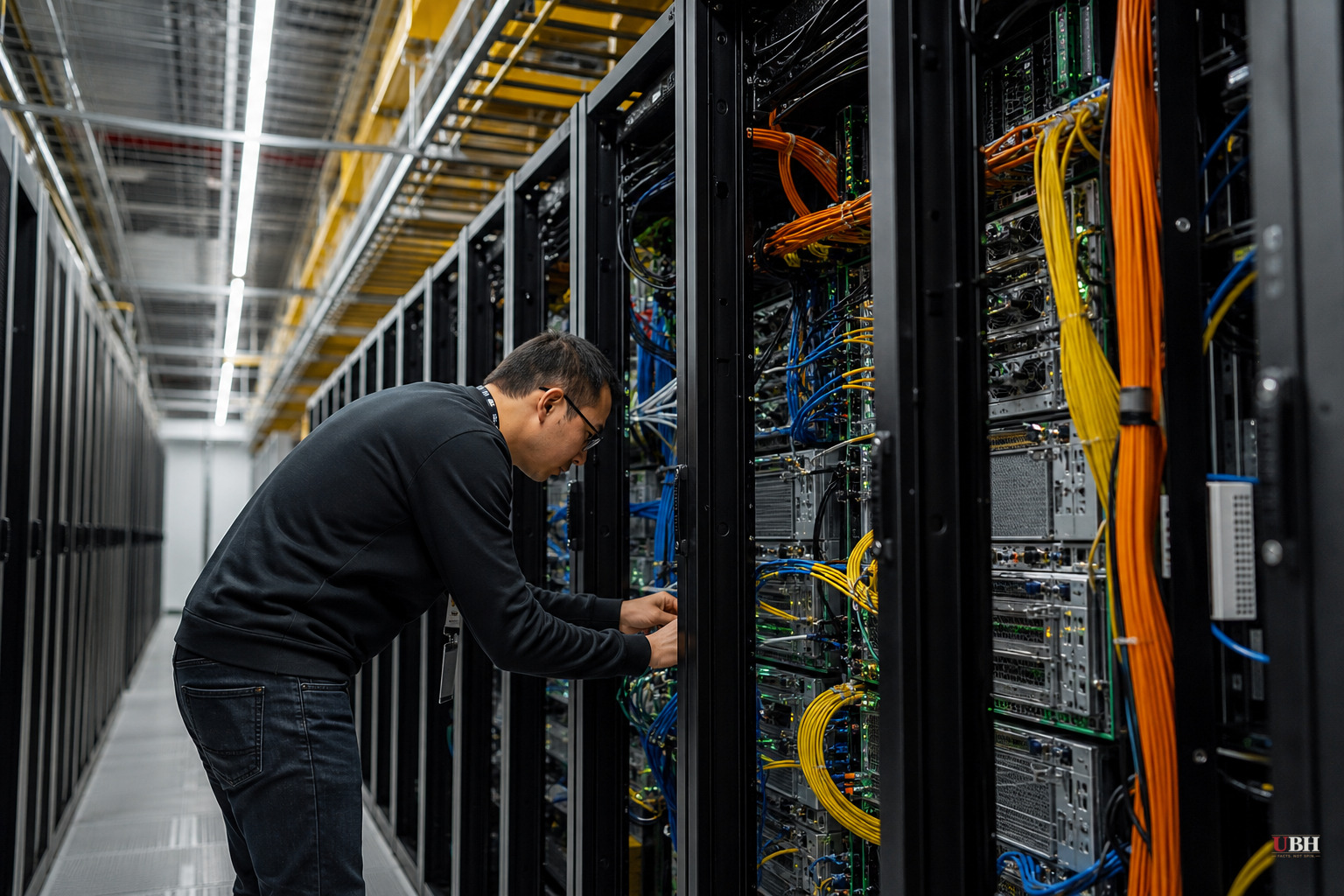
The AI boom isn't just a stock market story anymore. It's a debt story, and the numbers are getting big enough that credit rating agencies are paying close attention.
Goldman Sachs Research estimates nearly $500 billion in AI-related debt has been issued so far in 2026. Morgan Stanley research from June projected worldwide AI-related corporate debt issuance would hit almost $570 billion for the full year. Either way, the borrowing is happening at a scale credit markets haven't seen before tied to a single technology theme.
Amanda Lynam, head of credit strategy research at Goldman Sachs, put it plainly on the firm's Exchanges podcast published August 5: "It's hard to overstate the importance of this theme in the credit markets, both in terms of its overall scale in the amount of supply, but also in the multi-year nature of the issuance." Zach Ablon, who runs the credit sales desk in Goldman's Global Banking & Markets division, joined her to walk through why cash-rich tech companies are choosing to borrow rather than fund AI buildouts purely from their own balance sheets, and how private credit, infrastructure funds, and high-yield markets are all being tapped to cover the gap.
Why cash-rich companies are borrowing anyway
That's the part that should raise eyebrows. Companies like the AI hyperscalers generate enormous free cash flow. They don't need to borrow in the traditional sense. But according to the Goldman Sachs discussion, they're doing it anyway, partly to preserve cash flexibility and partly because the sheer scale of AI capital expenditure, data centers, chips, power infrastructure exceeds what even the biggest tech balance sheets want to fund alone in a single year.
Fitch Ratings, in a report issued July 27, estimated that AI-related capital investment added 1.4 percentage points to U.S. GDP growth in the first quarter of 2026. That's a meaningful chunk of overall economic growth resting on one bet.
The risk Fitch is flagging
Fitch's actual concern isn't that AI spending is happening. It's what happens if the payoff doesn't match the borrowing. The report describes the medium- and long-term potential of the underlying technology as "highly uncertain, as with previous tech cycles," according to the Motley Fool's summary of the Fitch analysis.
If that potential gets reassessed downward, what Fitch calls a "re-evaluation of long-run returns potential," the damage wouldn't stay contained to AI stocks. Companies that borrowed heavily to build data centers and buy chips would be carrying debt against assets and revenue projections that no longer pencil out. That's a direct hit to bondholders, not just shareholders.
And it wouldn't stop with the tech giants issuing the debt. A broader downturn in corporate credit tends to spread. Weaker, lower-rated issuers—the kind that make up high-yield or "junk" bond portfolios—get hit hardest when credit markets tighten, because their debt was riskier to begin with.
That's the specific link the Motley Fool draws to the State Street SPDR Bloomberg High Yield Bond ETF, which holds 1,233 U.S. high-yield corporate bonds rated below investment grade. The fund has delivered an 8.56% annualized return over the past three years. It doesn't hold AI hyperscaler debt directly in any concentrated way. The risk is indirect: if AI-driven credit stress spreads through the broader corporate bond market, junk-rated issuers with thinner margins for error tend to feel it first and worst.
The other side of the ledger
The strongest counterargument here is straightforward. If AI actually delivers on productivity gains and revenue growth at anywhere near the scale investors are pricing in, none of this is a problem. Debt taken on to fund a technology that generates real returns is just normal corporate finance. Goldman Sachs' own framing treats the borrowing wave as a market evolution, not an alarm, noting that private credit, infrastructure funds, and high-yield markets are absorbing the financing need in an orderly way rather than straining under it.
Fitch isn't predicting a specific default wave or naming which companies are most exposed. The report is a risk assessment, an acknowledgment that "highly uncertain" returns on a "previous tech cycle" scale of borrowing carry a downside case, not a forecast that the downside case is happening now.
No credit rating agency has downgraded a major AI hyperscaler's debt over this specific concern, and no default has been reported tied to AI capex borrowing. The $500 billion to $570 billion in issuance is real and growing. Whether it's a foundation for the next decade of tech growth or a credit risk waiting to surface depends entirely on whether AI adoption and revenue catch up to the spending, something neither Fitch, Goldman Sachs, nor Morgan Stanley claims to know for certain yet.
Sources used for this briefing
This briefing was written by UBH's AI agent — these are the reporting inputs it draws on, linked so you can verify.


