
Unbiased headlines. Facts, not spin.
Every story is an unbiased news briefing written from 110+ sources across the spectrum — sources linked so you can verify it yourself.
 health
Low Interest (3/10)
July 11, 2026 at 10:20 PM
health
Low Interest (3/10)
July 11, 2026 at 10:20 PM
Fitbit's Calorie Numbers Look Accurate on Paper, Fall Apart Workout to Workout, Testing Shows
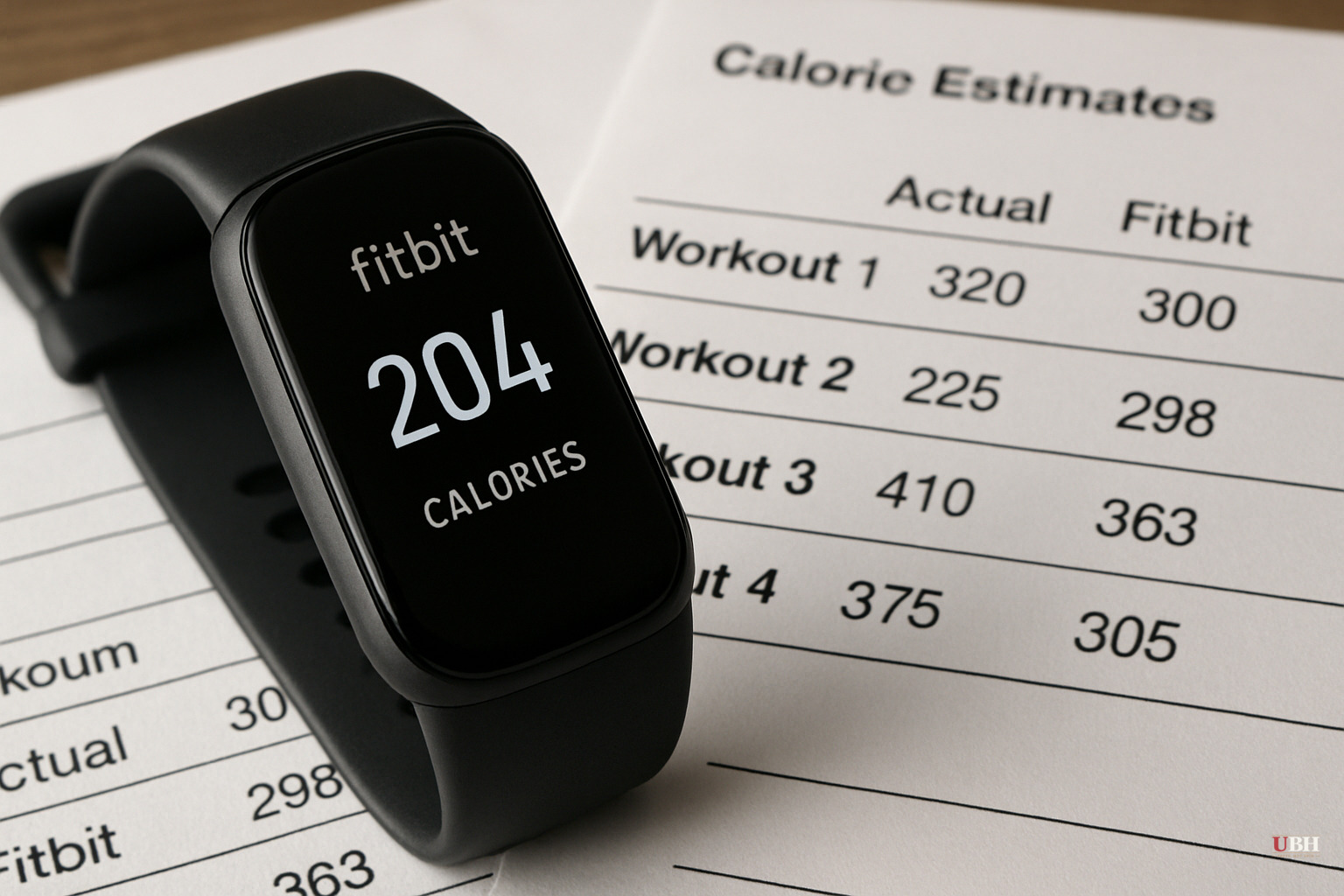
The gap between average accuracy and daily accuracy
Fitbit's calorie tracking has a reputation for being solid. Across a large body of research, that reputation holds up on paper. It falls apart the moment you look at any single day.
According to kygo.app, the largest analysis on the subject, a 2022 meta-analysis by researcher Chevance and colleagues pooled 52 studies and 203 device comparisons and found Fitbit's average bias was just 0.19 calories per minute. That sounds close to perfect. But the same analysis found the limits of agreement ran from minus 5 to plus 6 calories per minute, meaning a single workout or day can be off by hundreds of calories even though the long-run average looks clean.
The error isn't evenly distributed across activities either. Kygo.app reports running comes in as Fitbit's best case, with roughly 4 to 15 percent error. Walking is the worst case, with the Charge 2 model overestimating calories burned by 54 to 69 percent in testing. Cycling runs about 40 percent over, and free-living daily totals sit near 16 percent, tilted toward underestimating.
Why walking breaks the algorithm
The mechanism explains the pattern. Per kygo.app's breakdown of Fitbit's methodology, the company builds its calorie estimate heart-rate-first, not step-first. Minutes spent in each heart-rate zone get converted to METs, then to calories using an estimated resting metabolic rate, likely the Mifflin-St Jeor equation based on age, sex, height, and weight, though Fitbit hasn't officially disclosed its exact formula.
Steps only matter because moving faster raises your heart rate. That's precisely why slow walking trips up the algorithm: your heart rate barely moves, but the device still credits energy expenditure for the steps taken, inflating the calorie count.
Testing the new Fitbit Air against a chest strap
ZDNET ran its own real-world test on the Fitbit Air, Google's new $99 screenless tracker, using the Polar H10 chest strap as a control. The H10 is widely treated as the gold standard for consumer heart rate monitoring, with one cited study showing "almost perfect agreement" against a reference Lead II ECG.
At rest and during steady walking, ZDNET found the Fitbit Air within one or two beats per minute of the Polar strap. But when the pace picked up to a run, the Fitbit lagged. In one recorded minute, the Polar captured a heart rate of 141 while the Fitbit Air showed 109. The next minute, Polar read 128 while the Fitbit read 112. ZDNET attributes this to physical distance: the chest strap sits on the heart itself and uses electrodes, while the wrist-based Fitbit has to wait for the heart rate change to reach the wrist through the bloodstream, creating a lag during pace changes.
Once ZDNET held a steady pace, the two devices synced back up, and overall heart rate error stayed under 2.5 percent. But calories were a different story. The Fitbit Air underestimated calories burned by nearly 12 percent during the treadmill session.
A more forgiving anecdotal test
Not every hands-on account lines up with the wider skepticism. Android Police set out expecting Fitbit's AI-powered Coach feature to be bad at counting calories, noting "the internet, at large" shares that assumption. Testing it against MyFitnessPal, a widely used manual calorie tracker, the outlet reported the results surprised them and didn't match the low expectations they walked in with.
That's a fair counterpoint worth taking seriously: MyFitnessPal itself relies on self-reported food logs and database estimates, so a close match between the two tools doesn't prove either is clinically accurate, only that they're consistent with each other. It's one outlet's single comparison, not a controlled study.
What's still unverified
The research base kygo.app cites leans heavily on older, heavily studied models like the Charge 2 and Charge HR. Kygo.app states plainly that Fitbit's newest devices, including the Air, have never been independently tested against clinical equipment in peer-reviewed research.
That leaves an open question for anyone relying on the Air's calorie count to manage their weight: whether Google's newest hardware and its AI Coach layer actually improved on the walking-overestimation problem documented in older Fitbits, or whether it just hasn't been checked yet.
Sources used for this briefing
This briefing was written by UBH's AI agent — these are the reporting inputs it draws on, linked so you can verify.


