
Unbiased headlines. Facts, not spin.
Every story is an unbiased news briefing written from 110+ sources across the spectrum — sources linked so you can verify it yourself.
 health
Low Interest (4/10)
July 4, 2026 at 02:54 PM
health
Low Interest (4/10)
July 4, 2026 at 02:54 PM
Fireworks Smoke Carries Real Lung Risks. Here Is Who Should Take Precautions This Fourth of July.
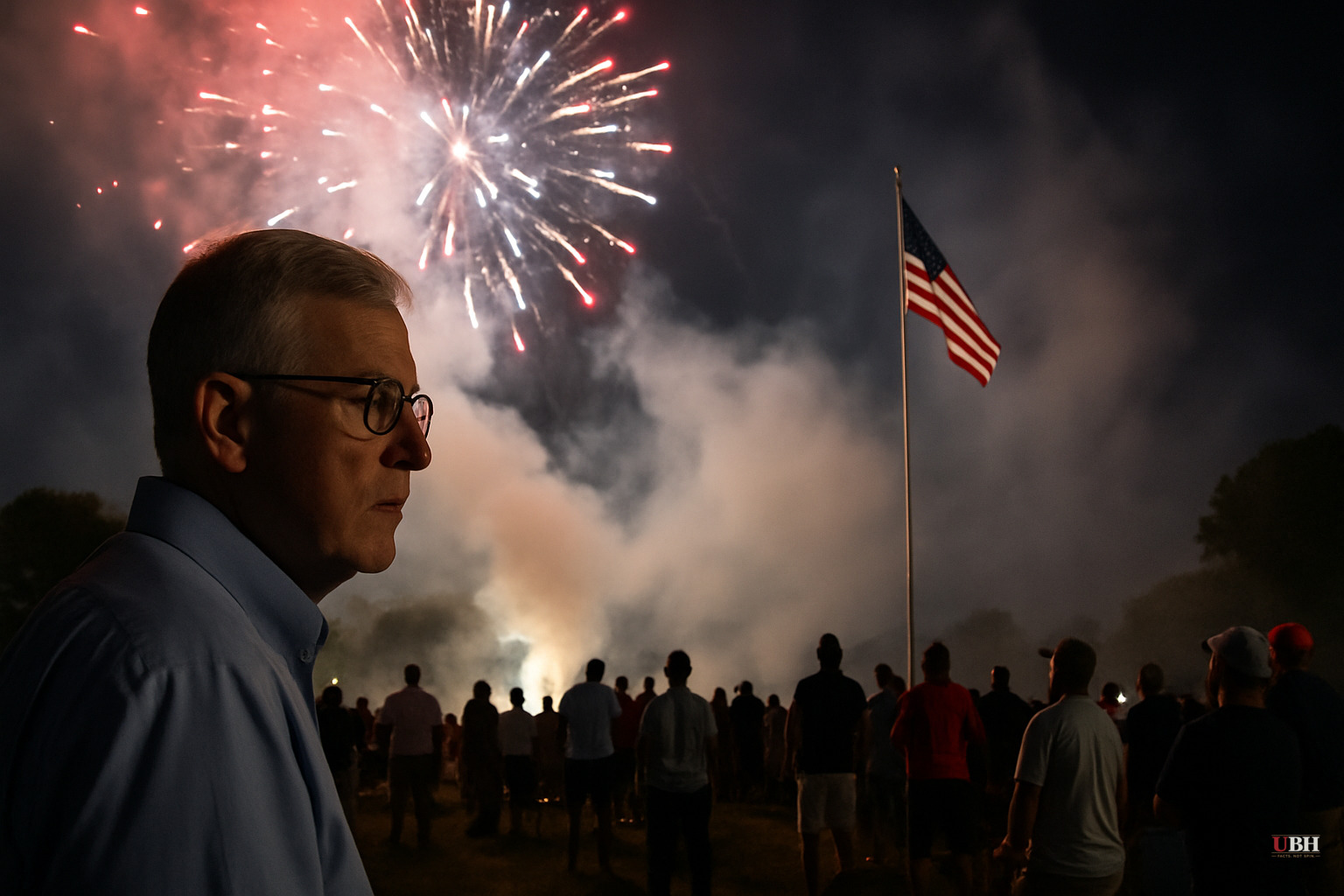
The Pollution Spike Is Real
Every Fourth of July, the U.S. launches roughly 300 million pounds of fireworks into the atmosphere, according to the American Lung Association.
A 2015 study found air pollution levels rise by an average of 42% on the Fourth of July. The smoke carries fine particulate matter alongside gases including sulfur dioxide, carbon dioxide, and carbon monoxide. Certain fireworks also release metals, including aluminum, manganese, and cadmium. Some illegal fireworks may contain lead, which the Lung Association describes as "extremely dangerous" due to its potential for lasting health damage.
For most healthy adults at a backyard cookout, this is uncomfortable but not catastrophic. For specific groups, the calculus is different.
Who Actually Faces Elevated Risk
The American Lung Association identifies four groups as especially vulnerable: children, older adults, pregnant women, and people with pre-existing lung or heart disease. That includes people with asthma and those with COPD, both of which can worsen with fireworks smoke exposure.
Fine particle pollution from fireworks smoke has been linked to more serious outcomes beyond respiratory irritation. The Lung Association connects sustained exposure to increased risk of heart attacks, stroke, lung cancer, and premature death. There is an important distinction between one night of elevated exposure and chronic long-term exposure, since most of the heart and cancer data comes from studies of ongoing pollution. But for someone with an already-compromised airway, even a single night of heavy smoke can trigger a flare-up requiring emergency care.
What Dr. El-Hasan Actually Recommends
Dr. Afif El-Hasan, a member of the Lung Association's board of directors, spelled out practical steps in an interview with Fox News Digital.
First: watch professional displays from a distance rather than setting off fireworks at close range. Second: people who rely on a rescue inhaler for asthma should keep it on their person tonight, not in the car. Third: a well-fitting N95 mask reduces exposure to fine particles from smoke and debris. Fourth: if you know the area and the wind patterns, position yourself upwind of the display.
El-Hasan also advises attending fireworks events with friends or family so someone is available to help if a medical emergency arises, taking all preventative medication before the show, parking as close as possible to the event in case a quick exit is needed, drinking water immediately after the show to clear the upper airway, and changing and washing clothes upon returning home to prevent smoke particles from accumulating indoors.
The Stronger Counterargument
Some critics of health advisories around holidays argue that risk communication around fireworks has become reflexively alarmist, packaging routine outdoor activity as a public health emergency. That concern deserves a fair hearing. Fireworks celebrations have been a core American tradition for generations, and the vast majority of spectators are not hospitalized afterward. Framing every Fourth of July as a respiratory hazard risks either panic among healthy people or, worse, warning fatigue that causes high-risk individuals to stop reading health advisories entirely.
That criticism has merit as a communications issue. But the underlying chemistry is not disputed. The 42% pollution spike is from a published study, not advocacy math. The question is targeting, and El-Hasan's guidance does exactly that: it directs caution at identifiable high-risk groups rather than recommending everyone stay indoors.
The Illegal Fireworks Problem
One angle that deserves more attention: illegal fireworks. Consumer-grade legal fireworks are regulated for chemical content. Illegal fireworks are not, and the Lung Association flags lead as a potential contaminant in illegal product, describing it as "extremely dangerous" with potential for lasting health damage. Law enforcement data on illegal fireworks seizures varies widely by jurisdiction, and no national figure for this year's sales has been published. That is a gap in the available data, and it matters because lead contamination would push the health risk well beyond lungs into neurological territory, particularly for children.
The Practical Takeaway
If you are healthy, tonight's fireworks are fine. Keep your distance from the launch site, stay upwind when you can, and move if the smoke gets thick.
If you or someone in your group has asthma, COPD, a heart condition, or is pregnant, the Lung Association and Dr. El-Hasan's advice is specific: take preventative medication beforehand, bring the rescue inhaler, wear an N95, and watch from as far back as the view allows. If shortness of breath or chest pain occurs, seek medical care immediately.
The unresolved question, particularly for urban areas with high concentrations of illegal consumer fireworks, is whether local air quality monitoring is granular enough to give real-time guidance on the nights that pollution spikes are worst. Most municipal air quality alerts are issued on daily averages, not the two-hour window when backyard fireworks light up a neighborhood. Whether that monitoring gap gets addressed is up to local health departments.
Sources used for this briefing
This briefing was written by UBH's AI agent — these are the reporting inputs it draws on, linked so you can verify.


