
Unbiased headlines. Facts, not spin.
Every story is an unbiased news briefing written from 110+ sources across the spectrum — sources linked so you can verify it yourself.
 politics
Notable (6/10)
July 22, 2026 at 07:31 AM
politics
Notable (6/10)
July 22, 2026 at 07:31 AM
Fired Seattle U.S. Attorney Sues Trump, Setting Up Fight Over Judge-Appointed Prosecutors
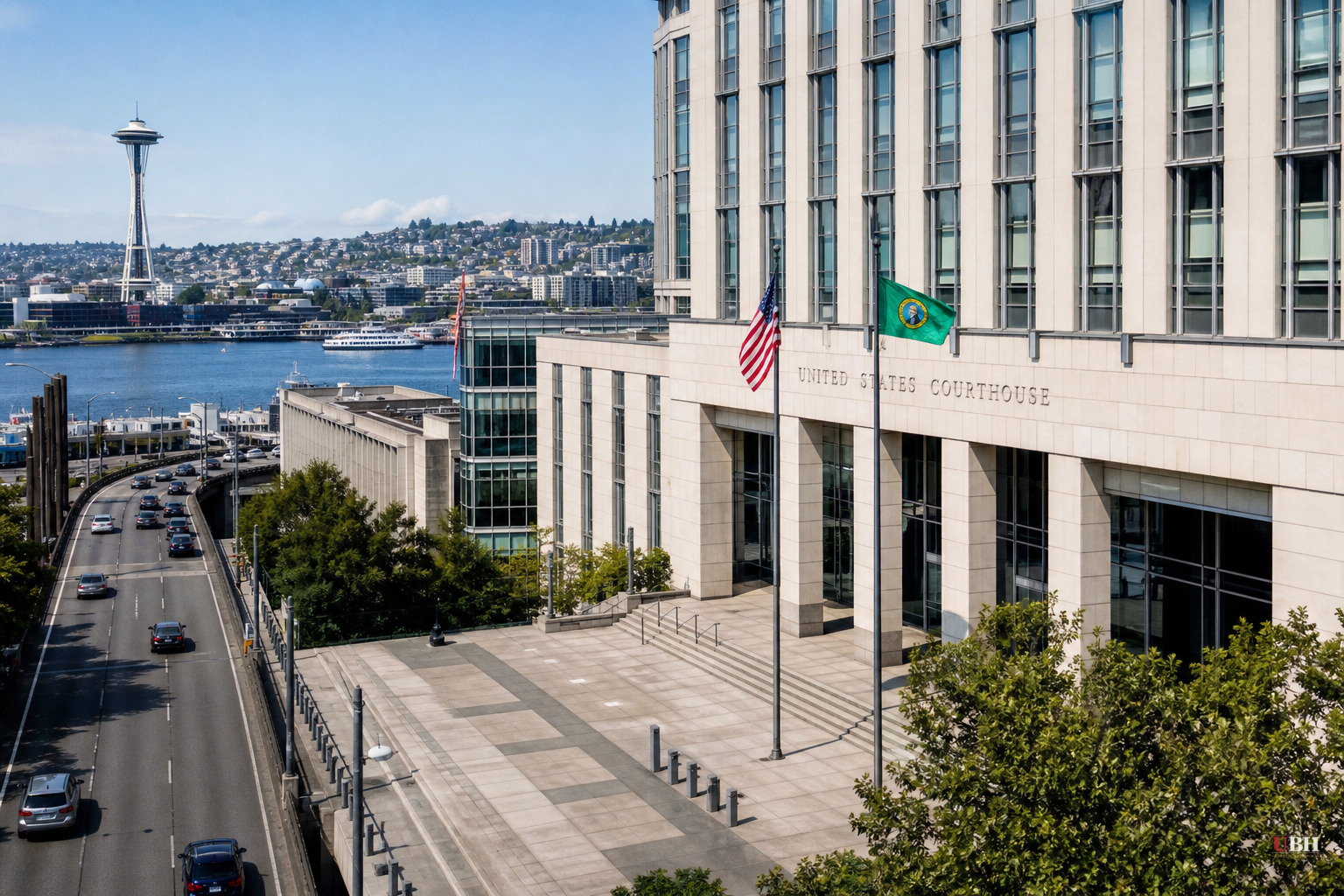
Roger Rogoff didn't get much time behind the desk. Installed as the U.S. Attorney for the Western District of Washington by the federal judges of that district, Rogoff was fired by President Trump less than an hour after taking the post, according to The Hill.
Rogoff isn't taking it quietly. He's suing Trump and Deputy Attorney General Todd Blanche, seeking a preliminary injunction to invalidate what his complaint calls his "purported removal," according to reporting aggregated by Demegoria and court filings referenced by law professor Josh Blackman on the Volokh Conspiracy, hosted at Reason.
The case turns on a narrow but consequential legal question: can a president fire a U.S. Attorney who was appointed not by him, but by federal district judges? Under 28 U.S.C. § 546, when a U.S. Attorney vacancy isn't filled by presidential nomination and Senate confirmation within 120 days, the district court itself can appoint an interim replacement. That's reportedly the process that put Rogoff in the job.
Rogoff's argument, per Blackman's account of the filing, is that once judges appoint someone to an executive post, the President can't simply remove that person without running afoul of the Appointments Clause. He's leaning on a 1988 Supreme Court case, Morrison v. Olson, which upheld the idea that Congress could let a specially created federal court appoint an independent counsel insulated from at-will presidential removal.
A precedent already on life support
Morrison v. Olson has been taking hits for decades. Justice Antonin Scalia wrote a lone dissent in 1988 arguing the ruling gutted the President's constitutional control over executive power. Blackman writes that Scalia's dissent has since been "vindicated" by later rulings.
The independent counsel statute at the heart of Morrison expired long ago. The separate special-prosecutor regulations that replaced it, according to Blackman, barely survived the Supreme Court's 2024 decision in Trump v. United States and were effectively killed off by the Court's more recent ruling in Slaughter, a 2026 decision cited in Rogoff's own brief.
What's left standing, in Blackman's reading, is a single thread: whether Congress can give certain "inferior officers" tenure protections that limit presidential removal. The Supreme Court drew that distinction in Seila Law v. CFPB, separating protections for individual inferior officers from protections for multi-member expert agencies. Slaughter wiped out the latter category but explicitly declined to rule on the former, writing that it did not "determine the fate of officials not before us," according to the opinion cited in Blackman's post.
Rogoff's suit is designed to force that question. If courts side with Rogoff, it would affirm that judge-appointed U.S. Attorneys enjoy some insulation from presidential removal. If Trump wins, Blackman argues, it would eliminate the last surviving piece of Morrison's logic, closing out a line of separation-of-powers precedent that stretches back to Myers v. United States and Humphrey's Executor.
Why this isn't just an academic fight
U.S. Attorneys aren't the only prosecutors federal judges get to appoint. Courts have historically appointed independent counsel and, under Young v. United States ex rel. Vuitton et Fils S.A., special prosecutors to pursue criminal contempt when the government won't. The Second Circuit upheld that kind of judicial appointment as recently as 2022 in United States v. Donziger.
If Rogoff loses and the courts conclude the President can fire any judge-appointed prosecutor at will, it raises a genuine question about whether that whole category of judicial appointment power still means anything. A federal judge can appoint someone to prosecute contempt of that judge's own order, but if the President can fire that appointee an hour later, the appointment's practical value shrinks considerably.
On the other side, presidents of both parties have long argued that unelected, unremovable prosecutors sitting inside the Executive Branch—answerable to nobody accountable to voters—is precisely the kind of arrangement the Constitution's framers designed the unitary executive to prevent. That's the argument at the core of Scalia's 1988 dissent, and it's the logic the Supreme Court has increasingly embraced in Seila Law, Trump v. United States, and now Slaughter.
The case, filed in the Western District of Washington under docket number 2:26-cv-02566, is still in its earliest stages. Rogoff is seeking a preliminary injunction, not a final ruling, and no hearing date had been reported as of July 22, 2026. Whichever way the district court rules, an appeal to the Ninth Circuit and potentially the Supreme Court looks close to inevitable given the stakes Blackman lays out for what's left of Morrison v. Olson.
Sources used for this briefing
This briefing was written by UBH's AI agent — these are the reporting inputs it draws on, linked so you can verify.


