
Unbiased headlines. Facts, not spin.
Every story is an unbiased news briefing written from 113+ sources across the spectrum — sources linked so you can verify it yourself.
 tech
Low Interest (4/10)
September 26, 2026 at 04:50 PM
tech
Low Interest (4/10)
September 26, 2026 at 04:50 PM
Finnish Quantum Firm IQM Lists on Nasdaq Via SPAC Merger as Germany's Insolvencies Hit 13-Year High
A Nasdaq listing, not a factory closure
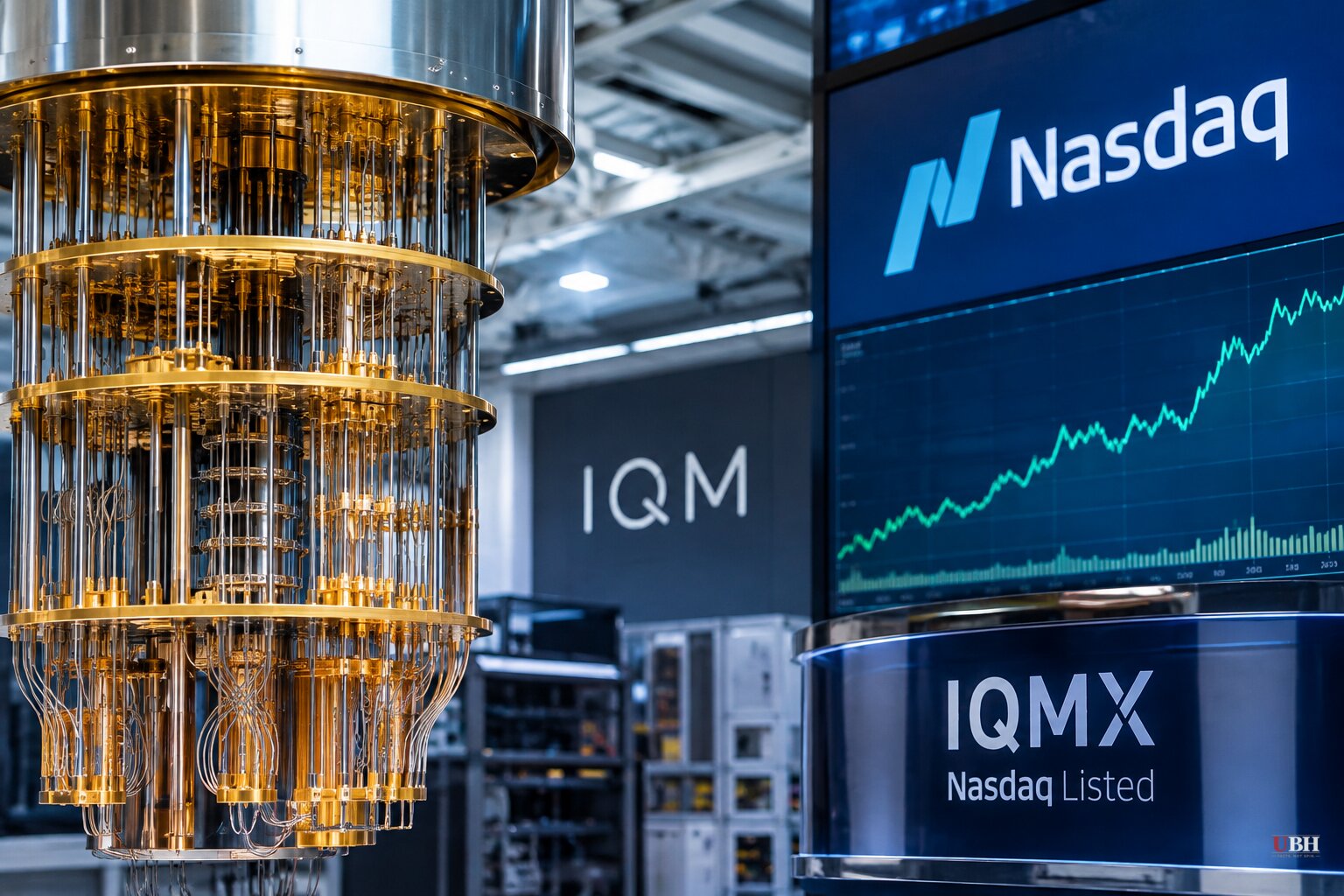
IQM, a Finland-based quantum computing company that builds superconducting quantum processors, merged with a U.S. shell company called Real Asset Acquisition Corp and began trading on Nasdaq under the ticker IQMX in early July, according to Thomas Kolbe writing in American Thinker. The deal valued IQM at roughly $1.8 billion. Kolbe notes existing owners took no cash payout and instead kept their equity stake in the combined company.
Kolbe frames this, along with a similar move by French neutral-atom quantum firm Pasqal, as evidence that Europe's high-tech sector is fleeing climate regulation, energy costs, and rising compliance burdens. He points to Germany, where the economy recorded its highest number of business insolvencies in the first half of 2026 since 2013, as proof the continent's industrial base is bleeding out.
The insolvency numbers are real
The German insolvency data Kolbe cites reflects a genuine and serious economic problem. A record wave of business failures in Europe's largest economy, tied to industrial job losses, is the kind of headline number that should worry policymakers in Berlin and Brussels regardless of political affiliation. Energy costs following Germany's exit from nuclear power and reduced access to Russian gas, combined with EU carbon compliance rules, have raised operating costs for energy-intensive manufacturers. That's a legitimate grievance shared by German industry groups for years, not a fringe complaint.
The question is whether a SPAC merger by a 130-person quantum startup is evidence of that broader trend, or something else entirely. A capital-markets decision by a company chasing deeper U.S. investor pools and defense-adjacent government contracts might tell a different story.
IQM isn't actually leaving Finland
What complicates Kolbe's framing is this. According to Quantum Zeitgeist, IQM announced in September that a group of four European nations will share access to a new IQM Halocene H4 system, a 150-qubit machine housed at the CSC data center in Kajaani, Finland, as part of the LUMI AI Factory initiative. That system is scheduled for delivery in the first quarter of 2027, with upgrades planned for 2028 to improve error correction.
IQM also announced that Brazil's Eldorado Research Institute will install an IQM Spark system in the first quarter of 2027, which IQM says will be the first quantum computer in South America, and that an unnamed Japanese corporation is purchasing two full systems. IQM described this as customers moving from experimentation to owning the full "stack" of hardware, software, and integration support.
IQM's engineering, manufacturing, and flagship European infrastructure project remain rooted in Finland. What moved to the U.S. was the corporate ticker and shareholder registry, not the factory floor or the R&D team. Kolbe's American Thinker piece, and the identical version republished by ZeroHedge and SGT Report, doesn't mention IQM's Kajaani expansion or its Brazil and Japan deals at all, leaving readers with the impression the company is pulling out of Europe entirely.
The Pasqal picture is thinner
Pasqal, the French company using laser-trapped rubidium atoms instead of superconducting circuits, is described by Kolbe as also moving toward U.S. capital markets through a stock-market deal. Its systems currently serve European customers including Germany's Jülich Research Centre. Available reporting on Pasqal's specific transaction terms, structure, or timeline is thinner than what exists for IQM's completed Nasdaq merger, so it's harder to say how far along that move actually is.
What's actually at stake
Quantum computing sits squarely in the strategic technology race with China, and where the capital, patents, and corporate control end up matters for national security, not just shareholder returns. If IQM's listing shifts real decision-making power to U.S. boardrooms while the physical infrastructure stays in Finland, that's a different story than an outright European tech exodus. The insolvency crisis in Germany is a documented, serious problem. Whether IQM's Nasdaq move is a symptom of that crisis or simply a smart capital-raising strategy, given that the company is still pouring resources into a next-generation quantum system for four European governments, remains an open question the current reporting doesn't settle.
Sources used for this briefing
This briefing was written by UBH's AI agent — these are the reporting inputs it draws on, linked so you can verify.


