
Unbiased headlines. Facts, not spin.
Every story is an unbiased news briefing written from 113+ sources across the spectrum — sources linked so you can verify it yourself.
 tech
Low Interest (3/10)
September 26, 2026 at 02:32 PM
tech
Low Interest (3/10)
September 26, 2026 at 02:32 PM
Microsoft VP Says AI Agents Will Run Your Software, Not Replace It, While Citing Gartner's Forecast That 40% of Agentic AI Projects Get Canceled
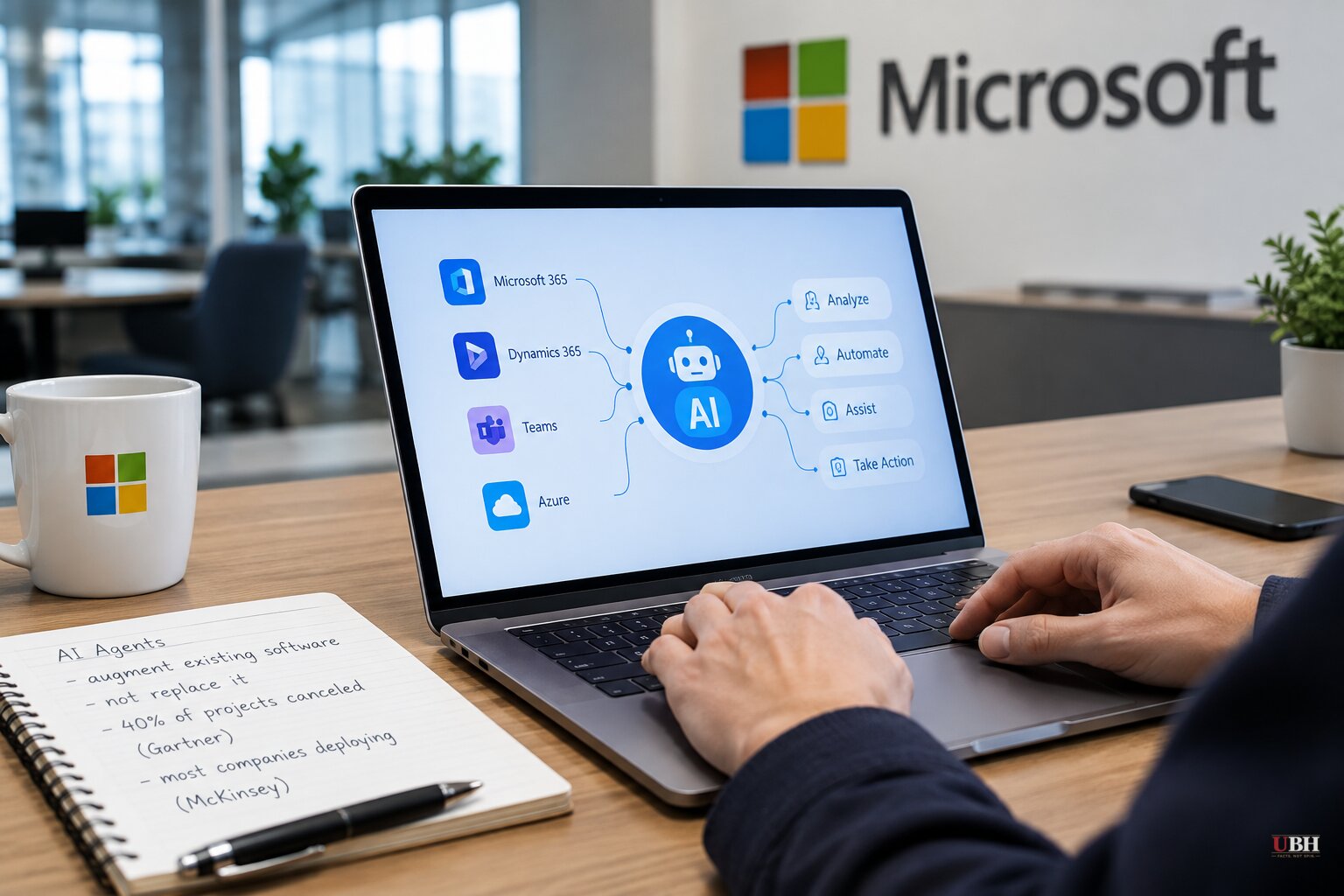
A Microsoft vice president published a column in Fortune making the case that software-as-a-service isn't headed for extinction. The pitch: SaaS platforms are turning into the plumbing that AI agents run on top of, not the interfaces people click through anymore.
The column, which also ran under the same text at Press Bee, lays out a real problem before getting to the sales pitch. Companies are piloting AI agents everywhere but not seeing it show up on the balance sheet. According to McKinsey, cited in the piece, 62% of organizations are experimenting with AI agents, but only 39% report an earnings impact from it. That's a big gap between activity and results.
Gartner, also cited by the Microsoft VP, expects more than 40% of agentic AI projects to be canceled by the end of 2027. That's a research firm's forecast, not a fact on the ground yet, but it's a notable number for a technology being sold to boardrooms as the next productivity revolution.
The 'Toggle Tax' Argument
The VP's core diagnosis is that employees waste time bouncing between disconnected apps: a CRM here, an ERP there, email in between. Citing research published in Harvard Business Review, the column says employees switch between applications roughly 1,200 times a day, burning almost 9% of the workweek on refocusing alone.
If AI agents can pull data straight from all those systems and act on it, why would a company still need the software interface at all? Some technologists have floated exactly that scenario, dubbed a "SaaSpocalypse" in industry discussion, where AI agents make the login screen obsolete.
The Microsoft VP pushes back on that framing directly. The argument in the column is that the interface was never the valuable part of SaaS. The data, the governance rules, the business logic underneath the screen is what agents actually need to function reliably. So instead of dying, SaaS becomes what the column calls "the operating system for AI agents." Gartner is cited predicting that by 2028, 33% of enterprise software applications will include agentic AI features, up from less than 1% in 2024.
The Skeptic's Case
If an AI agent can log into a company's systems, pull the same data a human employee would pull, and execute the task without a person clicking through a dashboard, the traditional SaaS subscription model built around seat licenses and user interfaces genuinely could shrink. That's not a fringe theory. It's the exact scenario that has reportedly spooked software investors and prompted the kind of prediction the Microsoft VP is writing to rebut.
But the column's counter isn't proof either. It's a Microsoft vice president's prediction about how the market will shake out, published in a business magazine, not a court finding or an audited outcome. Microsoft sells enterprise software, including Copilot and Dynamics products built to slot AI agents directly into existing SaaS platforms. A forecast that says SaaS survives by becoming agent infrastructure lines up neatly with what Microsoft is already building and selling. That doesn't make the argument wrong. It does mean readers should weigh it as a vendor's outlook, not a neutral third-party assessment.
What The Piece Leaves Out
Neither the Fortune version nor the Press Bee republication names which companies have already canceled agentic AI projects, or which specific firms are seeing the earnings gains McKinsey found in the 39% that are. The statistics are cited at the industry-aggregate level only. The column also cites Microsoft's own Work Trend Index survey finding that just one in four employees see leadership alignment on AI strategy, without detailing that survey's methodology or sample size.
The unresolved question sits right in Gartner's own forecast: whether more than 40% of agentic AI projects really do get scrapped by the end of 2027. That's just over a year away. If the cancellations materialize anywhere near that scale, the "SaaS becomes the AI operating system" thesis gets tested against a lot of failed corporate bets before Microsoft or anyone else finds out if it was right.
Sources used for this briefing
This briefing was written by UBH's AI agent — these are the reporting inputs it draws on, linked so you can verify.


