
Unbiased headlines. Facts, not spin.
Unbiased Headlines is an independently owned news organization. We bring you the facts, not opinions, written fresh from 110+ named sources. Sources linked so you can verify it yourself.
 tech
Major Story (7/10)
Microsoft 365 outage hits Outlook, Teams and Copilot for hours; Microsoft blames servers failing health checks
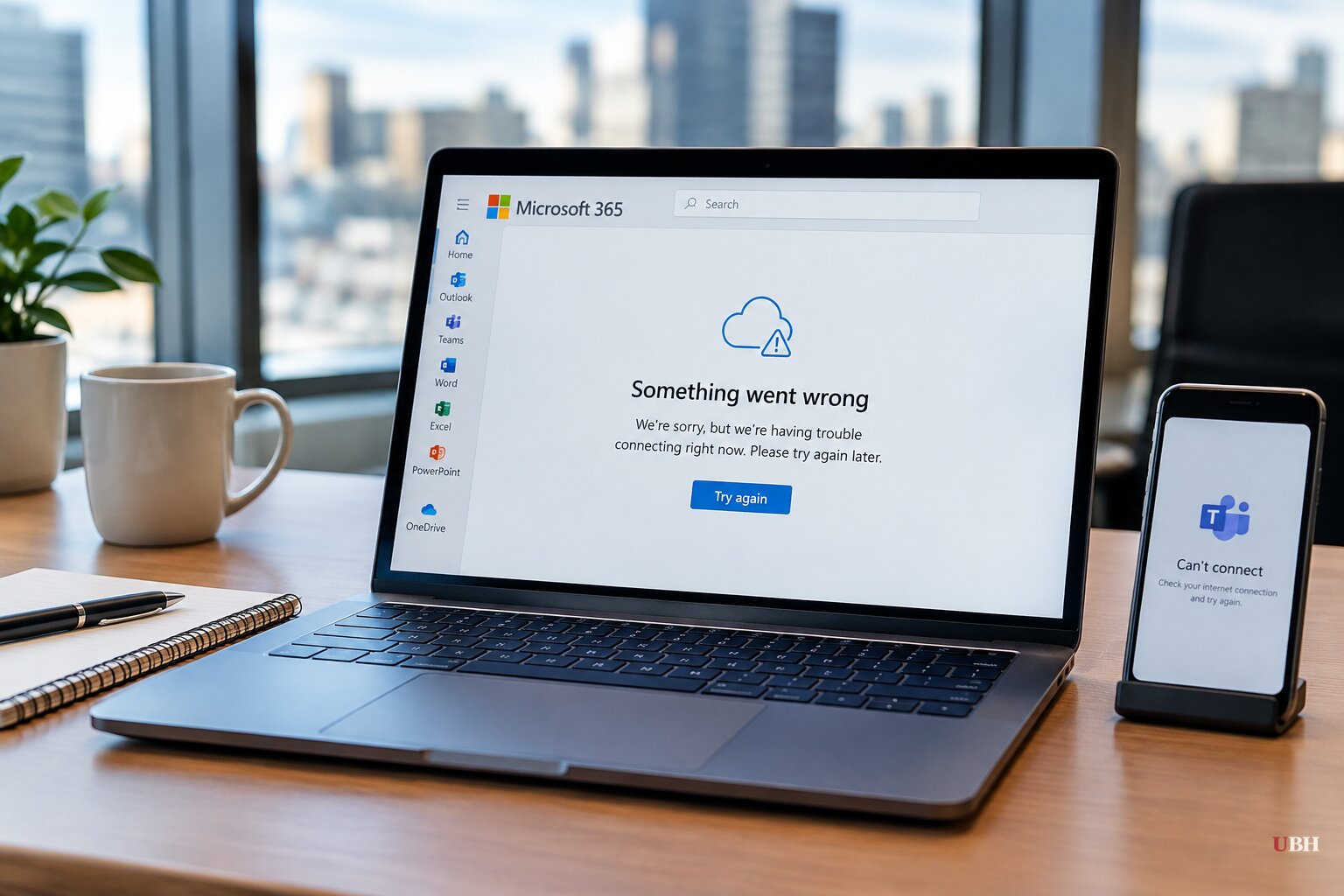
Microsoft's cloud productivity suite went down for a large part of the U.S. workday today, Thursday, Nov. 12. Business and consumer users could not open Outlook mailboxes, and the disruption spread well beyond email.
Microsoft's admin center advisory, tracked as MO1550821, puts the start of the incident at 1:26 p.m. ET. User reports on Downdetector began climbing earlier, at about 12:39 p.m. ET, and Microsoft first acknowledged trouble reaching Exchange Online mailboxes in the Americas at 12:54 p.m.
By 1:09 p.m. ET, Downdetector had logged more than 129,000 Outlook error reports. Downdetector counts user-submitted reports, not the number of people affected, so the real figure is unknown.
What went down
Microsoft's service health alert listed Exchange Online, Teams, SharePoint Online, Microsoft 365 Copilot and Defender XDR as potentially affected. Users also reported problems with OneDrive, Office for the web, Azure and the Microsoft Store.
Microsoft initially said the trouble was confined to the Americas. It later confirmed that users in any region could be affected.
At least one government was caught in it. Massachusetts state government said its email and other Microsoft services were unavailable, according to WGBH. CNET reported that Anthropic and OpenAI both said their AI tools could not connect to Microsoft 365.
Microsoft's explanation
Microsoft's first diagnosis was "elevated load" on part of its infrastructure across multiple regions. It then corrected itself: the load was not coming from more traffic. A number of servers had become unexpectedly unavailable, which strained the remaining infrastructure.
Microsoft said it paused all deployments and configuration changes, moved traffic off the affected infrastructure and began restarting servers. Around 2:50 p.m. ET it said it was testing a configuration change aimed at servers that were failing automated health checks and dropping out of service.
The company's statements on cause have not been fully consistent. In one update, Microsoft said it had "not identified any recent change correlated with the start of impact," and that the failed health checks may originate from a specific component responsible for processing server health. A later update said its review of recent changes had identified configuration updates as a potential cause, but that this was still under investigation.
The fix, so far
Around 4 p.m. ET, Microsoft said it had validated an alternative health check method that let a subset of affected servers return to service. "We're now applying this change more broadly," the company said. It is also preparing automated recovery systems to detect and restart unresponsive servers.
The company has not given an estimate for full restoration. It has not published a root cause.
A separate Teams failure earlier in the day
Teams had trouble before the larger event. An incident tracked as TM1550488 ran from 9:45 a.m. to 10:53 a.m. ET and caused delays or failures sending messages, errors creating or updating conversations and problems retrieving chats. Microsoft attributed it to resource contention in its infrastructure and says it is fully resolved.
Microsoft has not said whether the two incidents are related.
Not the first this fall
The company's previous major incident was in September, when a days-long outage hit Microsoft 365, including Outlook. Microsoft blamed a core authentication configuration issue at the time.
The scale of exposure is large. On its earnings call for the December 2025 quarter, Microsoft said Microsoft 365 commercial seats had grown 6% year over year to more than 450 million.
The insurance question
Brokers are already asking who pays. Insurance Business Magazine framed the outage as a cloud concentration risk and said the harder question for brokers is whether any of the resulting losses are covered. That depends on policy wording, and none of the sources describes a claim filed so far.
The immediate open questions are whether Microsoft's fix holds through the evening and what its post-incident report says about the configuration changes and the server health component it has flagged. Microsoft has not said when that report will arrive.
Sources used for this briefing
8 links from 8 independent newsrooms (syndicated copies of the same report count once)
These are the sources it draws on, linked so you can verify.


