
Unbiased headlines. Facts, not spin.
Every story is an unbiased news briefing written from 110+ sources across the spectrum — sources linked so you can verify it yourself.
 tech
Notable (6/10)
August 5, 2026 at 05:18 AM
tech
Notable (6/10)
August 5, 2026 at 05:18 AM
Filipino Outsourcing Workers Say They Trained the AI That Replaced Them
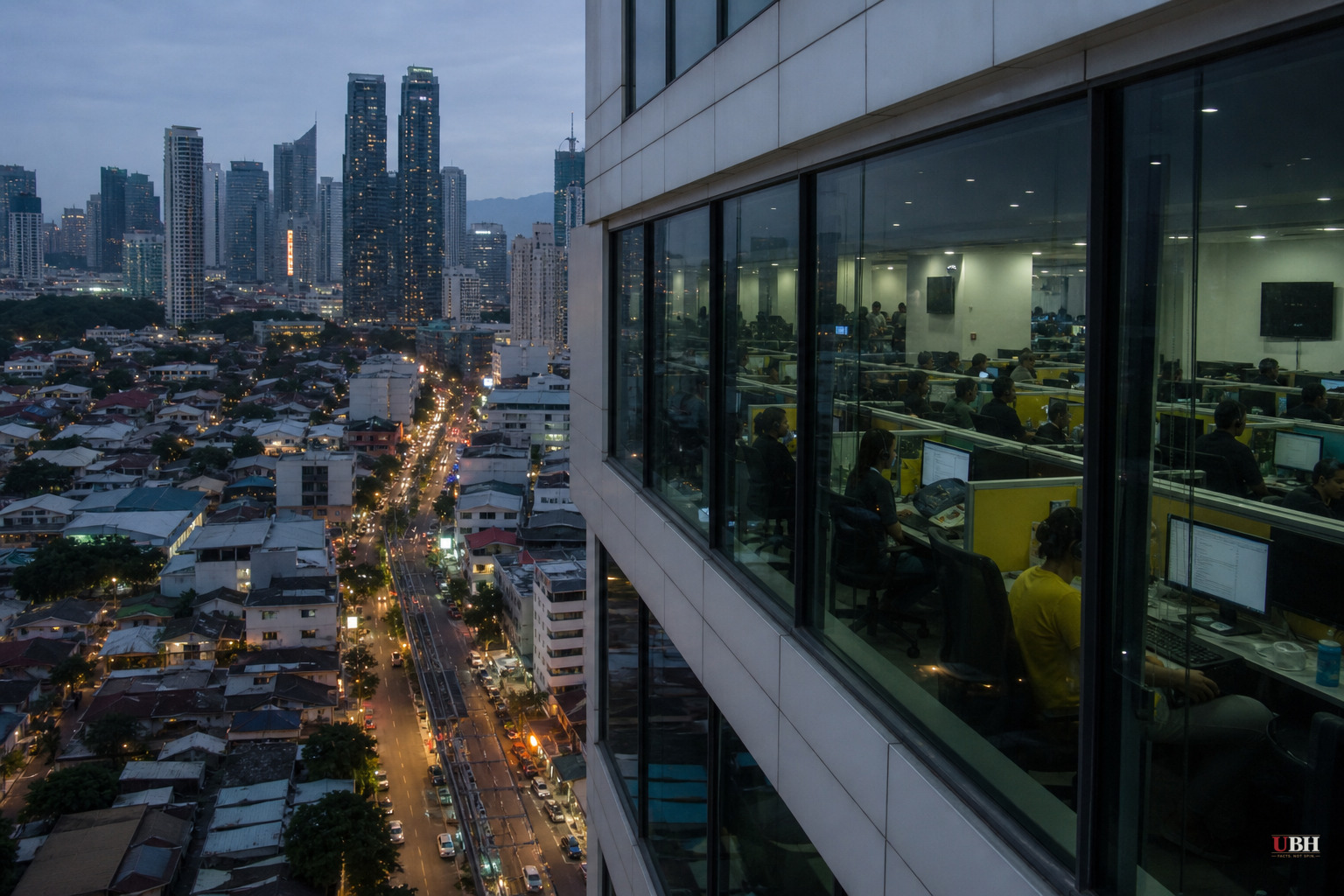
A Filipino content writer who goes by the pseudonym Lisa spent 15 years building a career in the outsourcing industry. Eight months into a new job, one month before it would have become permanent, she was let go.
Before her layoff, Lisa told the BBC, a public relations agency was brought in to produce AI-generated material that she and her colleagues were assigned to edit. In practice, that meant her editing choices were shaping how the AI learned to mimic the company's writing style.
"I feel like I dug my own grave," Lisa said. "We were the ones who trained the artificial intelligence that replaced us."
Lisa is not the only one. The BBC spoke to several former outsourcing employees who described similar experiences, all asking to remain anonymous. They signed confidentiality agreements in exchange for severance pay and worry that speaking out could hurt their job prospects in an industry built on a tight professional network.
A $40 Billion Industry Built on Cheap, Skilled English Labor
The Philippines' business process outsourcing sector didn't happen by accident. Starting in the early 2000s, the government marketed the country as an English-speaking alternative to India, offering tax breaks and infrastructure investment to lure multinational companies.
It worked. Firms like Accenture, Concentrix and Teleperformance built massive campuses across Manila's business districts, employing hundreds of thousands of workers in call centers, accounting, software development and marketing.
Today the industry employs roughly 1.9 million Filipinos and generates $40 billion a year, according to the BBC, accounting for about 10% of the country's entire economy. Every evening, streams of workers in company lanyards pour out of high-rises in districts like Cubao, a visible symbol of one of the country's biggest economic success stories over the past two decades.
Why This Sector Is a Sitting Duck for AI
The jobs that built this industry are exactly the jobs generative AI is best at automating: writing, transcription, basic customer service, data entry.
The International Labour Organization estimates that 12.7 million Filipino workers, more than one in four, are employed in occupations exposed to generative AI. That's the highest exposure rate in Southeast Asia, according to the ILO.
The organization stopped short of predicting mass job elimination, saying it expects many roles to change rather than vanish outright. But for workers like Lisa, that distinction is cold comfort when the change looks a lot like a layoff.
What's Proven, What's Not
What's documented: Lisa and other workers were tasked with editing AI-generated content before being laid off, and the ILO's exposure statistics are real, sourced estimates about a real industry.
What's not proven, at least not in what's publicly available: that AI was the sole or primary reason for any specific layoff, as opposed to normal restructuring, cost-cutting, or the end of a probationary contract. Companies rarely announce "we replaced you with a chatbot" in a severance letter. Confidentiality agreements, the same ones protecting these workers' severance pay, also make it nearly impossible to independently verify a direct causal line from "edited AI output" to "position eliminated."
That's a real structural problem. When companies require NDAs as a condition of severance, workers can't talk, journalists can't verify, and the public is left with anecdote instead of data. That doesn't mean the workers are wrong. It means the system is built in a way that makes the claim hard to prove or disprove either way.
The Case for Not Panicking
There's a reasonable counterargument here too. Outsourcing has survived worse disruptions than this: the 2008 financial crisis, the pandemic, offshoring competition from Vietnam and India. Automation has always changed which specific tasks get outsourced without necessarily shrinking the industry's overall footprint. Some economists would note that new categories of work, like AI output review, prompt engineering, and quality assurance for AI-generated content, are themselves outsourcing jobs that didn't exist five years ago.
Companies also have a straightforward economic incentive to use AI to boost productivity, and that's not inherently a scandal. The question is whether workers get transition support, retraining, or severance that reflects their contribution, including the uncomfortable reality that some of them helped build the tool that replaced them.
What Comes Next
No Philippine government agency has announced new labor protections specifically targeting AI-driven displacement in the BPO sector. No lawsuits over these particular layoffs have been reported. The workers who spoke to the BBC remain bound by their confidentiality agreements, meaning their real names, employers, and severance terms stay unpublished.
The open question is whether the Philippines' outsourcing industry, and the millions of families who depend on its $40 billion in annual revenue, can retrain fast enough to stay ahead of the technology it's increasingly being asked to build.
Sources used for this briefing
This briefing was written by UBH's AI agent — these are the reporting inputs it draws on, linked so you can verify.


