
Unbiased headlines. Facts, not spin.
Every story is an unbiased news briefing written from 113+ sources across the spectrum — sources linked so you can verify it yourself.
 tech
Notable (6/10)
Event date: September 17, 2026
tech
Notable (6/10)
Event date: September 17, 2026
Figure AI's Humanoid Robot Succeeded on 56% of Chores Across 30 Homes It Had Never Entered
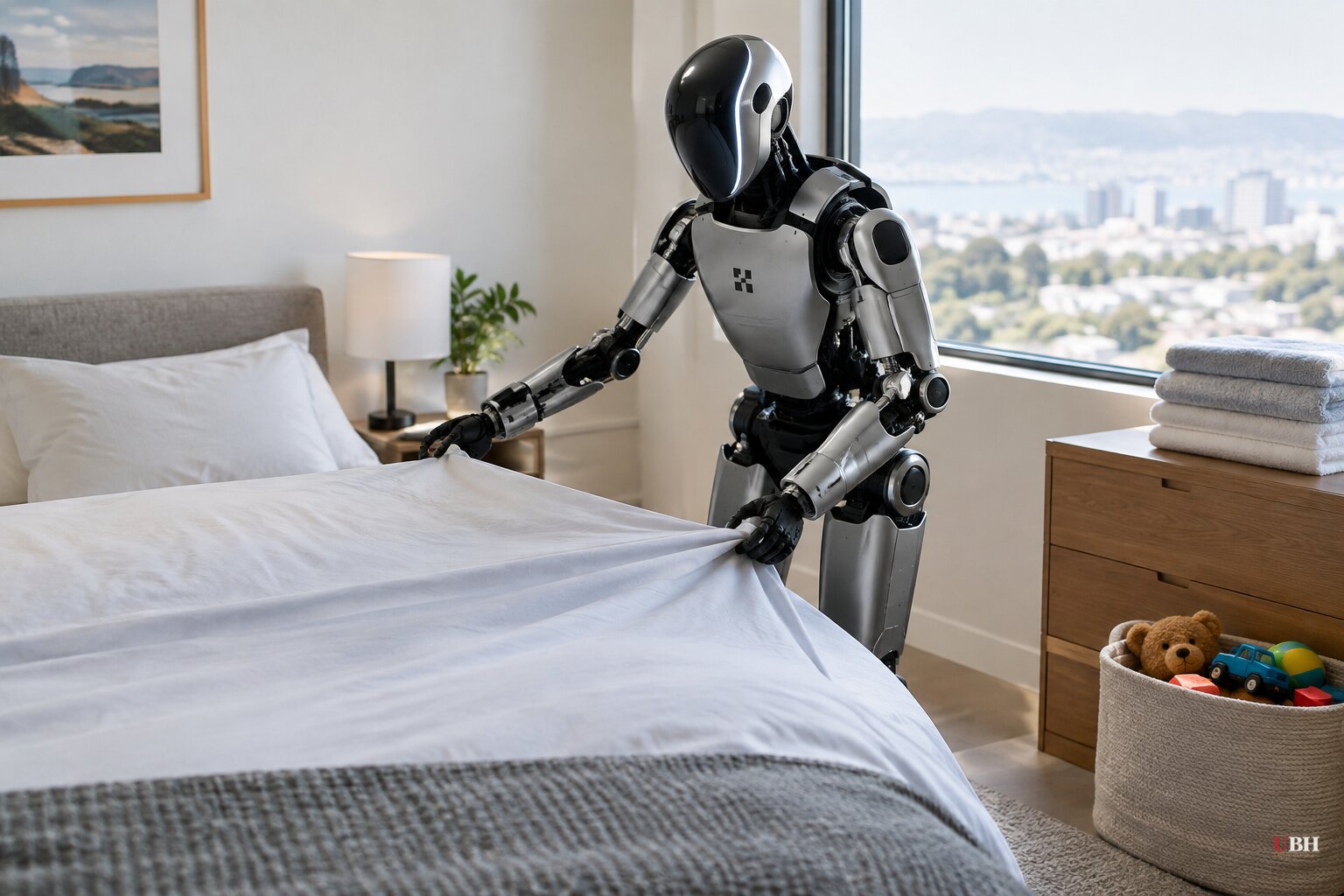
Figure AI says its humanoid robot can walk into a house it's never been in and start doing chores. The company isn't claiming it does that reliably.
On September 17, 2026, Figure unveiled Helix 2.5, a neural network model, and released results from a test spanning 30 homes across the San Francisco Bay Area. According to Figure and reporting from Tech Times and TechRepublic, the Figure 03 robot attempted 420 household tasks in those homes, split between bed making, towel folding, and tidying toys into a basket. It completed 237, a 56% success rate.
That number only means something next to its comparison point. Figure ran an identical robot on an identical task list, but trained from scratch instead of pretrained on the company's Index dataset. That version succeeded 9% of the time, according to BigGo Finance and Tech Times. Same hardware, same tasks, same homes. The only difference was the training approach, and it produced a sixfold gap.
The task-by-task numbers
Broken out by chore, per TechRepublic's reporting: bed making succeeded 67% of the time (94 of 140 attempts), towel folding hit 62% (87 of 140), and tidying toys lagged at 40% (56 of 140). Figure used all-or-nothing scoring. A bed made with a crooked pillow counted as a full failure. Any safety intervention by a human supervisor also counted as a failure, not a partial credit.
Figure CEO Brett Adcock called it "the most important project we've ever taken on at Figure" and described the goal as "zero-shot generalization" — a robot that's never seen a house getting to work anyway. "We rented 30 homes in the Bay Area and are doing tasks without any new training," Adcock wrote on X ahead of the release, according to Startup Fortune.
Where the improvement is coming from
Figure's technical bet is that pretraining on massive amounts of general human behavior transfers better than narrowly practicing three specific chores. That pretraining runs through Index, a dataset Figure took out of stealth on August 25, 2026, which the company says pulls in roughly 35 minutes of human-experience video every second from tens of thousands of weekly app contributors, per Startup Fortune.
Figure also reported what it calls a human-to-robot transfer scaling law: across four model versions trained on doubling amounts of Index data, held-out action-prediction loss fell on a predictable curve, according to Tech Times and techau.com.au. Figure says its smaller runs forecast the largest run's test loss to four decimal places before that run finished training. TechRepublic is the one outlet that flags the limit of that claim directly: the scaling result measured prediction loss in a lab metric, not real-world task completion. A predictable loss curve is not the same thing as a predictable success rate in someone's living room.
What the coverage leaves out
Techau.com.au reported that the 30 properties, based on the footage Figure released, "appear to be holiday rentals and Airbnbs rather than occupied family homes." That's a meaningfully different test than a robot navigating a lived-in house full of someone's actual clutter, pets, and daily mess. None of the other five sources reviewed here mention this distinction, and Figure's own materials, as summarized by BigGo Finance and Startup Fortune, describe the sites simply as "30 homes." If the test ran mostly in staged rental properties, that's a legitimate caveat on how far the zero-shot claim extends to a real family kitchen.
A 56% pass rate with strict all-or-nothing scoring, run in likely-staged rental units, still leaves a 44% failure rate before you can trust a $20,000-plus humanoid alone in your house with your kids' toys and your good towels. TechRepublic makes this point most bluntly: "generalization is not the same as dependable everyday performance."
Figure has real money behind the bet regardless. BigGo Finance reports the company has committed $3.5 billion in compute and signed a deal with Nscale locking in roughly 100,000 Nvidia Vera Rubin GPUs. None of the sources reviewed indicate a commercial home-robot product, price, or ship date. Figure's own blog, cited across the coverage, states plainly that general humanoid robotics "is not solved." Whether the jump from 9% to 56% zero-shot is the start of a solvable resource-scaling curve, as Figure argues, or whether toy-tidying's 40% success rate is closer to the ceiling for unstructured, cluttered real homes that were never staged for cameras remains to be seen.
Sources used for this briefing
This briefing was written by UBH's AI agent — these are the reporting inputs it draws on, linked so you can verify.


