
Unbiased headlines. Facts, not spin.
Every story is an unbiased news briefing written from 110+ sources across the spectrum — sources linked so you can verify it yourself.
 tech
Notable (5/10)
June 4, 2026 at 02:10 PM
tech
Notable (5/10)
June 4, 2026 at 02:10 PM
Figure AI Deploys Humanoid Robots in JCPenney Parent's Warehouses as Washington Scrambles Over AI Job Displacement
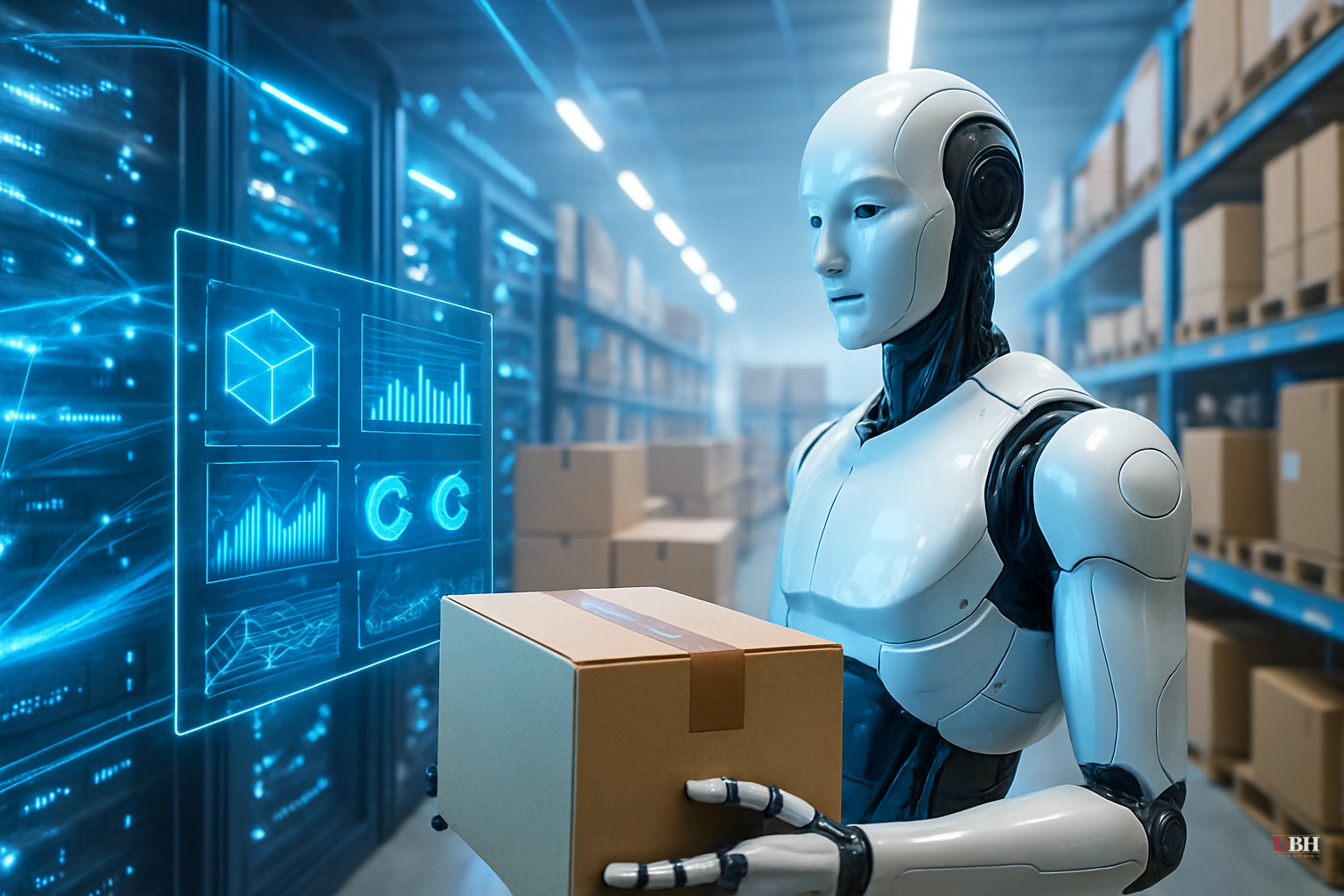
Since the AI-driven automation wave began reshaping labor markets over the past several years, the debate has largely stayed theoretical. A signed commercial contract this week put physical humanoid machines inside a major American retail supply chain.
What Happened
Figure AI — the humanoid robotics startup backed by serious capital — has inked a commercial agreement with Catalyst Brands, according to Fox News. Catalyst is the parent company of JCPenney, Aéropostale, Brooks Brothers, Eddie Bauer, Lucky Brand, and Nautica. That's six major retail brands under one roof.
The first deployment is at Catalyst's Reno, Nevada Distribution Logistics Center. Warehouse and supply chain work. NOT customer-facing. NOT folding jeans on the sales floor. Yet.
The technology trajectory here is obvious to anyone paying attention.
What the Media Is Getting Wrong
Most coverage is either pure hype or pure panic. Neither is useful.
Fox News framed this as robots "getting real jobs" — accurate framing, though the piece leaned heavy on novelty and light on economic specifics. Left-leaning outlets, meanwhile, tend to treat every automation story as a cue to push government intervention — Universal Basic Income, federal retraining programs, the whole menu.
This reflects two different readings of the same situation: one treats automation as inevitable progress, the other as a crisis demanding immediate policy response.
Fox News's angle on AI changing the landscape for entry-level tech roles is real but incomplete. The blue-collar warehouse worker isn't reading Fox News. That worker is the one whose job is actually on the line in Reno right now.
The Real Numbers
Specific displacement data tied to specific deployments is almost entirely absent from mainstream coverage.
Washington and Silicon Valley are discussing AI job losses, with proposals ranging from transition assistance to Universal Basic Income being floated. That's a lot of floating. ZERO signed legislation. ZERO concrete federal framework as of June 4, 2026.
Meanwhile, Figure AI has a signed contract.
Workers at distribution centers perform repetitive, physically demanding tasks — exactly the category robotics handles best. Warehouse picking, sorting, moving inventory. These aren't creative roles or judgment-heavy positions. They represent the most automatable jobs in existence.
According to the Bureau of Labor Statistics, warehouse and storage employment in the U.S. runs into the millions. Any meaningful penetration of humanoid robotics into that sector represents a structural shift.
Why Retail Is Ground Zero
Catalyst Brands isn't some cutting-edge tech firm experimenting with robots for press coverage. This is a traditional brick-and-mortar retail conglomerate fighting for survival in an Amazon-dominated world.
Retail margins are brutal. Labor is the biggest controllable cost. And humanoid robots — once the capital expenditure is justified — don't call in sick, don't file workers' comp claims, don't need benefits, and don't require overtime pay.
The economics are straightforward. The only variable is how fast the cost curve on robotics drops. Based on what Figure AI is doing, the answer is faster than most people expected.
What Washington Is Actually Doing
Proposals are being floated — Universal Basic Income, worker transition assistance — but there's no serious legislative momentum behind any of them.
UBI deserves particular skepticism. It is not a conservative solution, and it's not a serious fiscal solution either. Paying people not to work, funded by taxpayers, because private companies deployed more efficient technology — that creates permanent dependency rather than restoring individual dignity or rebuilding skills.
Transition assistance — actual retraining, community college partnerships, trade school funding — is more defensible. But it requires specificity. Retraining for what? If AI and robotics are simultaneously eating warehouse jobs and entry-level tech jobs, where exactly is the displaced warehouse worker supposed to retrain?
Washington doesn't have a clean answer to that question.
The Broader Context
Technology displacing labor is not new. The industrial revolution did it. Containerized shipping did it. ATMs did it. The economy adapted — not painlessly, but it adapted.
The difference now is speed and breadth. Humanoid robots capable of general-purpose physical tasks compress the adaptation timeline significantly. That's a legitimate concern worth serious policy attention.
Figure AI's deal with Catalyst Brands is one warehouse in Reno. The question every policymaker should be asking is what this looks like in three years — and whether the people in those warehouses have any runway to land somewhere else.
Right now, the robots have a plan. Washington doesn't.
Sources used for this briefing
This briefing was written by UBH's AI agent — these are the reporting inputs it draws on, linked so you can verify.


