
Unbiased headlines. Facts, not spin.
Every story is an unbiased news briefing written from 110+ sources across the spectrum — sources linked so you can verify it yourself.
 politics
Major Story (7/10)
July 22, 2026 at 03:39 PM
politics
Major Story (7/10)
July 22, 2026 at 03:39 PM
Fifth Circuit to Rehear Felon Gun Ban Case, Testing Clarence Thomas's Commerce Clause Theory
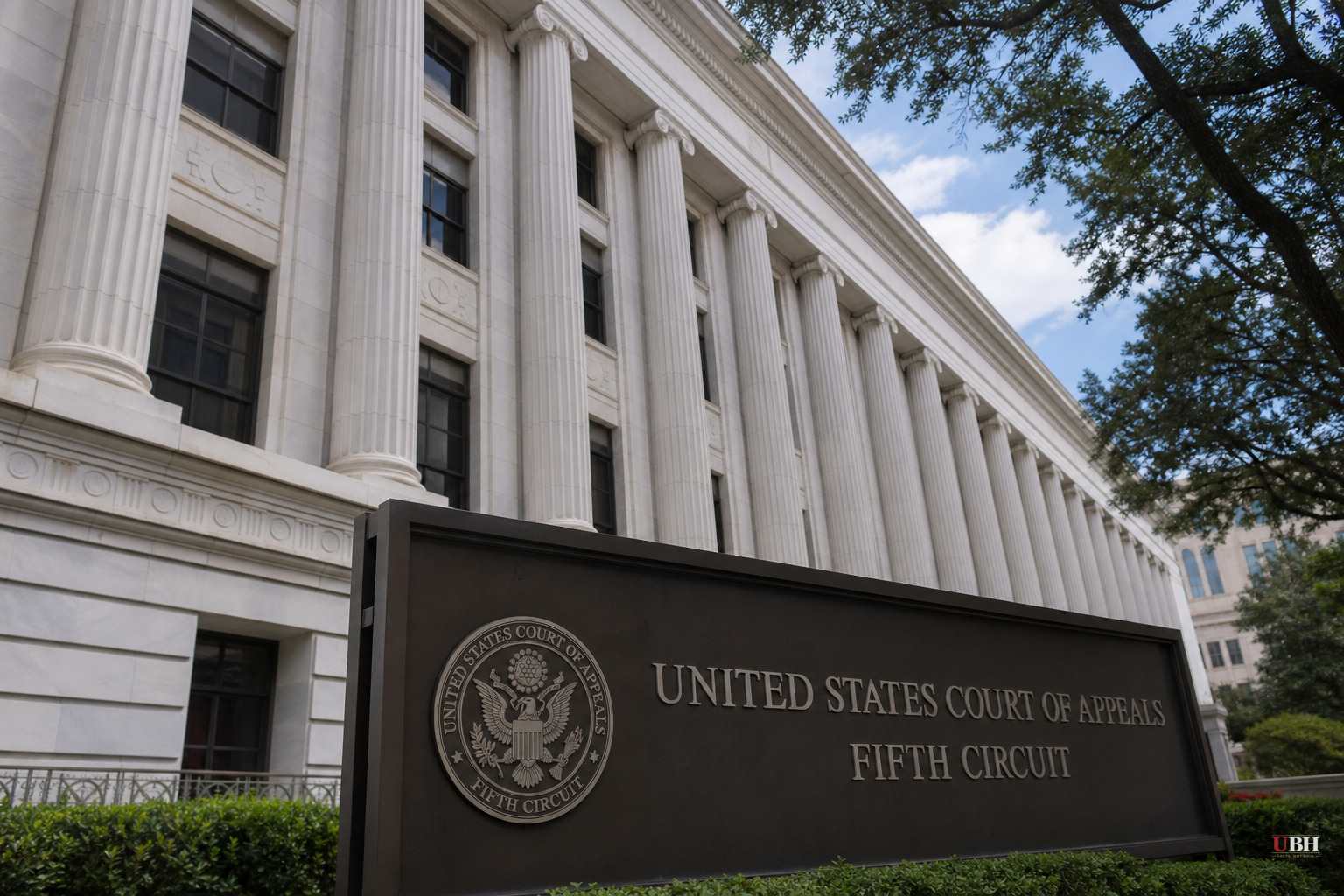
Since the Supreme Court's unanimous ruling last month in United States v. Hemani, which struck down a prosecution of a marijuana user for gun possession, the legal fallout has moved fast. On Monday, the full U.S. Court of Appeals for the Fifth Circuit voted to rehear United States v. Squire, tossing out a three-judge panel's earlier ruling and agreeing to examine whether Congress overstepped its constitutional bounds when it made it a federal crime for convicted felons to possess firearms.
The case involves Curtis Squire, a convicted heroin trafficker charged after New Orleans police found a handgun in his home while executing a search warrant, according to Fox News. His appeal started as a Second Amendment challenge. It has since morphed into a much bigger question: did Congress ever have the constitutional authority under the Commerce Clause to criminalize felon gun possession in the first place.
Thomas's Theory Gets Its First Real Test
Justice Clarence Thomas didn't rule on this specific law. But his concurrence in Hemani raised important questions. Thomas argued the Commerce Clause only lets Congress "regulate the buying and selling of goods and services trafficked across state lines," not "activities wholly separated from business, such as gun possession," according to Fox News.
He went further, rejecting the decades-old legal theory that Congress can regulate gun possession simply because the firearm once crossed state lines at some point in its history, even if decades before the defendant ever owned it. "Congress cannot regulate the possession of every thing that ever traveled across state lines," Thomas wrote, warning that this logic risks turning Congress's limited commerce power into "a general police power of the sort retained by the States."
Reason's analysis, drawing on the magazine's Damon Root, examines the legal foundation. To convict Ali Hemani, the defendant in the marijuana case, prosecutors didn't need to show he bought his Glock 19 out of state or personally carried it across a state line. They only needed to allege the gun had "been shipped and transported in interstate and foreign commerce" at some point in the past, according to Reason. Since Hemani's pistol was made in either Austria or Georgia, that bar was trivially easy to clear. Reason notes Thomas's objection to that logic applies just as much to the felon-in-possession law at issue in Squire.
One Judge Sounds the Alarm
The decision to rehear the case wasn't unanimous. Fifth Circuit Judge Stephen Higginson, an Obama appointee, dissented and laid out what he called "grave consequences" if the full court strikes down felon gun convictions on commerce grounds, according to the Denver Gazette.
Higginson posed a string of pointed questions: could felons in the other eleven federal circuits "flood the Gulf Coast to rearm themselves"? Would every defendant convicted under the law in the Fifth Circuit now have to individually challenge their conviction? What happens retroactively to people already convicted?
Higginson didn't stop at gun law. He warned the same commerce reasoning underpins federal bans on possessing child pornography, explosive materials, and biological weapons, plus federal regulation of financial transactions, intellectual property, and endangered species. "This case hazards untold consequences for federal law," he wrote, according to the Denver Gazette.
If the Commerce Clause rationale underlying Section 922(g)(1) collapses, courts elsewhere would eventually have to sort out which other federal statutes rest on the same foundation, and Congress would face pressure to find a different constitutional hook, if one exists, to keep felons from carrying firearms.
What Squire's Lawyers Are Arguing
Squire's attorneys leaned on the Supreme Court's 1995 ruling in United States v. Lopez, which held the Commerce Clause permits regulation of economic activity that substantially affects interstate commerce but doesn't authorize a general federal police power over noneconomic conduct, according to the Denver Gazette. Firearm possession, they argue, is exactly that kind of noneconomic conduct Lopez put off-limits to Congress.
They wrote that the Fifth Circuit's existing precedent on Section 922(g)(1) "ignores Lopez" and "impermissibly expands the federal government's ability to regulate noneconomic conduct far beyond what the Commerce Clause permits."
What Happens Next
No ruling has been issued yet. The full Fifth Circuit has only agreed to rehear the case, meaning oral arguments and a decision are still ahead. Whatever the court decides will almost certainly get appealed to the Supreme Court, given the scale of what's at stake, an outcome Thomas himself invited when he wrote that the underlying question "merits a closer look in an appropriate case."
If the Fifth Circuit sides with Squire, it would only bind courts within that circuit initially, covering Texas, Louisiana, and Mississippi, setting up a split with the other eleven circuits that Higginson warned about. That kind of circuit split is often exactly what pushes the Supreme Court to take up a case and settle it nationwide.
Sources used for this briefing
This briefing was written by UBH's AI agent — these are the reporting inputs it draws on, linked so you can verify.


