
Unbiased headlines. Facts, not spin.
Every story is an unbiased news briefing written from 110+ sources across the spectrum — sources linked so you can verify it yourself.
 politics
Major Story (7/10)
July 27, 2026 at 12:47 PM
politics
Major Story (7/10)
July 27, 2026 at 12:47 PM
Fifth Circuit Strikes Down Texas Law Forcing Social Media to Police 'Harmful' Content for Minors
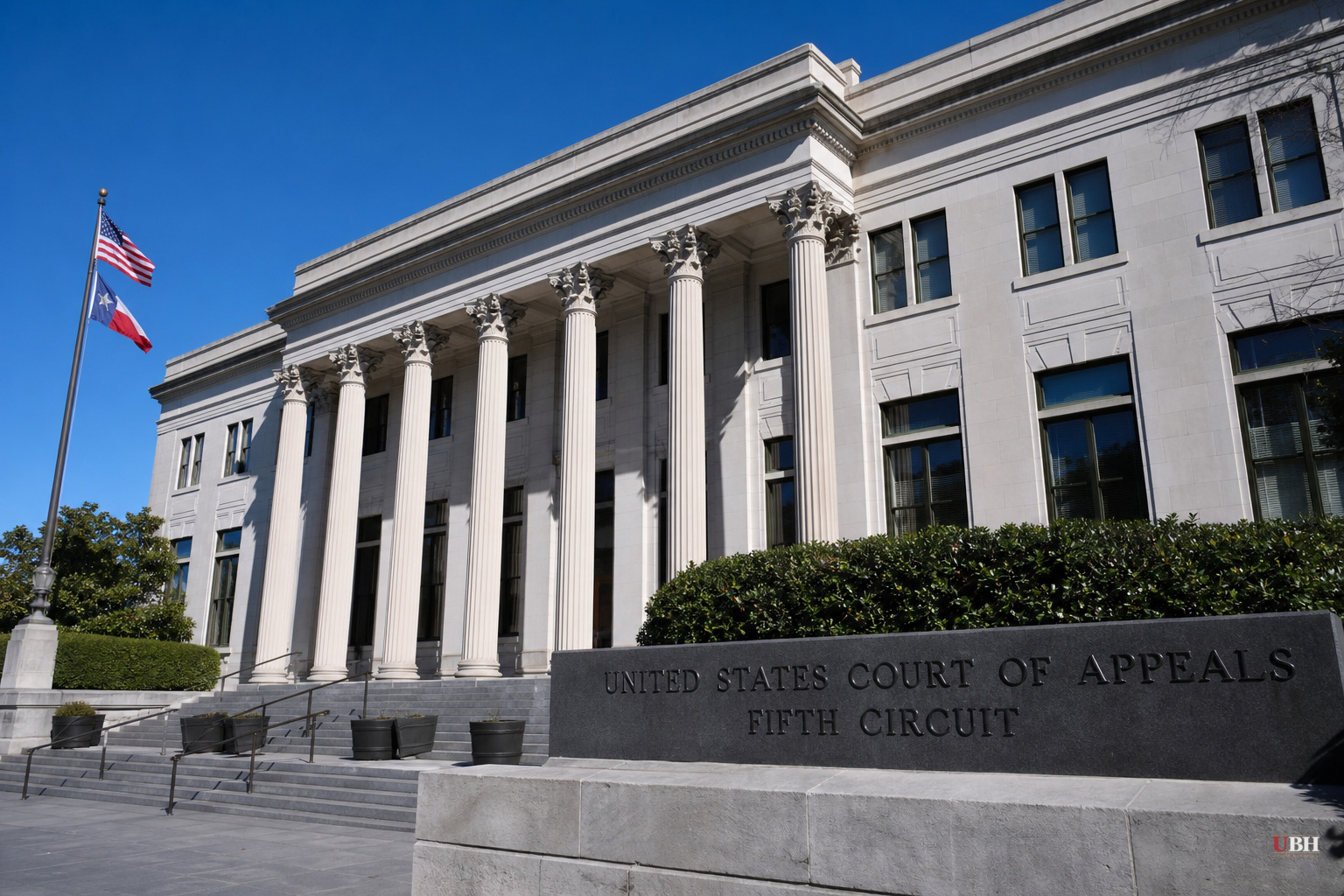
A divided panel of the Fifth Circuit ruled Friday that federal law preempts a core piece of a Texas law meant to force social media companies to shield kids from harmful content online. The 2-1 decision in Computer & Communications Industry Association v. Paxton, issued by Judges Dana Douglas and Patrick Higginbotham for the majority, deals a setback to one of the more aggressive state efforts to regulate how platforms handle minors.
The law at issue, Texas House Bill 18, targets what the bill calls Digital Service Providers, platforms whose service lets users socially interact, create a public or semi-public profile, and post content viewable by others, including via message boards, chat rooms, or feeds presenting content posted by other users. The law carves out exemptions for state and local government websites, financial institutions, medical websites, small businesses, higher-education websites, employee management software, school education software, and email or direct-messaging services that provide only those functions. It also exempts services that primarily provide news, sports, commerce, or content the provider itself selects, with only incidental social features.
H.B. 18's most contested piece is its "monitoring and filtering requirement." It mandates covered platforms to develop and implement a strategy to prevent known minors' exposure to "harmful material" and other content that "promotes, glorifies, or facilitates" suicide, self-harm, eating disorders, substance abuse, stalking, bullying, harassment, grooming, trafficking, child pornography, or other sexual exploitation or abuse. Texas defines "harmful material" with reference to the state penal code's definition of material obscene as to minors.
What the Court Actually Ruled
Judges Douglas and Higginbotham, writing for the majority, held that Section 230 of the federal Communications Decency Act preempts this monitoring and filtering mandate. Section 230, as the panel described it, gives platforms "broad immunity" from "all claims stemming from their publication of information created by third parties."
The majority leaned on the Fifth Circuit's own precedent. In Doe v. MySpace, Inc. (2018), the court held Section 230 shielded MySpace from negligence liability for publishing communications between a minor and an adult who later sexually assaulted her. But in Free Speech Coalition, Inc. v. Paxton (2024), the same court upheld a separate Texas age-verification requirement for pornographic websites, reasoning that it did not pertain to immunizing platforms from harm caused by unremoved speech, which the court called "the point of Section 230."
The key distinction the panel drew: liability "reliant on the harm done by third-party content" is preempted by Section 230; "liability purely based on whether plaintiffs comply with the statute" is not. H.B. 18's monitoring and filtering mandate falls into the first bucket, according to the majority, because enforcement is triggered by failures to adequately filter content, whether pursued by the Consumer Protection Division of the Attorney General's Office or by a parent of an affected minor. The court held these are claims stemming from platforms' actions as publishers, monitoring, screening, and deleting content, and are therefore squarely preempted. As the panel put it, quoting its own earlier decision, "publishers do not filter audiences; they filter content." Unlike the age-verification requirement addressed in Free Speech Coalition, the court found H.B. 18's monitoring and filtering requirement "is all about filtering content," and is thus preempted.
The age-verification piece of H.B. 18 was not addressed by this holding and tracks the Free Speech Coalition precedent, meaning Texas retains at least part of its regulatory scheme aimed at minors online.
The Texas Attorney General's office argued that the Supreme Court's recognition, in Moody v. NetChoice, LLC (2024), of platforms' own free-speech interest in curating content meant Section 230 shouldn't apply to claims targeting a platform's own curation methods. The majority said it "hesitate[s] to read Moody to render Section 230 so easily avoidable."
What's Unresolved
The decision was issued by a 2-1 vote, meaning one judge on the panel dissented from the majority's preemption holding. The reasoning behind that dissent is not detailed in the available excerpts of the opinion, but the split itself signals this is a contested legal question rather than a settled one.
This ruling doesn't resolve the underlying policy fight over how platforms should handle content that reaches minors. It resolves a narrower legal question: whether Texas can use content-moderation mandates to hold platforms liable, or whether federal law preempts that approach. For now, the Fifth Circuit says federal law wins.
Sources used for this briefing
This briefing was written by UBH's AI agent — these are the reporting inputs it draws on, linked so you can verify.


