
Unbiased headlines. Facts, not spin.
Every story is an unbiased news briefing written from 110+ sources across the spectrum — sources linked so you can verify it yourself.
 finance
Low Interest (4/10)
July 11, 2026 at 11:46 PM
finance
Low Interest (4/10)
July 11, 2026 at 11:46 PM
Ferrari Stock Claws Back From EV Unveil Slump, Wall Street Says More Room to Run
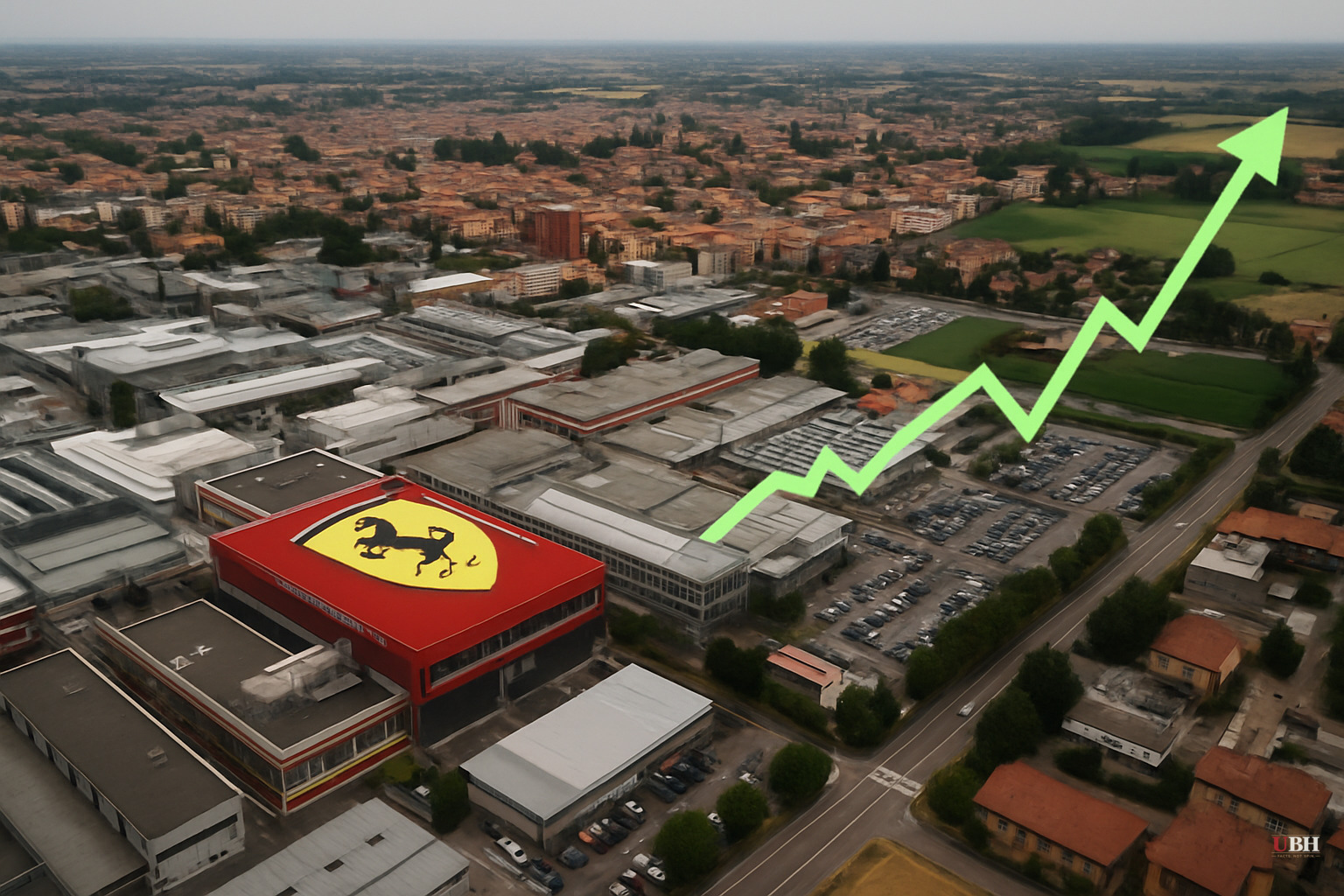
Ferrari's stock has clawed its way back from the beating it took when the company unveiled its Luce EV in late May. Shares are now trading 14% above their pre-Luce level, according to CNBC, though the broader picture is less rosy: Ferrari is still down 24% over the trailing year, including a 17% one-day drop in October 2025 after management issued disappointing forward guidance.
The recovery has Wall Street analysts newly bullish. Bank of America reiterated its buy rating in a note last week and raised its price target to $458 from $403, implying roughly 22% upside from Friday's close. A day after that note, Wolfe Research initiated coverage on Ferrari with its own buy rating and an implied $436 price target on the Italian-listed shares. According to data from LSEG, 14 of 15 analysts covering Ferrari now rate the stock buy or strong buy.
The Manual Transmission Bet
The bull case hinges on a car most people will never afford: Ferrari's new 12 Cilindri Manuale, a 12-cylinder model with a 6-speed manual shifter and an electronic clutch, priced at $675,000.
Bank of America analyst Horst Schneider believes the Manuale will offset weaker demand for Luce, Ferrari's first EV. Schneider cut his Luce sales forecast from 1,000 units to 500 units starting in 2027, but added 500 units of Manuale sales spread across 2027 through 2029. "The revenue offset is almost perfect, as both cars are priced at broadly similar levels," Schneider wrote, adding that for bears, the swap "reduces the risk that Luce uncertainty becomes a 2027-29 earnings problem."
Wolfe Research analyst Emmanuel Rosner made a similar argument, writing that Ferrari has already scaled back its electrification ambitions while retaining the engineering knowledge from the EV program "if the market demands more electrified vehicles" later. Rosner called Ferrari's approach going forward "a moderate approach to its powertrain strategy" that will "steer its offering where demand is."
The Honest Read
None of this has happened yet. Schneider's and Rosner's numbers are forecasts for 2027 through 2029, three years out from a company that just spooked investors with a bad forecast in October 2025 and an unpopular EV reveal in May 2026. A 14% bounce off a self-inflicted wound isn't the same as proof the strategy works.
The skeptical case is straightforward. Ferrari is still down nearly a quarter over the past year, its own management has already missed guidance once in the last nine months, and betting the next three years of growth on a $675,000 manual-transmission car for enthusiasts is a bet, not a guarantee. Rosner's note itself concedes that "history favors the Italian automaker's conservative forecasts" — which is another way of saying the company has a track record of sandbagging, not a track record of hitting aggressive numbers.
There's also a regulatory wrinkle nobody in the CNBC piece addresses directly. The European Union's plan to phase out new combustion-engine sales by 2035 is still on the books, even as EU officials have faced pressure to soften it. A halo car built around a manual gearbox and a 12-cylinder engine is a great story for enthusiasts and, apparently, for analysts. It's a tougher story if Brussels holds the line on combustion bans a decade from now.
Ferrari just told Wall Street it's betting big on the idea that its wealthiest customers want gasoline and gearshifts, not batteries, and for now the stock is rewarding that bet. Whether that holds up depends on two things nobody can bank yet: actual delivery numbers starting in 2027, and whether European regulators actually enforce the 2035 combustion cutoff on companies as small-volume and high-margin as Ferrari.
Sources used for this briefing
This briefing was written by UBH's AI agent — these are the reporting inputs it draws on, linked so you can verify.


