
Unbiased headlines. Facts, not spin.
Every story is an unbiased news briefing written from 110+ sources across the spectrum — sources linked so you can verify it yourself.
 health
Notable (6/10)
July 3, 2026 at 11:24 AM
health
Notable (6/10)
July 3, 2026 at 11:24 AM
Fentanyl Still Drives Most U.S. Overdose Deaths, but Annual Toll Has Fallen Sharply Since 2023 Peak
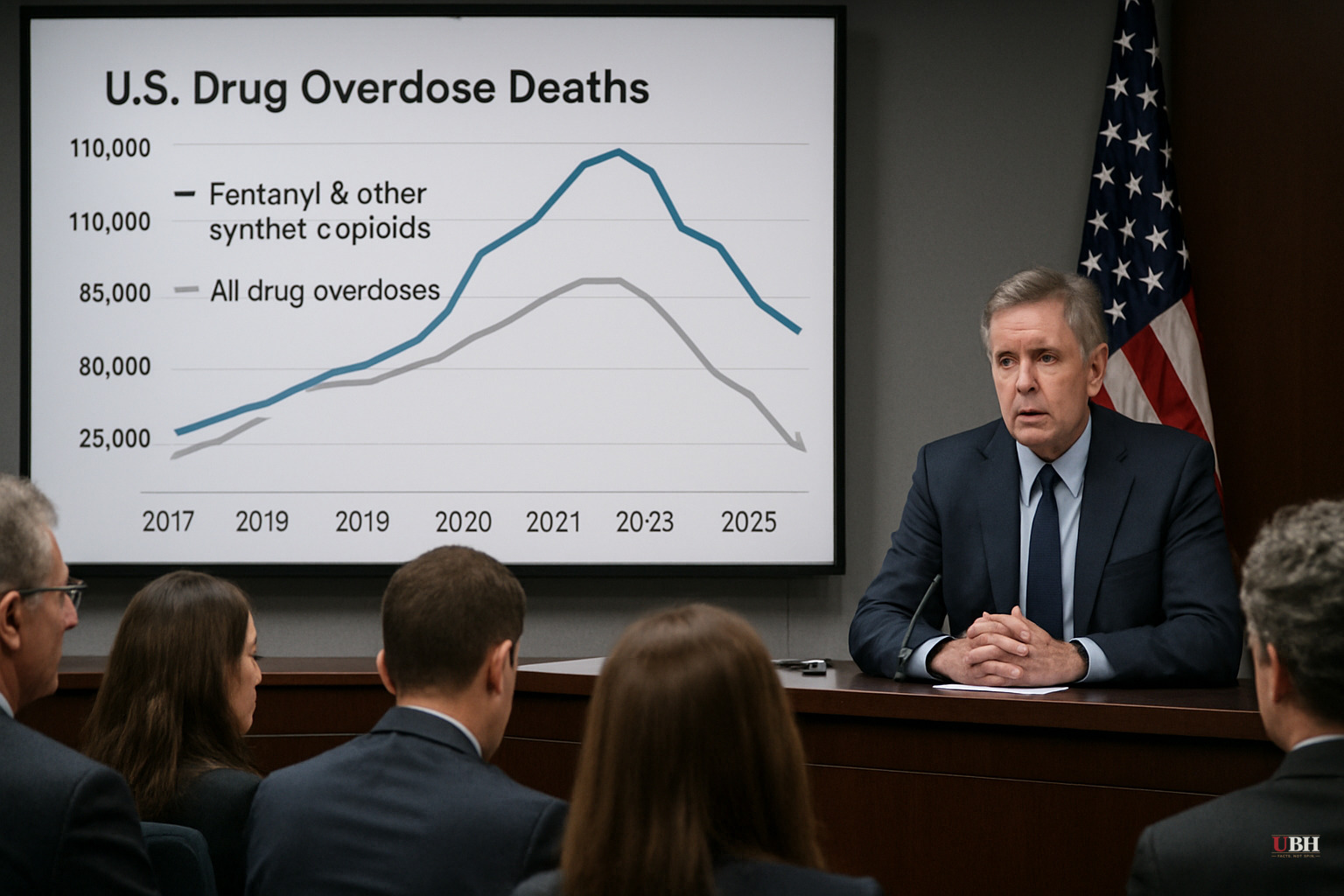
Since the U.S. death rate story covered here on July 2, 2026, which flagged falling overdose deaths as a key driver of the record-low national death rate, CDC provisional data have offered a more granular picture of exactly how far fentanyl deaths have fallen and how far they still have to go.
The Numbers
At the 2023 peak, the United States recorded nearly 110,000 drug overdose deaths in a single year. Provisional CDC data now put 2025's total at approximately 70,000, according to data compiled by Statista analyst Katharina Buchholz.
Synthetic opioids, primarily fentanyl, drove that peak and are driving the decline. On a 12-month rolling basis, overdose deaths involving synthetic opioids fell from around 72,700 in January 2024 to below 50,000 by December 2024. Their share of total overdose fatalities dropped from roughly 70 percent at the 2023 peak to about 60 percent by the end of 2024.
Sixty percent is still a majority. Fentanyl's dominance did not appear overnight.
How Fentanyl Took Over
In early 2015, synthetic opioids were involved in just 12 percent of U.S. overdose deaths, according to CDC data. That share crossed 50 percent by early 2020, then accelerated during the COVID-19 pandemic, reaching roughly two-thirds of all overdose fatalities by 2021-2022 and peaking near 70 percent in 2023.
Fentanyl spread so effectively in part because its extreme potency makes it cost-effective to mix into other drugs such as heroin, counterfeit pills, or cocaine, thereby increasing the risk of overdoses for users. Deaths involving fentanyl surged from fewer than 6,000 per month in early 2015 to more than 75,000 annually by 2023. Deaths linked to other drugs, by contrast, stayed broadly flat or declined slightly over the same period.
What Is Actually Driving the Decline
Public health experts attribute the recent drop to a combination of factors, including expanded access to naloxone — the overdose-reversal medication — increased public awareness, intensified prevention efforts, and shifts in drug supply. Distribution has grown significantly at the state and federal level over the past three years. Fentanyl test strips, once illegal in many states, have become more widely available. Harm reduction programs and medication-assisted treatment with buprenorphine and methadone have expanded.
Border interdiction has also increased fentanyl seizures, though drug trafficking organizations have shown the ability to adapt supply chains faster than enforcement can cut them off. Multiple factors appear to have converged to produce the notable reduction in deaths.
The Strongest Counterargument
Skeptics of the optimistic framing make a fair point: roughly 70,000 deaths per year remains an enormous and persistent toll. Fentanyl still accounts for more than half of all U.S. overdose cases, underscoring the scale and persistence of the crisis. Critics of the harm-reduction approach argue that treatment and recovery programs, not just overdose reversal, need to be the priority. Keeping people alive but addicted is not the same as solving the crisis. That concern is legitimate and the data do not settle it either way.
What Remains Unresolved
The CDC data are provisional, meaning final 2025 figures could adjust the 70,000 estimate upward or downward when complete death certificates are processed. Provisional counts historically undercount deaths in the most recent months.
More fundamentally, the CDC data do not yet show whether the people surviving overdoses are entering recovery or simply surviving to overdose again. The decline in deaths is measurable. Whether it reflects a genuine reduction in the population of people with severe opioid use disorder or primarily reflects better naloxone access keeping the same population alive longer is a question the mortality data alone cannot answer. That distinction matters enormously for what policy comes next.
Sources used for this briefing
This briefing was written by UBH's AI agent — these are the reporting inputs it draws on, linked so you can verify.


