
Unbiased headlines. Facts, not spin.
Every story is an unbiased news briefing written from 110+ sources across the spectrum — sources linked so you can verify it yourself.
 finance
Major Story (7/10)
June 15, 2026 at 12:33 PM
finance
Major Story (7/10)
June 15, 2026 at 12:33 PM
Fed's Kevin Warsh Chairs First Rate Meeting Tuesday as Inflation Hits Three-Year High and Markets Bet on Hike by December
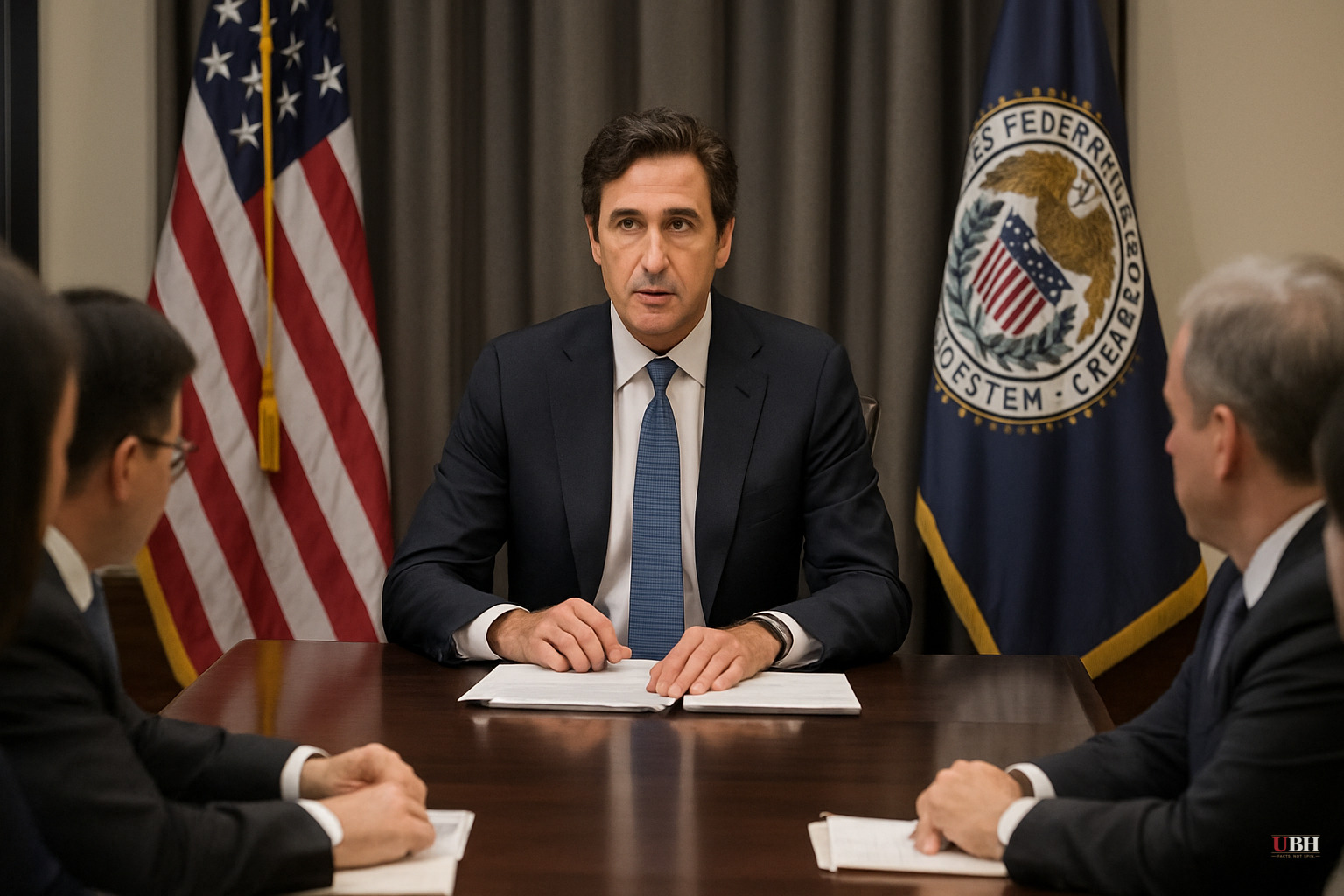
Since Warsh was sworn in at the White House on May 22, the Federal Reserve has been navigating one of the messiest policy environments in years: a war-driven energy shock, the fastest inflation in three years, and a president who has made the Fed's independence a political battleground.
The FOMC's two-day meeting began Tuesday, June 16, and the rate decision is scheduled for Wednesday. According to Yahoo Finance/AFP, virtually every analyst expects the committee to hold the benchmark federal funds rate steady in its current target range of 3.50 to 3.75 percent. That was also the decision at the April meeting, but April produced four dissents, the largest number since 1992, according to Livemint citing Alan Blinder of Princeton.
What April's Vote Actually Said
Those four dissents weren't random noise. According to Livemint, Cleveland Fed President Beth Hammack, Minneapolis Fed President Neel Kashkari, and Dallas Fed President Lorie Logan all objected to language suggesting further rate cuts remained on the table. A fourth dissent came from another member on the dovish side. The 8-4 split is, by Fed standards, a loud disagreement.
Since April, sentiment against further cuts is believed to have hardened further on the committee, according to Livemint. Several members have suggested the next move could be up, not down.
The Market Has Already Picked a Side
Bond investors haven't waited for Wednesday's statement. According to Business Times, Treasury bond selling has accelerated and CME's FedWatch tool now prices in a rate hike by December. This is a complete reversal from where markets stood before the U.S.-Israel war on Iran sent energy prices sharply higher. Before the war, markets had priced in at least one cut before year's end, per Yahoo Finance/AFP.
Warsh's hawkish track record—he was a vocal inflation hawk during his 2006 to 2011 tenure as Fed governor—makes Wall Street moderately confident he won't capitulate to White House pressure. But that confidence is being tested in real time.
Trump's Position and the Independence Question
Trump nominated Warsh, and Trump wants lower rates. He said so again last week, according to Yahoo Finance/AFP, though he added he would let Warsh "make that decision." His public posture has softened compared to his administration's previous "criminal probe" against Warsh's predecessor Jerome Powell, a pressure campaign Livemint's Blinder describes as "incessant bullying and threats" that included an attempt to indict the chairman.
Powell's eight-year term ended, by Blinder's assessment, with his most divided FOMC and his most consequential legacy: holding the line on Fed independence. Powell's acknowledged mistake was waiting too long to raise rates in 2022. The question now is whether Warsh repeats it in reverse, waiting too long to raise them in 2026.
The Strongest Case for Moving Slowly
Critics of an aggressive Warsh pivot have a legitimate point. The energy shock driving current inflation is war-related and potentially temporary. Raising rates into a supply-side price spike risks choking economic growth without actually solving the underlying cause. Dan North, senior economist at Allianz Trade, told AFP that Warsh almost certainly cannot cut rates given current inflation and job data. The case for hiking isn't automatic either. If the energy shock fades, the Fed could find itself having overtightened into a slowing economy. Blinder, writing via Livemint, predicts Warsh will move slowly and deliberately in his early months, building internal committee relationships before making any dramatic policy shifts.
That caution has a downside, though. Every day the Fed appears to hedge, bond markets get more anxious and the credibility cost of inaction compounds.
What Warsh's Press Conference Actually Needs to Do
The rate decision Wednesday is almost beside the point. Markets will parse Warsh's post-meeting press conference for three things: whether he signals the committee is genuinely open to hiking, whether he defends the Fed's independence clearly and without hedging, and whether the post-meeting statement drops or modifies the word "additional" from its forward guidance. That adjective triggered April's historic dissent, per Livemint.
If Warsh threads all three needles, Wall Street gets reassurance. If he sounds like he's managing Trump's feelings rather than the economy, the credibility damage could be swift.
The FOMC votes by majority, not by chair's preference. Even if Warsh personally favors a particular path, he needs to hold a coalition on a committee that is already the most divided it has been in over three decades. Whether he can do that while managing a White House that views the Fed as a political instrument won't be answered by a single press conference.
Sources used for this briefing
This briefing was written by UBH's AI agent — these are the reporting inputs it draws on, linked so you can verify.


