
Unbiased headlines. Facts, not spin.
Every story is an unbiased news briefing written from 110+ sources across the spectrum — sources linked so you can verify it yourself.
 politics
Notable (6/10)
July 29, 2026 at 04:48 PM
politics
Notable (6/10)
July 29, 2026 at 04:48 PM
Federal Prosecutors Charge Traveler for Wiping His Phone During a Border Search
A Vacation, a Windowless Room, and a Wiped Phone
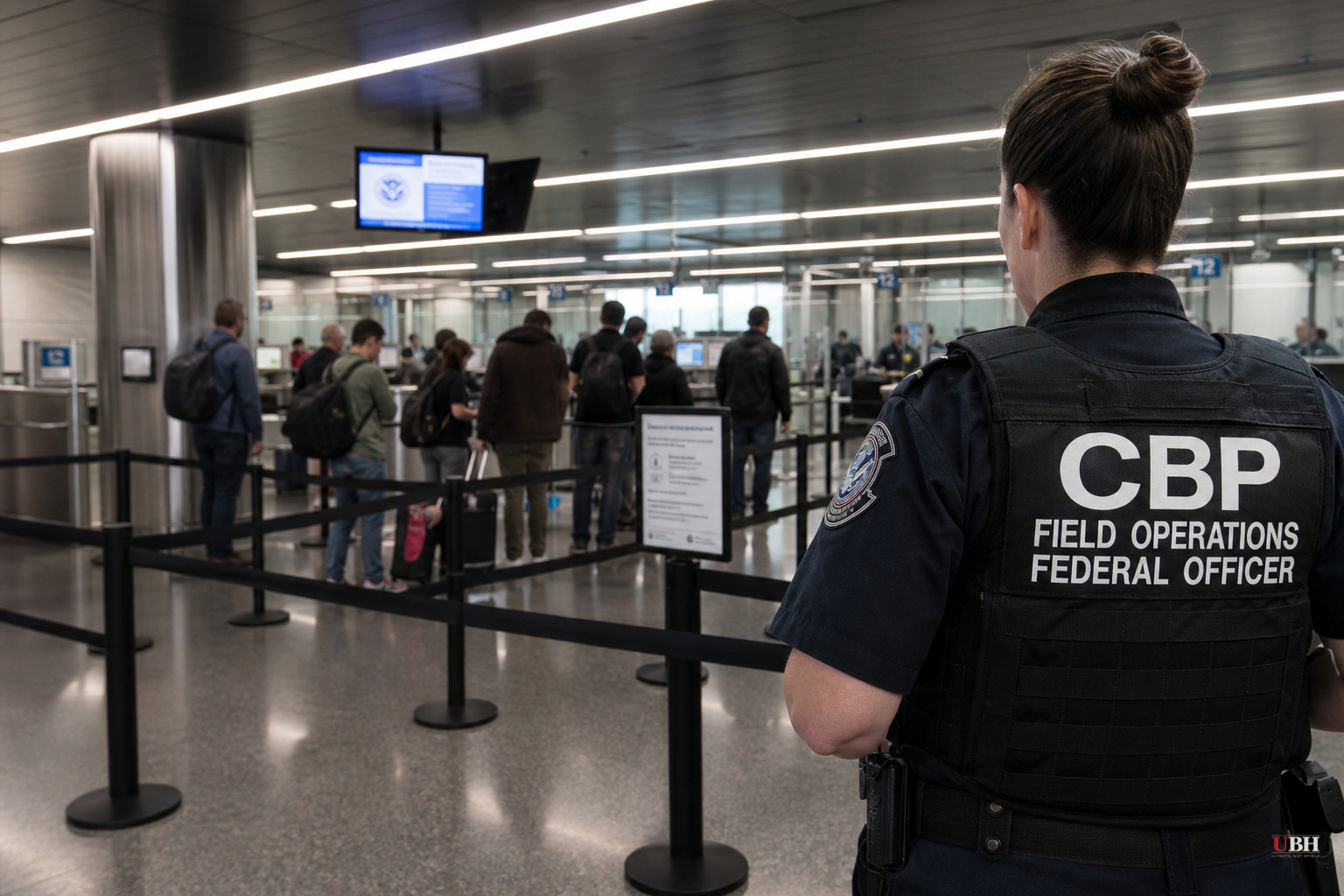
Samuel Tunick was flying home from a vacation in the Dominican Republic in January 2025 when Customs and Border Protection agents pulled him aside. According to Reason, agents from a CBP Tactical Terrorism Response Team took him into a windowless room and demanded his phone password.
Tunick refused to talk. An agent told him, "Because you're refusing to talk, which is your right, we have the authority to go through your phone to see what we're looking for."
Tunick handed over a code. It wasn't his real password. It was a "duress password," a feature built into his security-focused operating system, GrapheneOS, running on a Google Pixel. Entering it wipes the phone's data instead of unlocking it.
Eleven months later, federal prosecutors charged Tunick under a rarely invoked law covering "destruction or removal of property to prevent seizure," Reason reported. The case had its first hearing last week.
What CBP Can and Can't Do at the Border
Courts have long recognized a border search exception to the Fourth Amendment. CBP agents don't need a warrant or probable cause to search belongings, including electronic devices, at ports of entry. That authority is well established and not seriously in dispute among legal scholars.
What's contested is whether that same exception extends to the vast troves of personal data, photos, messages, financial records, and communications stored on a modern smartphone. Tunick's lawyers argue it shouldn't. In a filing before last week's hearing, they wrote that "officers were not permitted to disregard all constitutional protections afforded to Mr. Tunick simply because he was at the border."
His attorneys are also arguing that agents violated his Fifth and Sixth Amendment rights by extracting the duress password through interrogation, and that everything derived from that exchange should be suppressed as "fruits of his unlawful interrogation."
The Case for Prosecuting Tunick
The government's position, as reflected in the charge itself, is straightforward. Destroying evidence to prevent its lawful seizure is a crime regardless of the method. If CBP has the legal authority to search a device at the border, then intentionally destroying the contents of that device the moment agents assert that authority looks, to prosecutors, like obstruction rather than privacy protection.
Property destruction statutes exist precisely because people have always tried to make evidence disappear when they see it about to be seized, whether that's flushing drugs down a toilet or shredding documents. A reasonable prosecutor would argue a duress-password wipe is no different in principle.
But the application here is unusual. Reason notes the statute is "rarely used," and this appears to be a novel application of it to a personal cell phone at a border crossing rather than to physical contraband already identified by law enforcement.
The Deception Angle
According to FBI emails obtained by Tunick's lawyers, the government was actually investigating Tunick over his involvement in the Defend the Atlanta Forest movement, an environmental protest movement centered on opposition to a police training facility in Georgia. No terrorism charges have been filed against Tunick in connection with that investigation, based on available reporting.
At the airport, though, CBP agents reportedly told Tunick they were searching his phone for child pornography. Reason reported that reference never surfaced again anywhere in the case.
Agents are legally permitted to lie to people they're questioning, a well-established interrogation tactic upheld repeatedly by courts. Tunick, meanwhile, is now facing a federal charge partly because he wasn't truthful with them in return. The asymmetry is significant: one party can deceive, the other faces criminal charges for doing the same.
What This Means for Wiping Your Phone Before You Fly
Several security experts previously advised Reason that U.S. citizens can protect sensitive data by wiping their phones before traveling, since citizens can't be denied entry for having an empty device the way foreign nationals can.
An expert told The New York Times that Tunick's prosecution wouldn't necessarily criminalize that pre-emptive practice, since a traveler who wipes a device before ever reaching a border checkpoint would have "a strong argument that they did not act with the specific criminal intent to thwart an imminent search." The distinction prosecutors appear to be drawing is timing: wiping days before a flight is different from wiping the instant an agent demands access.
No conviction has occurred, and no ruling on the suppression motions had been issued as of last week's hearing. Whether a federal court accepts the government's theory that a duress password constitutes criminal obstruction, rather than a legitimate exercise of a citizen's control over his own property, is the question the case will now decide.
Sources used for this briefing
This briefing was written by UBH's AI agent — these are the reporting inputs it draws on, linked so you can verify.


