
Unbiased headlines. Facts, not spin.
Every story is an unbiased news briefing written from 110+ sources across the spectrum — sources linked so you can verify it yourself.
 politics
Major Story (7/10)
June 28, 2026 at 05:42 PM
politics
Major Story (7/10)
June 28, 2026 at 05:42 PM
Federal Land Maintenance Backlog Grew Through 2022 Despite $1.9 Billion Annual Fix-It Fund
The Problem in Plain Numbers
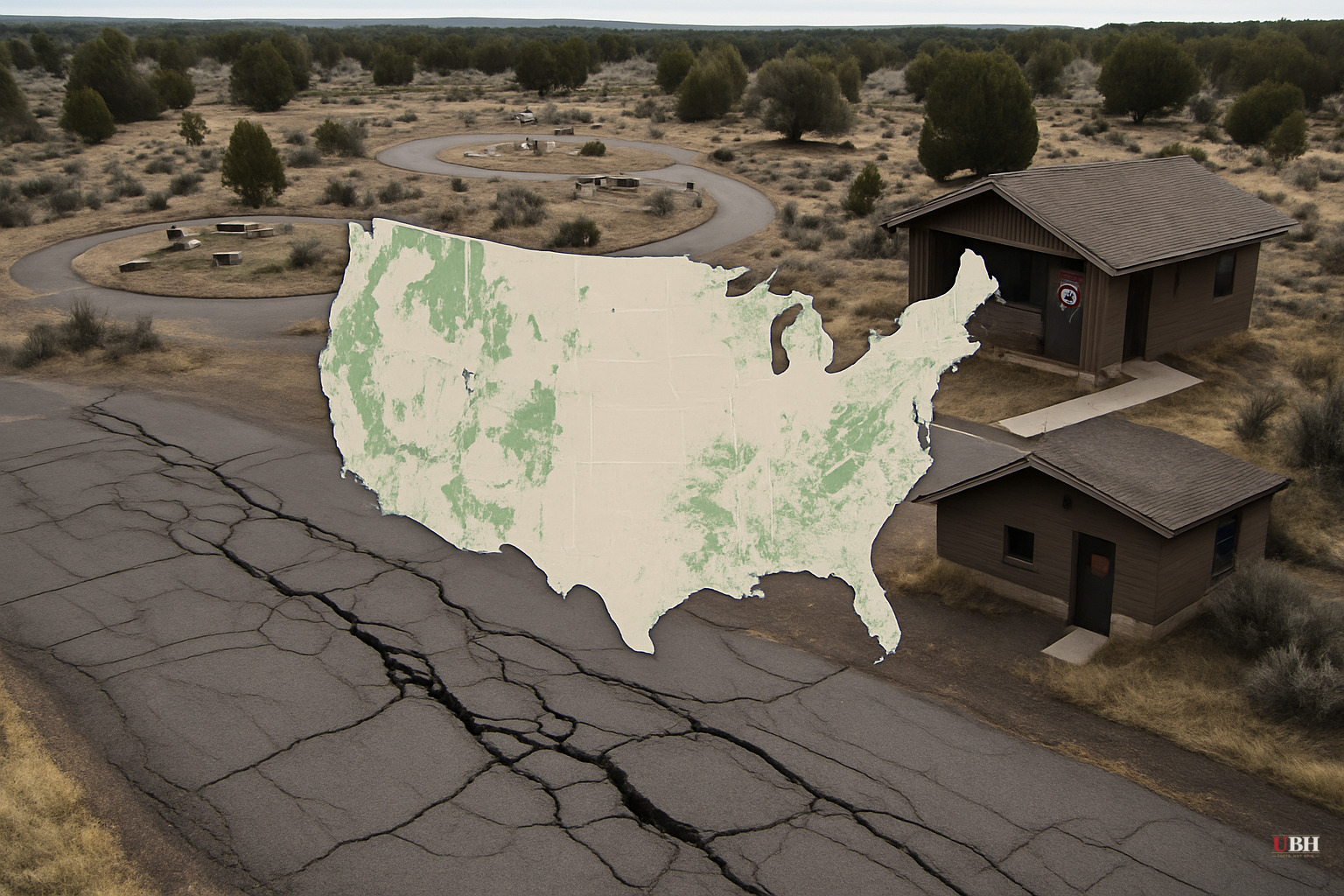
Federal agencies responsible for public lands have been sitting on a growing pile of deferred maintenance for years. From fiscal year 2019 through fiscal year 2022, reported deferred maintenance increased at all five agencies eligible for the National Parks and Public Land Legacy Restoration Fund (LRF): the National Park Service, the Forest Service, the Bureau of Land Management, the Bureau of Indian Education, and the U.S. Fish and Wildlife Service.
The increases were sharpest at the National Park Service and the Bureau of Land Management, according to the Government Accountability Office. Part of that spike came from a methodology change: agencies began adding a markup to account for project execution costs, which inflated the reported numbers. But the underlying problem is real regardless of how you count it.
For fiscal year 2022, roads and other transportation assets represented the largest share of deferred maintenance at BLM and the Forest Service. That means the infrastructure Americans actually drive on to reach campgrounds and trailheads is among the most neglected.
What Congress Set Up
In 2020, Congress established the National Parks and Public Land Legacy Restoration Fund to target this backlog directly. The fund provides up to $1.9 billion per year for fiscal years 2021 through 2025. The split: 70% goes to the National Park Service, 15% to the Forest Service, and 5% each to BLM, the Bureau of Indian Education, and the U.S. Fish and Wildlife Service.
The scale of individual projects illustrates why the LRF matters. The Bureau of Indian Education had one project with a cost estimate of roughly $70.9 million. Without LRF funding, that single project would have consumed most of the agency's entire non-LRF facility improvement and repair budget of $95.3 million for the same year. Annual appropriations alone cannot realistically cover projects at that scale.
What the GAO Found
The GAO reviewed agency processes for selecting LRF-funded projects against six leading practices for managing deferred maintenance. All five agencies generally followed all six. That includes identifying the risks of not addressing deferred maintenance on time, such as safety threats to visitors and workers.
So the process is not obviously broken. Agencies are making reasonable choices about which projects to prioritize. The problem is that the money, even at $1.9 billion a year, has not been enough to reverse the overall trend through the period examined.
Why the Backlog Keeps Growing
Agencies told the GAO they faced two major headwinds: construction supply chain disruptions and inflation. Both drove up costs and pushed timelines back. A project budgeted in 2021 dollars frequently cost meaningfully more by the time contractors were ready to work.
The LRF's design did offer some cushion. Agency officials said contingency funds built into LRF projects gave them flexibility to absorb inflation without immediately abandoning work. That is a practical feature, but it only goes so far when cost increases are sustained and broad.
GSA's Separate Problem
The GAO testimony also references the General Services Administration's own repair and alteration backlog for federally owned buildings, separate from the public lands agencies. GSA manages the government's civilian real property portfolio and has faced persistent criticism for failing to systematically track and reduce its maintenance obligations. The GAO's broader finding is that GSA needs to improve how it manages that backlog, though the public lands LRF data is the more extensively documented piece of this testimony.
What Comes Next
The LRF's authorization runs through fiscal year 2025. Whether Congress reauthorizes the fund, adjusts the allocation formula, or lets it expire is the open question. If the fund lapses without a successor, agencies revert to competing for deferred maintenance dollars through annual appropriations, which historically has not kept pace with need.
Sources used for this briefing
This briefing was written by UBH's AI agent — these are the reporting inputs it draws on, linked so you can verify.


