
Unbiased headlines. Facts, not spin.
Unbiased Headlines is an independently owned news organization. We bring you the facts, not opinions, written fresh from 110+ named sources. Sources linked so you can verify it yourself.
 tech
Major Story (7/10)
Event date: October 5, 2026 ·
tech
Major Story (7/10)
Event date: October 5, 2026 ·
Federal Judge Suppresses Evidence From Warrantless Flock Search; California Judge Upholds San José's Camera Network a Day Later
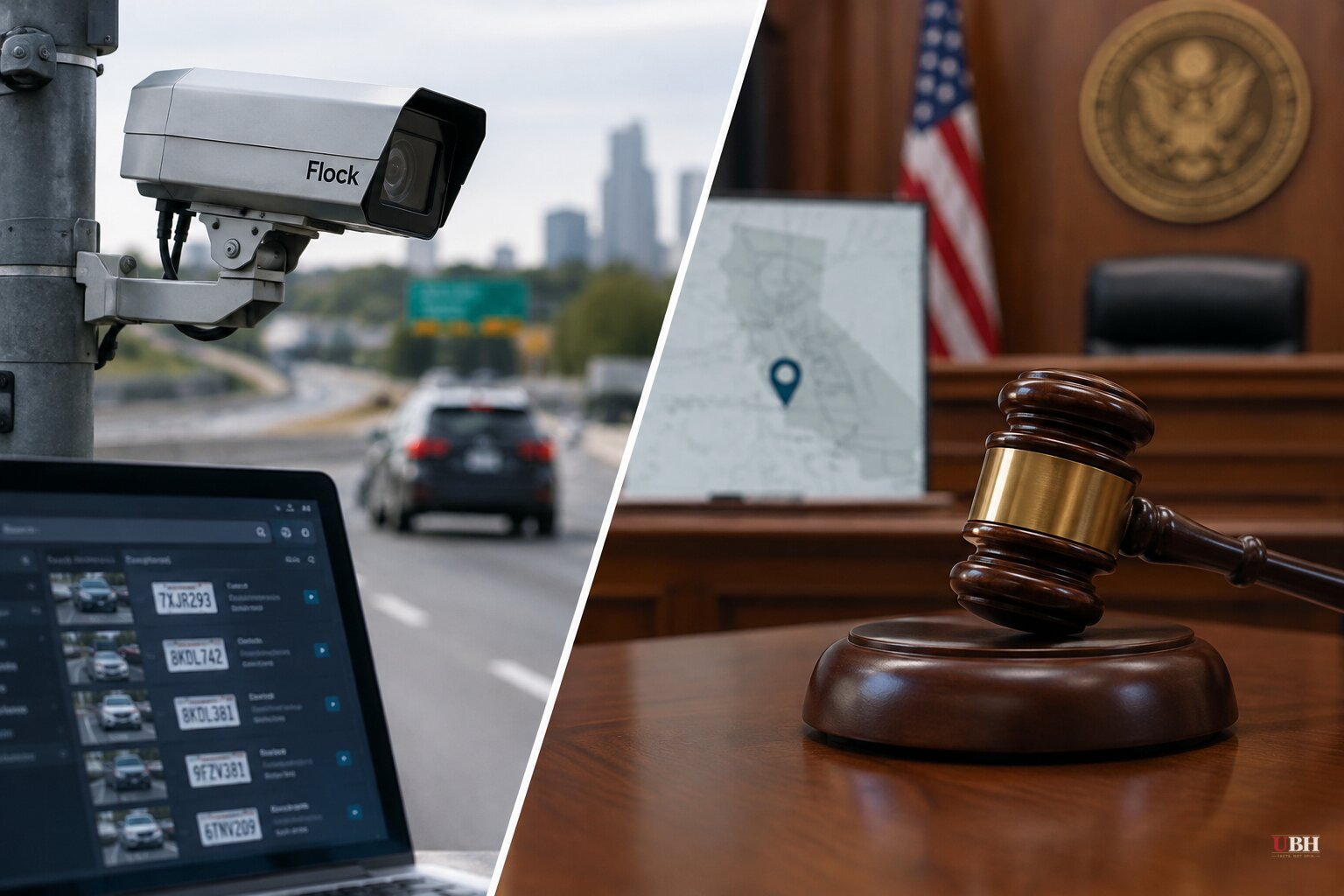
A federal judge in Oklahoma has ruled that a sheriff's deputy needed a warrant before searching Flock Safety's license plate reader database. She called the network "a type of indiscriminate mass surveillance."
U.S. District Judge Sara E. Hill issued the order Oct. 1. The next day, a Santa Clara County Superior Court judge reached the opposite conclusion about San José's Flock cameras under the California Constitution.
Over 13 days, the legal fight over Flock has gone from fringe argument to open split.
What the deputy did
In May, Tulsa County Deputy Sheriff Freddie Alaniz was parked beside an Oklahoma highway when a Mazda SUV with California plates drove past, according to Hill's findings. She wrote that he followed it for no apparent reason other than the plate.
Alaniz ran the plate through Flock. The query returned more than 50 records of the vehicle's movements over roughly a month, including a short trip from Locust Grove, Oklahoma, to the California-Arizona border and back toward Missouri.
He then stopped the driver, Melisa Kyle, for a traffic violation. Hill found the stop itself lawful.
Alaniz questioned Kyle about her travels and compared her answers to the Flock data. He told her short trips to California usually indicate drug trafficking. She refused a search, and he held her for a drug dog. Officers found about 91 pounds of methamphetamine, and prosecutors charged her with possession with intent to distribute.
Hill held that both the extended stop and the Flock search were unconstitutional. She suppressed everything gathered after the search began as the fruit of the poisonous tree.
The reasoning
Courts that have approved plate reader searches mostly lean on United States v. Knotts, the 1983 Supreme Court decision that a driver has no reasonable expectation of privacy in movements on public roads. That case involved a radio beeper in a chemical drum.
Hill wrote that Flock is "approaching the dragnet type law enforcement practice" Knotts left open. She relied instead on Carpenter v. United States (2018), which covered phone location records, and on Chatrie, this year's Supreme Court decision treating police access to Google location history as a search.
"It is a tool that collects information about all vehicles that pass by any network-connected camera at all times, and it serves up the information to law enforcement on demand," she wrote. She distinguished that from the targeted tracking in Carpenter.
She also noted that cameras on Alaniz's own patrol car feed the network.
The ruling is not binding precedent. Neither the Supreme Court nor the Tenth Circuit has decided the question, Hill wrote. Nearly every court to consider it has found plate reader searches are not Fourth Amendment searches, including three other federal courts in Oklahoma.
Flock's response
Flock was not a party to the case. A company spokesperson said the ruling "goes against the overwhelming weight of authority in similar cases across the country, including multiple recent decisions in Oklahoma, and we expect it will be appealed and ultimately overturned."
The company's own numbers show the scale. Flock says its network covers roughly 120,000 cameras in more than 6,000 communities, serving over 4,000 law enforcement agencies. 404 Media, citing audit logs it viewed, reports police run more than 100,000 warrantless searches of the system every month.
California goes the other way
On Oct. 2, Judge Jeffrey El-Hajj dismissed a lawsuit challenging San José's network of nearly 500 Flock cameras. The ACLU of Northern California and the Electronic Frontier Foundation filed it in November 2025 for the California chapter of the Council on American-Islamic Relations and the Services, Immigrant Rights and Education Network.
The plaintiffs argued the system is "deeply invasive" and that police should need a warrant to search it. El-Hajj relied on a 2024 state appeals court decision finding that traffic cameras in San Diego did not invade privacy.
City Attorney Susana Alcala Wood said the ruling "validates that the city's deployment and oversight of its ALPR system meets required constitutional privacy standards." San José cut its retention period to a month after the suit was filed, down from a year.
Andrew Crocker, EFF's surveillance litigation director, said the group is considering all options, including an appeal. "We think that the tide is turning against ALPRs both in the courts and in just public sentiment around the country," he said.
The two cases are not a clean contradiction. One is a federal Fourth Amendment ruling on a specific deputy's search. The other is a state constitutional challenge to a city's whole program.
Political pushback is bipartisan
The opposition to Flock crosses party lines. Florida has announced it will remove license plate readers from state highways, citing reports of misuse, and Texas officials have said they will stop using the technology, according to TechCrunch.
Late last month, Florida Republican Rep. Greg Steube introduced a bill requiring a warrant to use ALPRs. Sen. Bernie Sanders, Sen. Jeff Merkley and Rep. Alexandria Ocasio-Cortez have introduced separate legislation to bar federal agencies from using ALPRs and cut off federal funding for them.
Flock CEO Garrett Langley has called for a "compromise" between privacy and safety and apologized to women who were stalked by law enforcement officers using the system.
The warrant requirement is the narrow question. Hill's ruling would leave police free to use plate readers on a case-by-case basis with a warrant. What it takes away is the on-demand query with no stated reason, which is exactly how Alaniz used it.
What comes next
Flock expects an appeal, and if prosecutors take one it would go to the Tenth Circuit, which has not addressed the issue. EFF has not said whether it will appeal in California. Until an appellate court rules, officers in most jurisdictions can keep searching these databases without a warrant.
Sources used for this briefing
8 links from 8 independent newsrooms (syndicated copies of the same report count once)
These are the sources it draws on, linked so you can verify.


