
Unbiased headlines. Facts, not spin.
Unbiased Headlines is an independently owned news organization. We bring you the facts, not opinions, written fresh from 110+ named sources. Sources linked so you can verify it yourself.
 tech
Major Story (7/10)
Event date: October 12, 2026 ·
tech
Major Story (7/10)
Event date: October 12, 2026 ·
FCC Rule Bars Devices With Huawei and ZTE Chips From Authorization as Oct. 29 Vote on Chinese Test Labs Nears
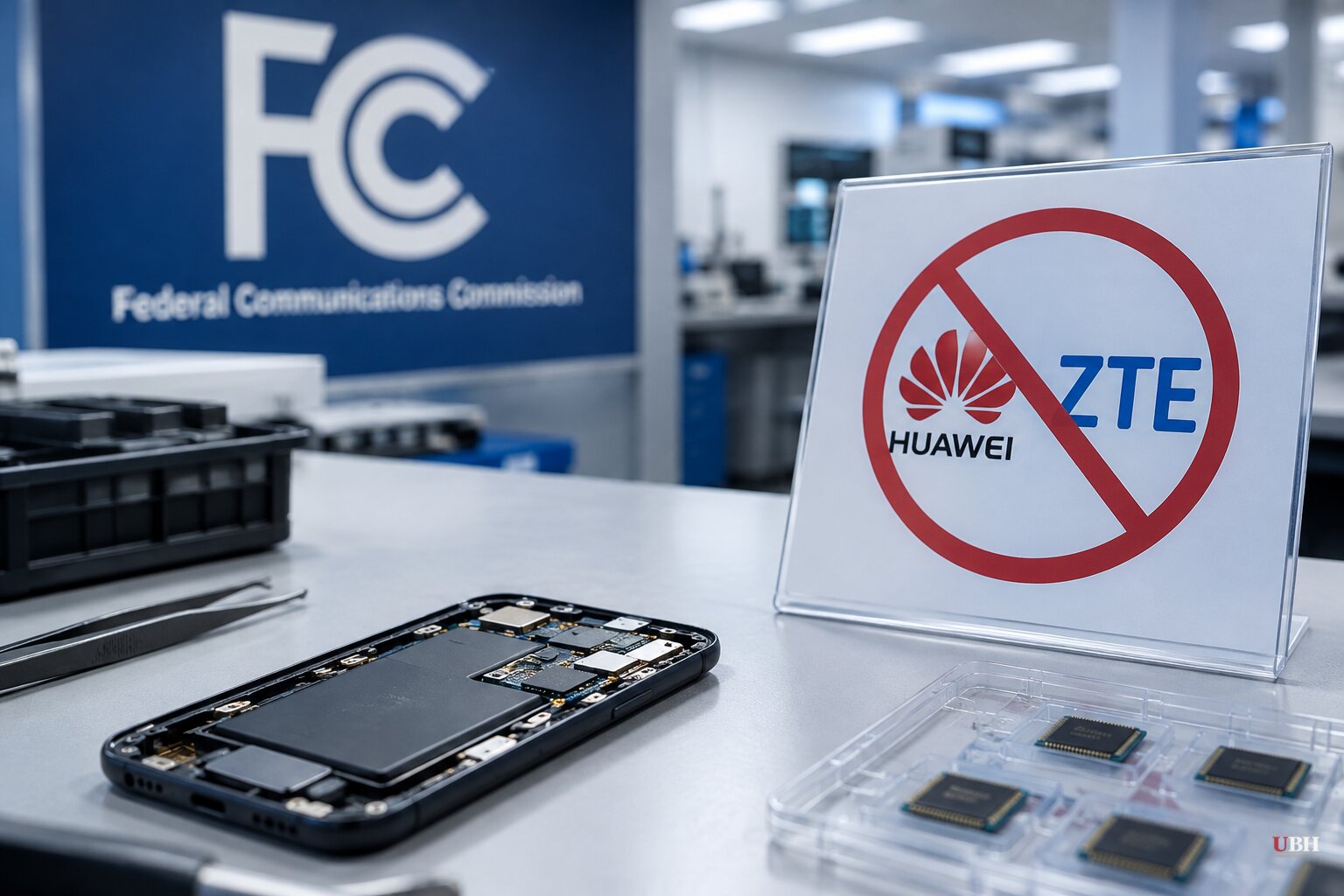
Since the FCC began tightening its equipment rules in 2025, the agency has moved from banning finished Chinese products to targeting what is inside them and who tests them. Two pieces of that campaign land within weeks of each other: a chip-level rule that took effect today, Oct. 14, and a vote scheduled for Oct. 29 on the labs themselves.
The chip rule takes effect
FCC Report and Order 26-50, published in the Federal Register on Sept. 11, 2026, closes what Chairman Brendan Carr has called the "component part loophole." Any radio-frequency device that incorporates a chip, wireless module or programmable sub-assembly made by Huawei, ZTE or three other designated national-security entities can no longer receive FCC authorization.
The old gap was simple. The FCC could deny authorization to a finished device made by a Covered List company. But if another manufacturer assembled a router, camera or wireless module and sourced a critical chip from Huawei or ZTE, the product could still clear the FCC and reach U.S. shelves.
The order's reasoning is that a compromised logic-bearing component can let its maker access, intercept or reroute U.S. communications without users knowing. The FCC cited research showing that malicious logic, hidden firmware or hardware backdoors at the chip level can undermine encryption, firewalls and endpoint detection software above it. Carr has summarized the principle as "trust starts in silicon."
The rule covers all new authorization applications from today forward. Per the order's terms, a pending application amended to swap in different logic-bearing chips after today loses its grandfathering protection. Manufacturers, importers and contract assemblers must be able to certify before filing that no logic-bearing component came from a Covered List entity. The burden sits on the applicant.
The next target: the test labs
On Oct. 7, the FCC said it will vote on Oct. 29 to bar all labs in China from testing smartphones, cameras, computers and other electronics for the U.S. market. The prohibition would also reach test labs and certification bodies in any country that denies reciprocal treatment to U.S.-based labs. The ban is slated to take effect Dec. 1, 2028.
Carr laid out the numbers. Less than 4% of all electronic devices are tested in labs inside the United States, he said, and 82% were tested in China in 2025. Carr said in April, when the rule was first proposed, that more than 75% of testing occurs in countries that have refused to commit to reciprocal treatment of U.S. labs and certification bodies. The FCC says it will "insist on fair and reciprocal treatment in international commerce."
The agency is also adopting a streamlined approval process for devices tested in U.S. labs or in labs from countries that do not pose national security risks.
The lab ban builds on 2025 action. In May 2025 the FCC barred labs controlled by foreign-adversary governments, and beginning in September 2025 it withdrew or denied recognition of 23 such labs. The FCC said this year that a substantial majority of China-based labs were still testing U.S.-bound electronics anyway. That gap is what the Oct. 29 vote aims to close.
A steady escalation
The FCC's record over the past year is a ratchet:
- December 2025: ban on imports of new models of Chinese drones.
- March 2026: same treatment for new models of Chinese-made consumer routers.
- April 2026: proposal to phase out, over two years, labs in countries without mutual recognition agreements with the U.S., a reciprocity requirement the agency dropped in 2015.
- June 2026: ban on imports of more equipment from a group of Chinese manufacturers including Huawei and ZTE.
- July 2026: vote to bar U.S. sales of devices containing key hardware from Chinese firms deemed national security risks, plus the addition of foreign-made advanced robots and power inverters to the Covered List.
The FCC has also proposed barring U.S. carriers from interconnecting with Chinese telecom firms deemed security risks, and has proposed banning imports of most military-grade drones.
Beijing's response
China's Ministry of Commerce announced three countermeasures against the FCC on Aug. 5, according to Chinese media reports, and warned it would take further action if Washington introduced new restrictions. Chinese media and commentators now say Beijing is ready to strike back again. The specific form of any new retaliation has not been announced.
On the commercial side, the effect is expected to be uneven. Some manufacturers may move production lines to Southeast Asia if they eventually have to test products there. Others may keep producing in China and absorb higher logistics costs from shipping samples back and forth to overseas labs. Some observers say the lab ban gives the "China plus one" strategy another push to move production bases outside China.
The compliance cost is a live question for importers. The chip rule puts certification duties on applicants, and the lab ban adds a testing-location requirement more than two years out. Neither the FCC nor the sources cited here have put a dollar figure on what either will cost manufacturers or consumers.
The next fixed date is Oct. 29, when the commission votes on the lab ban. If it passes as announced, test labs in China and in countries without reciprocal access for U.S. labs have until Dec. 1, 2028 to stop serving the U.S. market.
Sources used for this briefing
3 links from 3 independent newsrooms (syndicated copies of the same report count once)
These are the sources it draws on, linked so you can verify.


