
Unbiased headlines. Facts, not spin.
Every story is an unbiased news briefing written from 110+ sources across the spectrum — sources linked so you can verify it yourself.
 politics
Notable (6/10)
July 20, 2026 at 01:28 AM
politics
Notable (6/10)
July 20, 2026 at 01:28 AM
Federal Judge Strikes Race-Based Provision From Biden's $2.75 Billion Digital Equity Program, Orders Funding Restarted
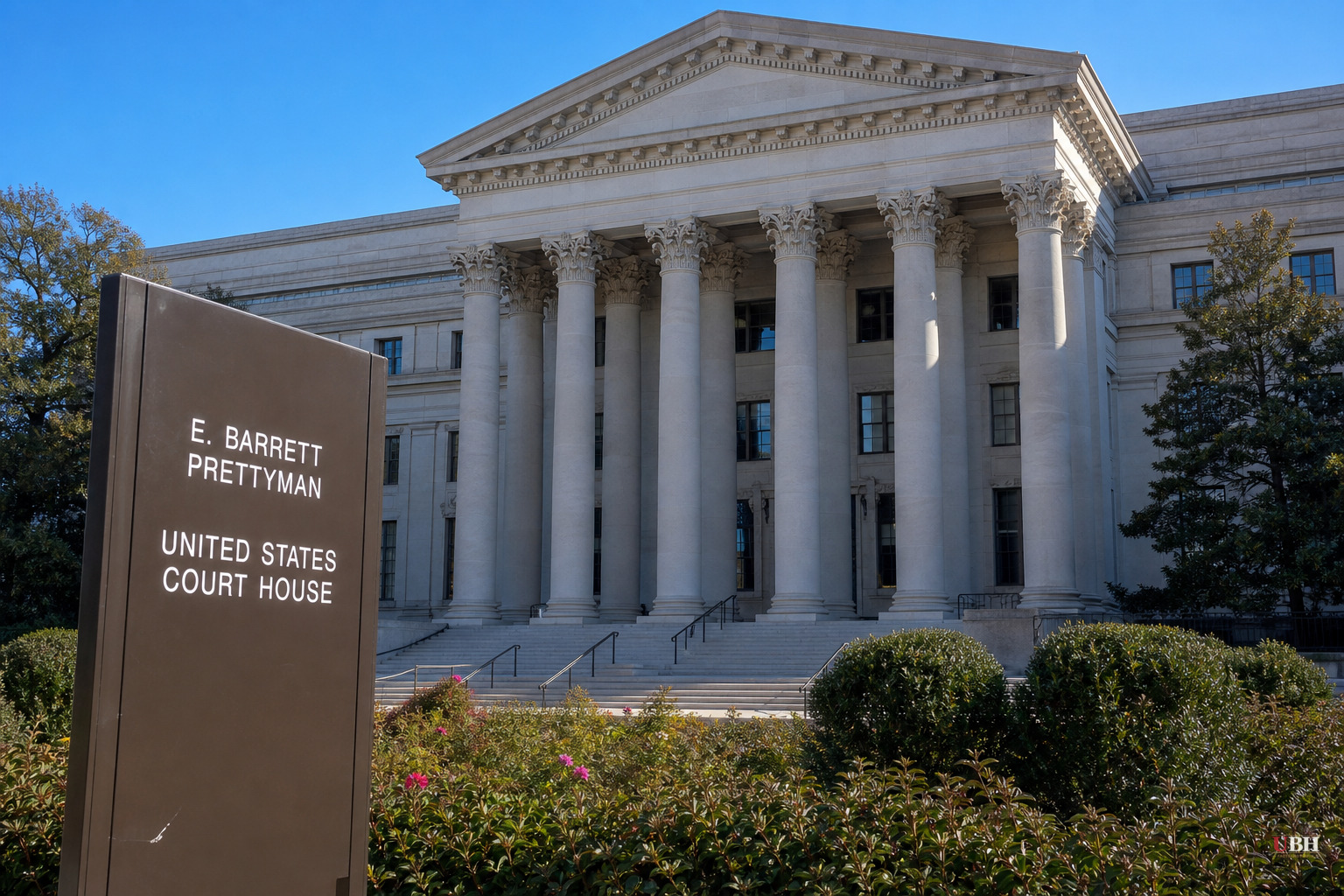
A federal judge has split the difference on one of the Trump administration's most contested rollback fights, striking down a race-based provision in a Biden-era internet grant program while ordering the program itself to keep running.
U.S. District Judge John Bates of the U.S. District Court for the District of Columbia ruled on July 15 that a provision of the Digital Equity Act naming racial and ethnic minorities as a "covered population" for federal grant purposes is unconstitutional, according to The Epoch Times. Bates cited the Supreme Court's 2023 decision striking down affirmative action in college admissions, writing that "ameliorating general societal inequalities" does not give the government a compelling interest to use race as a factor in distributing money.
"Otherwise, Congress could deploy racial classifications when confronted with any situation of an uneven resource distribution," Bates wrote in his 35-page order.
What the law actually did
The Digital Equity Act was part of the bipartisan Infrastructure Investment and Jobs Act that Biden signed in 2021. It set aside $2.75 billion for the National Telecommunications and Information Administration to fund broadband expansion and digital literacy programs, administered through state grants and a separate Competitive Grant Program.
The law identified eight "covered populations" facing barriers to internet access, among them racial and ethnic minorities, low-income households, veterans, older adults, and people with disabilities. It was that racial category, specifically, that Bates found unconstitutional.
After Trump took office for his second term, he called the program "racist" and "illegal," and in May 2025 his administration froze the Competitive Grant Program and terminated existing awards, according to Public Knowledge, a group that filed statements supporting the plaintiffs. The Justice Department has confirmed it will not defend the racial criterion as written, according to Newshue.
The lawsuit and the ruling
The National Digital Inclusion Alliance, a nonprofit that had received Competitive Grant Program funding before the freeze, sued the administration in October 2025 to force reinstatement of the program. Bates's ruling handed each side a partial win.
He rejected the administration's attempt to dismiss NDIA's lawsuit outright, meaning the government cannot simply cancel the program because Trump disagrees with it. But he agreed with the administration that the racial preference itself violates the Constitution's equal protection guarantee.
Critically, Bates found the race provision severable from the rest of the law, meaning the program can continue without it rather than being thrown out in its entirety. "The government has committed to reinstating the Competitive Grant Program upon a judicial determination that the race criterion is unconstitutional and severable," Bates wrote, according to Community Broadband Networks.
Reaction is split, but not on the core legal question
John Bergmayer, legal director at Public Knowledge, welcomed the reinstatement of funding but argued Bates got the constitutional call wrong. He said the law only listed minority status as one of eight nonexclusive indicators of digital access barriers and never created a quota or set-aside. "At a minimum, the court should have allowed the factual record to develop before deciding that Congress lacked a compelling basis for the provision," Bergmayer said.
Bates's opinion applied existing precedent directly, finding that closing a general disparity gap between racial groups, without evidence tied to specific past discrimination, does not clear the bar the Supreme Court set. Bergmayer's own defense concedes the law used race as an explicit criterion, which is precisely what triggered the constitutional problem.
Christopher Mitchell, director of the Community Broadband Networks initiative at the Institute for Local Self-Reliance, called the ruling "on balance, a victory" for NDIA, since the funding survives. He argued the removal of the racial category won't change much in practice, because the program still prioritizes low-income communities, older adults and veterans, and many racial minorities are overrepresented in those groups anyway.
NDIA Executive Director Angela Siefer credited her organization's litigation for keeping the program alive at all.
What happens next
The Commerce Department, which oversees NTIA, has pledged to the court that it will restart the Competitive Grant Program now that the racial criterion has been severed, according to Public Knowledge. No timeline for that restart has been publicly announced.
It remains unresolved whether NDIA will appeal Bates's ruling on the race provision itself. Separate claims in the underlying lawsuit over how the administration handled the funding freeze are, per Newshue, still active before the court. Congress appropriated the $2.75 billion; how much of it reaches grant recipients, and how fast, now depends on NTIA Administrator Roth's next move.
Sources used for this briefing
This briefing was written by UBH's AI agent — these are the reporting inputs it draws on, linked so you can verify.


