
Unbiased headlines. Facts, not spin.
Unbiased Headlines is an independently owned news organization. We bring you the facts, not opinions, written fresh from 110+ named sources. Sources linked so you can verify it yourself.
 health
Major Story (7/10)
Federal Judge Strikes Down CMS Limit on Medicaid 'Medically Frail' Exemption; Nebraska's Early Work Rules Face Scrutiny
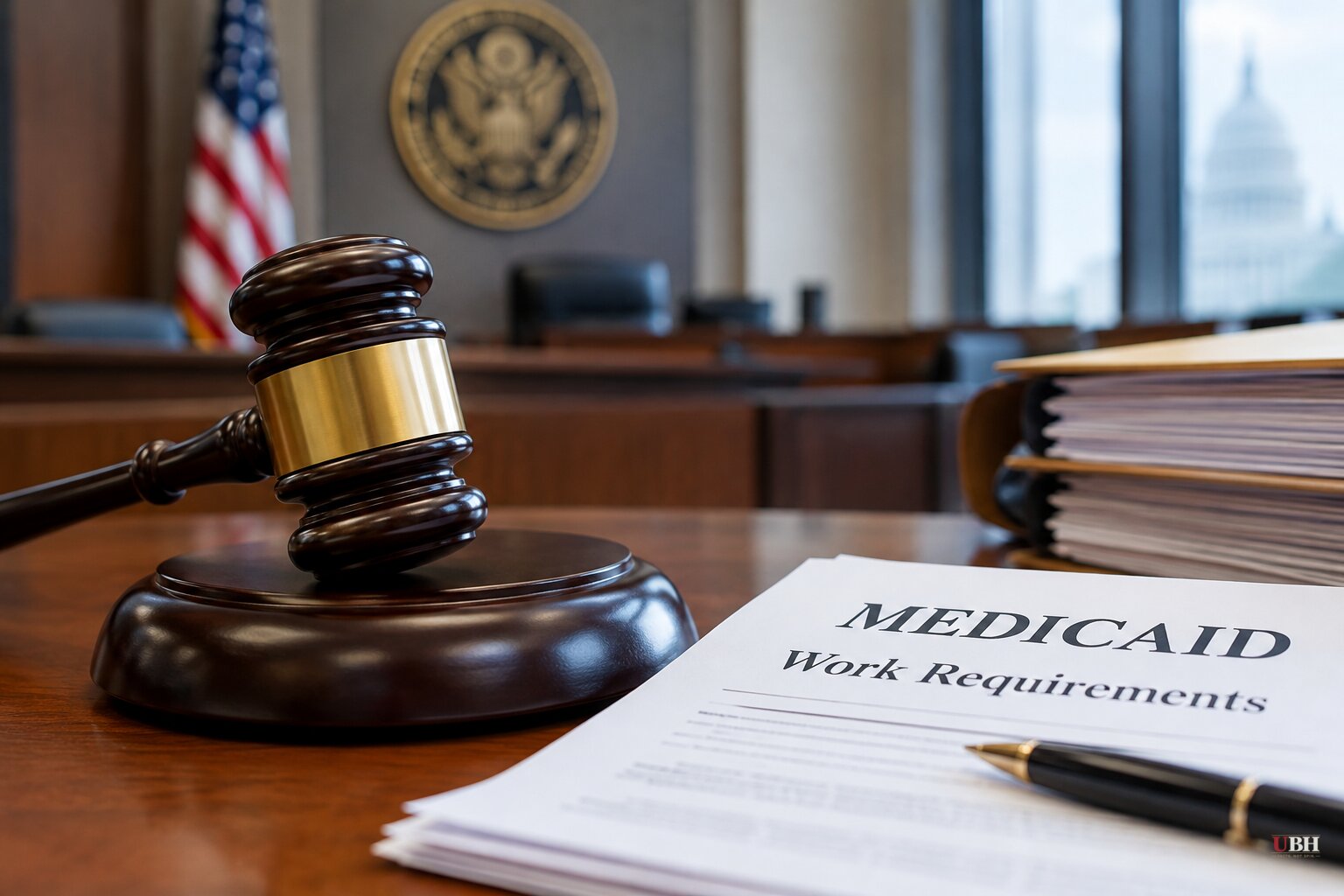
The Medicaid work requirement is about to go national, and the first real tests of it are producing both court losses and hard cases.
On Oct. 29, a federal judge, identified in court coverage as Stearns, ruled that the Centers for Medicare and Medicaid Services overstepped when it narrowed the "medically frail" exception in its final rule. The agency issued that rule over the summer to implement the work requirements from the 2025 law.
What the judge struck down, and what he left standing
The CMS rule said people qualify as medically frail only if they have a physical, mental or behavioral health condition that "significantly impairs the individual's ability to comply with the community engagement requirement." The judge found that definition went beyond what the law allows.
He wrote that "there is an inherent public interest in ensuring that the government follows the law." He added that enforcing an unlawful definition "may lead to the disenrollment of otherwise eligible vulnerable individuals relying on Medicaid coverage for continuity of care." He gave states a six-month stay of enforcement on medically frail determinations.
The states that sued did not win everything. The judge upheld two other CMS limits: states can only look back 12 months when verifying eligibility for exceptions, and self-attestation is accepted just once per enrollment period. He said the states had not met the threshold to strike those down.
"The Government provided a non-frivolous rationale for adopting each provision and explained why it did not find the States' concerns of disenrollment compelling," he wrote.
A CMS spokesperson said the agency does not comment on pending litigation. Dr. Willie Underwood, president of the American Medical Association, welcomed the ruling. He called it "a victory for patients as it strikes back against unnecessary barriers to care."
The rules themselves
Under the law, adults 19 to 64 must work, volunteer, train or attend school for at least 80 hours a month to keep Medicaid. Exceptions include pregnancy and being the parent of a child of certain ages, along with the medically frail category the court just reshaped.
States have until Jan. 1, 2027 to implement the requirements.
Nebraska went first
Nebraska did not wait. It began enforcing the requirements May 1, eight months ahead of most states. Gov. Jim Pillen, a Republican, said in December that officials "certainly appreciate President Trump and his whole administration for delivering this key reform." He spoke alongside Mehmet Oz, who oversees Medicare and Medicaid for the administration, who appeared by video. "We're excited to be able to be the first to make it happen," Pillen said.
The state's Department of Health and Human Services says it is working. Spokesperson Jeff Powell said the rollout "has been very successful." He pointed to state data showing 86% of affected applicants met the requirement or qualified for an exclusion, and 93% of existing enrollees kept their coverage.
Those are the state's own figures. The arithmetic implies about 14% of affected applicants and 7% of existing enrollees did not clear the bar. The state's figures as relayed do not say how many people that is or why they fell out.
One patient's account
Eli McCreary of Omaha, 64 at the time, says he learned he'd lost coverage from a hospital. He said CHI Health, part of CommonSpirit Health, called after his kidney cancer diagnosis in June and told him it would cancel his appointments unless he paid out of pocket.
McCreary told KFF Health News that a call-center representative told him, "You're required to do work to stay on." He has battled drug addiction for decades and was discharged from a substance use treatment program in March, according to documents KFF Health News reviewed. He also has diabetes and chronic obstructive pulmonary disease.
"I can't walk. I can hardly breathe. I can't move around. What job am I going to get?" he said.
He says he canceled a CT scan and other tests and delayed an appointment with a physician who travels to Omaha. "I missed my window of opportunity with him for another month," he said.
CHI Health spokesperson Taylor Miller declined to answer questions about his experience. She said the system is "committed to helping patients understand their health care coverage and access to care." Pillen's spokesperson, Laura Strimple, did not respond to requests for comment. McCreary's account is his own, and the sources do not say whether he was screened for an exemption.
McCreary's account lines up with the court fight over the medically frail definition. Whether a person with serious illness is sorted into the exempt category is the point on which the judge found CMS went too far.
Supporters of work requirements argue that able-bodied adults should be working, volunteering or training in exchange for taxpayer-funded coverage, and that the law carves out the sick. Pillen's office frames its numbers that way. The dispute in court was not over that premise. It was over whether CMS rewrote the exemption more narrowly than Congress did.
What comes next
Democrats have said they plan to try to repeal the Medicaid changes in their first 100 hours in power in January. Trump could veto any such bill, and it is unclear whether repeal would succeed.
In the meantime, states have a Jan. 1, 2027 implementation deadline and a six-month pause on medically frail determinations. How many states will have systems ready to identify and exempt people like McCreary by then is an open question that CMS has not answered.
Sources used for this briefing
7 links from 3 independent newsrooms (syndicated copies of the same report count once)
These are the sources it draws on, linked so you can verify.


