
Unbiased headlines. Facts, not spin.
Unbiased Headlines is an independently owned news organization. We bring you the facts, not opinions, written fresh from 110+ named sources. Sources linked so you can verify it yourself.
 health
Major Story (7/10)
NASA Sends Three Aircraft and a Satellite Instrument to Track Iowa Lead Azide Blast Set for 9 a.m. CT
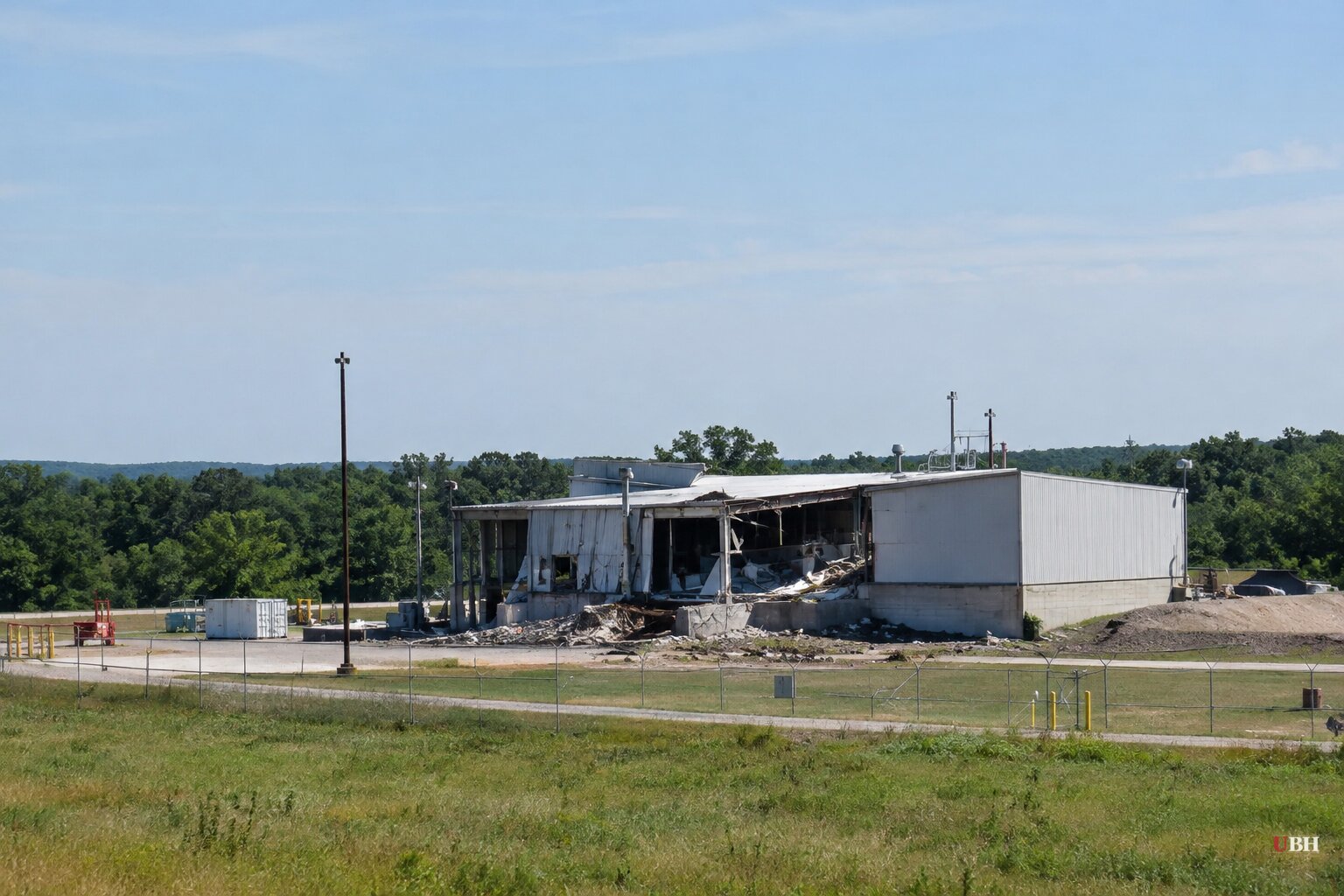
Since the Army set today, Wednesday, Nov. 25, for destroying the nation's stockpile of degraded lead azide at the Iowa Army Ammunition Plant, the federal response has grown: NASA announced late Tuesday that it has sent three research aircraft and a space-based pollution instrument to watch the blast. The detonation is scheduled for 9 a.m. Central (10 a.m. Eastern) and has not yet taken place.
NASA joins the response
NASA said it has "rapidly mobilized specialized research aircraft, space-based observation capabilities, and scientific personnel" to support the operation in Middletown. A P-3 Orion and a Gulfstream III are flying from Langley Research Center in Virginia. A contracted Beechcraft King Air B200 is flying from Ames Research Center in California.
The agency is also drawing on TEMPO, an instrument that tracks air pollution over North America from orbit. TEMPO can follow airborne pollutants and aerosols, but it is not designed to identify lead specifically. NASA described the work as part of a "whole-of-government effort" and said the data will inform the broader federal response.
The plan for the blast
The Army intends to destroy 68 drums holding about 9,700 pounds (4,400 kg) of lead azide in two controlled detonations, according to NASA's account of the operation. The plant sits about 8 miles west of Burlington, Iowa.
Acting Secretary of the Army Adam Telle said crews built a waterwall, foam barriers and gel blocks around the site. The concrete storage structures are already covered in dirt, and sand barriers have been added. The Army also plans to douse the material with thousands of gallons of water.
"A controlled mitigated detonation is far preferable for public health and safety than an uncontrolled detonation, which is a worst-case scenario," Telle said at a Tuesday news conference in Middletown. He also told reporters: "We don't want to give the public the feeling that there's absolutely no risk."
Maj. Gen. Eric Shirley, the operation's commander, said "Inaction is no longer an option." He said months of research found no other safe way to dispose of the barrels. The Army says the lead azide has recrystallized and become unstable, and that the danger grows as temperatures fall.
Where the plume is expected to go
On Tuesday the Army released new maps showing the likely plume traveling toward Missouri. Earlier plans had it headed north. Officials say Wednesday's wind is expected to blow southwest, away from Burlington, a city of just under 25,000.
The Army posted updated lead deposition maps this morning, and a later check showed no change from its 5 a.m. CT version. It has said it will issue a final deposition estimate after the detonation.
Illinois environmental officials say the blast is expected to throw up a dust plume carrying lead particles that could drift beyond the plant and settle on nearby surfaces. Illinois health officials told residents to stay indoors today with windows and doors closed, and to keep them closed for 24 hours afterward.
The Centers for Disease Control and Prevention says there is no safe level of lead exposure.
Evacuations and sampling
A FEMA emergency alert sent Tuesday said the agency will contact residents within 5 miles of the plant to provide evacuation or relocation assistance. People 5 to 20 miles out were told to stay inside with windows closed "to avoid airborne lead dust, noise and vibration."
Burlington Public Library is opening for evacuees, and donations are coming in for Middletown residents. EPA technicians took soil samples around homes in nearby Augusta before the operation. The EPA is also testing land, air and water for lead. The Army says it may cover injuries or property damage tied to the blast.
The dispute over notice and the permit
Residents and some officials say the public was told far too late. The Washington Post reported that the Army found the cache of reactive lead waste eight months ago. It did not warn the public until Sunday that a plume could reach as far as 100 miles north of the plant. The detonation was first set for last Friday, and the public got only about five days' notice.
Environmental groups sued last week to stop it. They argue the blast risks fouling air, contaminating water and harming residents' health. The Army answers that leaving the stockpile alone is the greater danger, because it could explode uncontrolled.
On Monday a three-judge panel of the 8th U.S. Circuit Court of Appeals reinstated the EPA's emergency permit. The court found the EPA had adequately built dust-dispersal safeguards into the permit. It said it was satisfied the Army had not settled on detonation lightly. Litigation over the permit continues.
Trump's conditions
President Trump posted Monday that he had ordered the military to hold off until the Eighth Circuit agreed the operation could go forward. He also made the decision "fully subject to the incoming Governor-elect, Rob Sand, agreeing to the operation." The appeals court ruling satisfied the first condition.
Outgoing Gov. Kim Reynolds said Tuesday, "I believe, based on the information I've been given, that the danger is immediate, and I trust the Army will do everything in its power to protect the people who could be affected."
The Army says the 9 a.m. CT blast is on. What remains open is how much lead actually leaves the site, and the EPA's soil, air and water results and the Army's post-blast deposition estimate are the first measurements that will answer that.
Sources used for this briefing
7 links from 7 independent newsrooms (syndicated copies of the same report count once)
These are the sources it draws on, linked so you can verify.


