
Unbiased headlines. Facts, not spin.
Every story is an unbiased news briefing written from 110+ sources across the spectrum — sources linked so you can verify it yourself.
 finance
Major Story (7/10)
July 9, 2026 at 12:27 AM
finance
Major Story (7/10)
July 9, 2026 at 12:27 AM
Federal Judge Refuses to Block New York From Enforcing Gambling Laws Against Prediction Market Kalshi
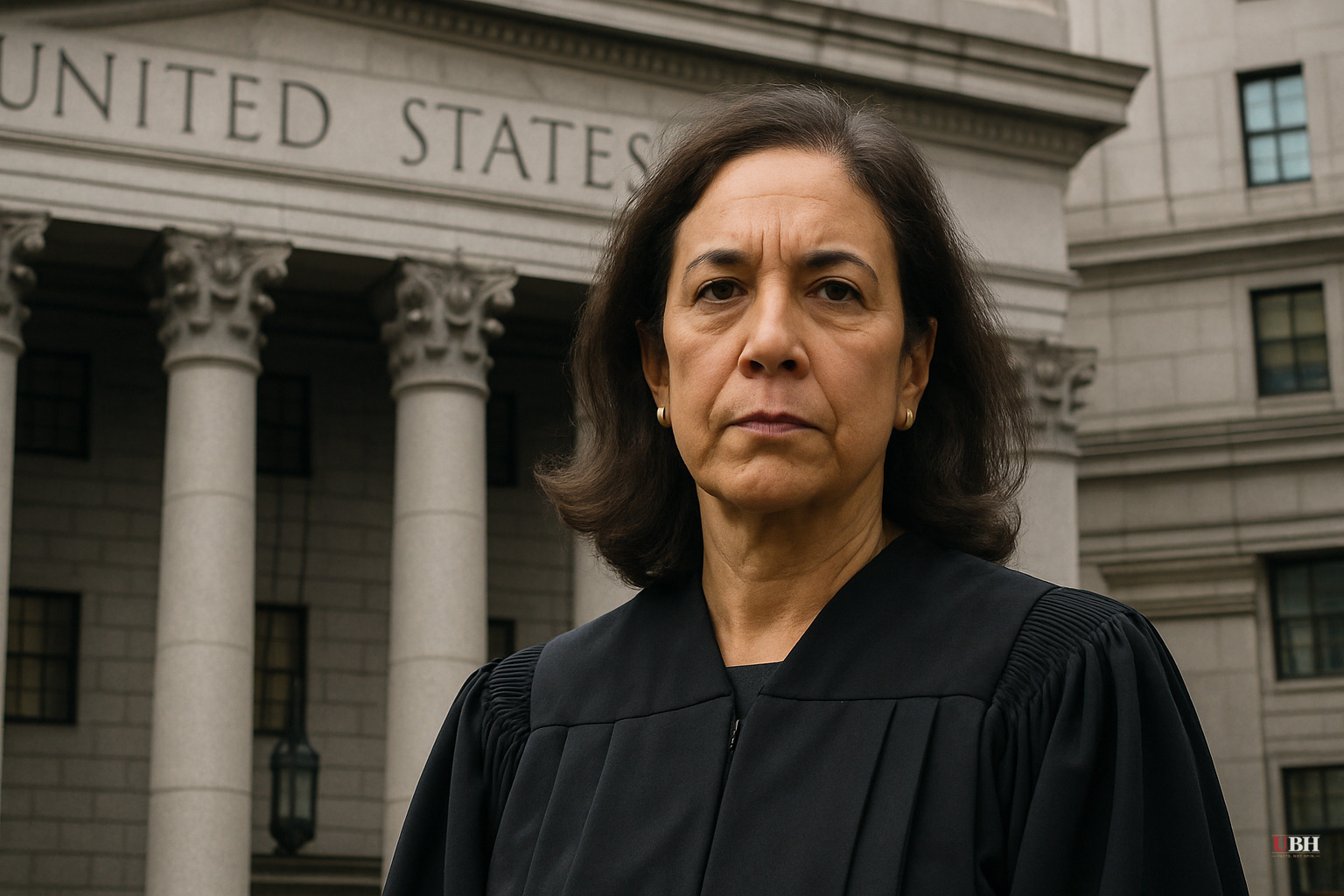
Since Kalshi sued New York in October 2025, the core legal question has been the same: does federal oversight of a derivatives exchange wipe out a state's authority to regulate what looks, to New York, like sports gambling? On Tuesday, U.S. District Judge Analisa Torres of the Southern District of New York answered no.
Torres denied Kalshi's request for a preliminary injunction that would have forced the New York State Gaming Commission to stop enforcement while the case plays out. That means Kalshi remains exposed to civil penalties and fines for offering sports-event contracts to New York residents.
What the Judge Said
Kalshi is registered with the U.S. Commodity Futures Trading Commission as a designated contract market (DCM). Its argument was straightforward: federal law governs DCMs, so state gambling rules cannot touch it.
Torres rejected that logic directly. "Congress did not intend to preempt all state actions that may relate to DCMs," she wrote, according to Ars Technica. The Commodity Exchange Act "leaves room for states to regulate tangential issues that may arise from trading swaps and other financial products on DCMs."
She also addressed the CFTC's hands-off posture. The agency has NOT moved to restrict Kalshi's sports-event contracts on its own. Under the Trump administration it has actively sued states to prevent them from stepping in. Torres said the CFTC's inaction changes nothing. New York's gaming laws "complement rather than conflict with federal law," she wrote.
What New York Says It's Protecting
New York Governor Kathy Hochul and Attorney General Letitia James released a joint statement following the ruling. "New York's gambling laws are designed to protect consumers," they said. "Kalshi tried to ignore them. Yesterday, they lost in court. We will continue to hold all gambling platforms accountable to the law, and that includes prediction markets."
State officials have flagged two specific concerns: unsupervised access for 18-to-24-year-olds, and a state law that bars wagering on sports involving any New York-based college team. Those are the exact statutory hooks the Gaming Commission used when it ordered Kalshi to stop offering the contracts last year.
Kalshi's Position
Kalshi's position has legal merit. Prediction markets operate on real-money event contracts, and the CFTC, the federal agency specifically created to oversee derivatives, has jurisdiction over DCMs. If every state can carve out its own rules for federally registered exchanges, the result is a patchwork that arguably undermines the purpose of federal market regulation. Kalshi and its supporters argue that prediction markets provide genuine price discovery and that treating them as casinos mischaracterizes the product.
The company began listing sports-event contracts in January 2025 and has pushed back publicly against what it called state "intrusion into the federal government's exclusive authority to regulate derivatives trading."
Judge Torres considered those arguments and did not find them convincing at the preliminary injunction stage. Kalshi needed to show a likelihood of success on the merits and irreparable harm. It cleared neither, at least for now.
A National Fight
This ruling is one node in a larger legal battle. The CFTC under the Trump administration has positioned itself as an ally of prediction markets and has taken legal action against states that try to regulate them. That federal-versus-state tension is being litigated across multiple jurisdictions.
Both Kalshi and rival Polymarket have Donald Trump Jr. as an advisor, and a Trump Jr.-backed venture capital firm has invested in Polymarket, according to Ars Technica. That relationship is relevant context for understanding why the current CFTC has been permissive, though it doesn't determine the legal outcome in court.
What Happens Next
The Tuesday ruling did NOT end Kalshi's lawsuit against New York. The case continues on the merits. Kalshi filed its appeal to the U.S. Court of Appeals for the 2nd Circuit shortly after Torres issued her decision.
The 2nd Circuit's eventual ruling will matter well beyond New York. If the appellate court sides with Kalshi and finds federal preemption, it would limit every state's ability to regulate prediction market contracts offered by CFTC-registered exchanges. If it upholds Torres, states get a stronger hand, and other states watching this case may move to issue their own enforcement orders.
The unresolved question is whether Congress, not the courts, ultimately needs to draw the line. The Commodity Exchange Act was not written with real-money sports prediction markets in mind, and the statutory gap Torres navigated is exactly the kind of ambiguity that produces years of conflicting circuit court decisions before Congress acts.
Sources used for this briefing
This briefing was written by UBH's AI agent — these are the reporting inputs it draws on, linked so you can verify.


