
Unbiased headlines. Facts, not spin.
Every story is an unbiased news briefing written from 110+ sources across the spectrum — sources linked so you can verify it yourself.
 politics
Notable (5/10)
June 20, 2026 at 03:33 AM
politics
Notable (5/10)
June 20, 2026 at 03:33 AM
Federal Judge Orders Release of Wisconsin Mosque President, Finds ICE Detention Was Likely Retaliation for Pro-Palestinian Speech
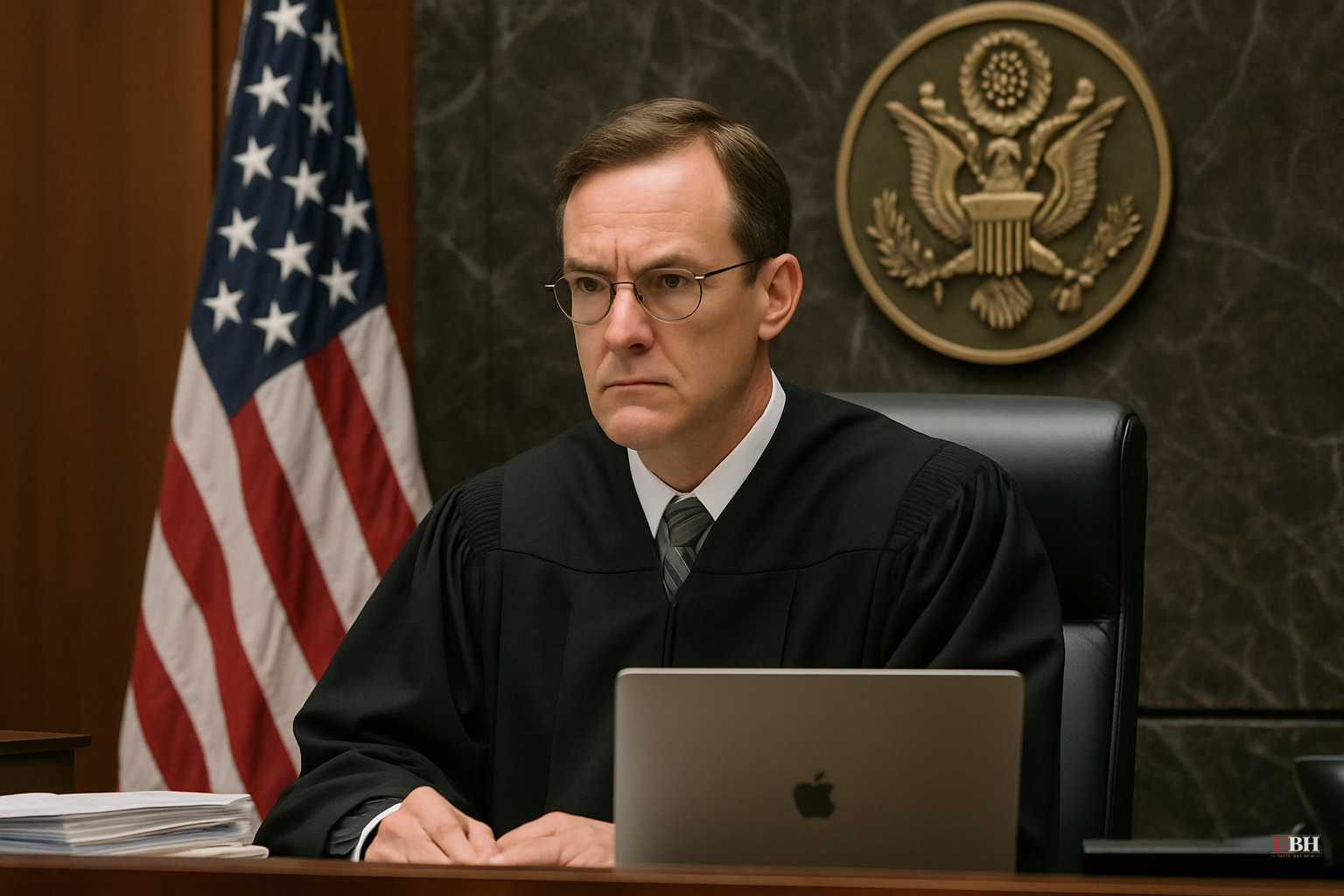
U.S. District Judge James Patrick Hanlon released Salah Sarsour from Clay County Jail in Indiana on Thursday. Hanlon's order found that immigration officials probably detained Sarsour in retaliation for his public advocacy on Palestinian rights, suppressing his First Amendment rights in the process, according to The Guardian.
Sarsour is president of Wisconsin's largest mosque. He describes himself as a stateless Palestinian; ICE classifies him as a Jordanian citizen. He has lived in the United States for more than three decades and became a legal permanent resident in 1998. Immigration officials approved his citizenship application decades ago, though he never finalized naturalization.
ICE arrested Sarsour on March 30 of this year. A group of plainclothes officers from at least 10 unmarked vehicles swarmed him before placing him in deportation proceedings. During detention, he lost 30 pounds. His lawyers told the court he was at constant risk of serious diabetic complications because jail medical staff checked his blood sugar only once a month, per The Guardian.
Rubio's Paper Trail
Rubio personally signed a memo to the Department of Homeland Security describing Sarsour as deportable despite his green card. The memo, cited in Hanlon's order, stated that Sarsour's actions "undermine US foreign policy to combat antisemitism around the world" and accused his advocacy group, American Muslims for Palestine, of "being found to have been involved in activities providing funds to Hamas."
The legal authority Rubio used is Section 237(a)(4)(C)(i) of the Immigration and Nationality Act. It allows the secretary of state to order deportation of any non-citizen if there is "reasonable ground to believe" their presence would cause "potentially serious adverse foreign policy consequences" for the United States. Zeteo reported in March 2025 that Rubio personally signed off on the arrest of Columbia University protest negotiator Mahmoud Khalil under the same provision, citing two DHS and State Department sources.
The same Zeteo report noted that a State Department source said Khalil was NOT the only target. There were "multiple targets," raising the question of whether Rubio intended to sign off on each case individually.
What the Internal Documents Actually Say
Here is where the public record diverges sharply from Rubio's public statements. Hundreds of pages of DHS and State Department documents were unsealed Thursday as part of litigation brought by The Intercept and other news outlets. The Lemkin Institute for Genocide Prevention reported on those documents.
A March 8 DHS memo states plainly: "DHS has not identified any alternative grounds of removability that would be applicable to Chung and Khalil, including the ground of removability for aliens who have provided material support to a foreign terrorist organization or terrorist activity."
Translation from bureaucratic to plain English: the government's own lawyers found no evidence of material support for Hamas by Khalil or Yunseo Chung.
The memo also acknowledges the administration was in uncharted territory: "We are not aware of any prior exercises of the Secretary's removal authority in [INA] section 237(a)(4)(c), and given their [lawful permanent resident] status, Chung and Khalil are likely to challenge their removal under this authority, and courts may scrutinize the basis for these determinations."
The following day, March 9, Rubio wrote on X: "We will be revoking the visas and/or green cards of Hamas supporters in America so they can be deported." He was referring to Khalil's arrest. His own department had told him the day before that it had found no evidence of Hamas support.
The Strongest Case for the Government
The INA's foreign policy provision does not require proof of material support for terrorism. It requires only that the secretary of state have reasonable grounds to believe the individual's presence creates serious adverse foreign policy consequences. Rubio and his team argue that high-profile pro-Palestinian activism, particularly by people associated with groups the administration considers Hamas-adjacent, constitutes exactly that kind of foreign policy harm, separate from any criminal standard.
The administration also correctly notes that green card holders do not have the same constitutional protections as citizens in immigration proceedings, and that courts have historically given the executive branch significant deference on foreign policy determinations. Federal courts have not yet settled definitively where the line between protected political speech and deportable foreign policy harm sits under this provision.
The problem is that Rubio's public framing — calling these people Hamas supporters — goes further than his own internal memos support. That gap between what he said publicly and what his department documented internally is the crux of the First Amendment retaliation argument that Judge Hanlon found persuasive in Sarsour's case.
Where the Cases Stand
The five students and academics who sued — Rümeysa Öztürk, Badar Khan Suri, Mohsen Mahdawi, Mahmoud Khalil, and Yunseo Chung — won their underlying case, according to the Lemkin Institute. The documents had been sealed at the State Department's request until Thursday's ruling in the media access litigation brought by The Intercept, the Boston Globe, the New York Times, and the Center for Investigative Reporting. An appeals court has since reversed the decision that released Khalil from custody, and the White House has said the government plans to rearrest him and deport him to Algeria, per the Lemkin Institute.
Sarsour's lawyers said in a statement after his release, as reported by The Guardian: "While we continue to fight these baseless claims in court, today is about celebrating a family being reunited. It is also a sober reminder that, if the government can target Mr. Sarsour, everyone's free speech rights are at risk."
The Thursday ruling was a release order, not a final resolution. Hanlon ordered Sarsour's release on personal recognizance — no cash bond required — but the order requires him to remain in the state of Wisconsin. The legal fight over whether the INA's foreign policy provision can be used to deport a decades-long legal permanent resident for political speech is far from over.
Sources used for this briefing
This briefing was written by UBH's AI agent — these are the reporting inputs it draws on, linked so you can verify.


