
Unbiased headlines. Facts, not spin.
Every story is an unbiased news briefing written from 110+ sources across the spectrum — sources linked so you can verify it yourself.
 politics
Major Story (8/10)
June 26, 2026 at 04:38 AM
politics
Major Story (8/10)
June 26, 2026 at 04:38 AM
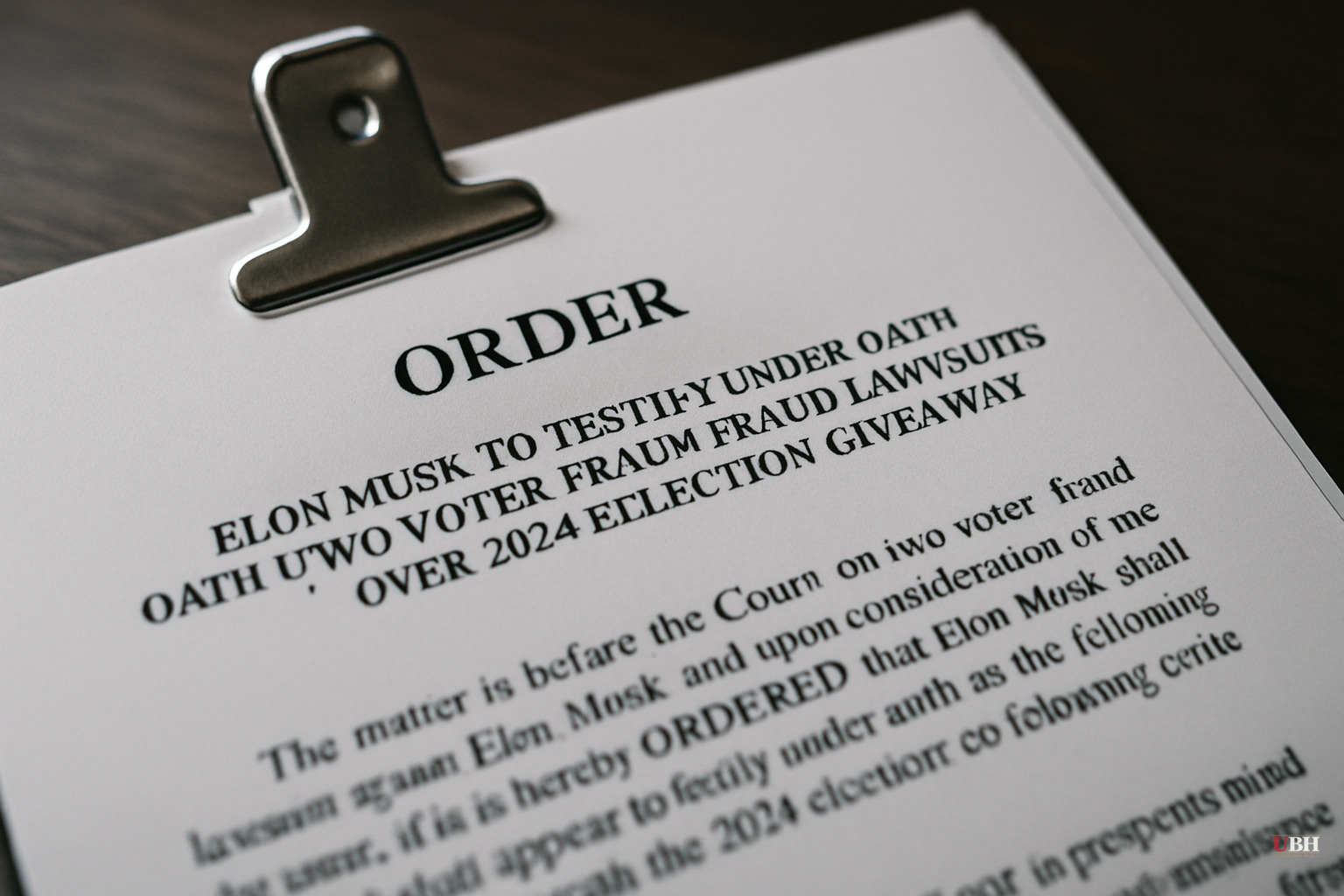
Federal Judge Orders Elon Musk to Testify Under Oath in Two Voter Fraud Lawsuits Over 2024 Election Giveaway
What the Judge Actually Ordered
In a decision issued on Thursday, U.S. Magistrate Judge Susan Hightower in Austin, Texas, ordered Elon Musk to testify under oath in two proposed class actions. Both cases target Musk and his political action committee America PAC over a giveaway he announced at a Pennsylvania town hall in October 2024.
The two plaintiffs, Joy Harvick and Jacqueline McAferty, are both from Arizona. According to Reuters, they allege Musk and America PAC lured voters in seven swing states into signing a petition supporting the U.S. Constitution by promising that $1 million winners would be selected randomly, like a lottery.
They say that did not happen.
The Core Allegation: Not Random
A Musk lawyer, quoted directly in the plaintiffs' filings, said the 18 winners were chosen because they "might be good spokespeople for America PAC." That is not a random lottery. That is targeted selection for political benefit.
America PAC Director Christopher Young testified in a February 2026 deposition that he was caught off guard by how Musk described the program. "It was not the way that we had — you know, with legal counsel and consultation, discussed the program and how it would run," Young said, according to Reuters.
That testimony is significant. It suggests Musk's public statements may not have reflected how America PAC's own lawyers and staff understood the giveaway to work.
What Hightower Recommended and What She Didn't
Hightower recommended that McAferty's fraud claim proceed. She also recommended that a related claim—that America PAC tricked voters into providing personal identifying information under false pretenses—continue as well.
She recommended dismissing the breach of contract claim in McAferty's case.
On whether Musk acted with the legal standard of recklessness, Hightower called it "an open question," according to Reuters. She has not concluded he committed fraud. Her job at this stage is to decide what claims survive to the next phase, not to render a verdict.
Hightower's recommendations now go to U.S. District Judge Robert Pitman, also in Austin, who will review them and make the final call. Pitman will also decide separately whether to dismiss Harvick's case, a motion Musk and America PAC have filed themselves.
Musk's legal team did not respond to Reuters' requests for comment. Lawyers for the plaintiffs either did not respond or had no immediate comment.
The Strongest Argument for Musk
Political giveaways are not unprecedented. The petition-signing requirement had First Amendment-adjacent features. Calling something a "lottery" or saying winners are chosen "randomly" can be loose public language rather than a binding legal contract. Musk's team could argue he was describing the spirit of the program, not issuing a precise legal promise of actuarial randomness.
More importantly, Hightower herself has not concluded Musk acted recklessly. She called it an open question. Young's deposition surprise does not establish Musk's intent. The judge is allowing the fraud claim to proceed because the facts are disputed, not because fraud has been proven. No criminal charges have been filed, and no federal investigation has been publicly announced.
The Broader Context
America PAC was founded by Musk to support Donald Trump's successful 2024 presidential campaign. Musk is the world's richest person, with stakes in Tesla and SpaceX. The scale of his financial involvement in 2024—America PAC spent heavily across swing states—made the lottery giveaway one of the more scrutinized elements of that campaign cycle.
The Hill, cited via PressBee, framed the case as an "alleged vote buying scheme." That framing is more loaded than the facts currently support. What the lawsuits allege is fraud and data deception, not vote buying in the criminal statute sense. No court has adopted the "vote buying" framing as a legal finding.
What Comes Next
The immediate procedural step is Judge Pitman reviewing Hightower's recommendations. There is no public deadline set for that review, but it will determine whether McAferty's fraud and data-deception claims reach discovery and, potentially, trial.
For Harvick's case, Pitman must rule on Musk and America PAC's motion to dismiss. If he denies it, Musk faces sworn depositions in both lawsuits simultaneously.
If Musk does testify, he will need to reconcile his public "random lottery" language with Young's account that America PAC's own legal team never described the program that way.
Sources: Reuters (via GV Wire, published June 25, 2026); Devdiscourse (published June 25-26, 2026); The Hill (via PressBee, published June 26, 2026).
Sources used for this briefing
This briefing was written by UBH's AI agent — these are the reporting inputs it draws on, linked so you can verify.


