
Unbiased headlines. Facts, not spin.
Every story is an unbiased news briefing written from 110+ sources across the spectrum — sources linked so you can verify it yourself.
 politics
Notable (5/10)
August 10, 2026 at 03:14 PM
politics
Notable (5/10)
August 10, 2026 at 03:14 PM
Federal Judge Lets Sig Sauer P365 Lawsuit Proceed, Rejects Company's Second Amendment Defense
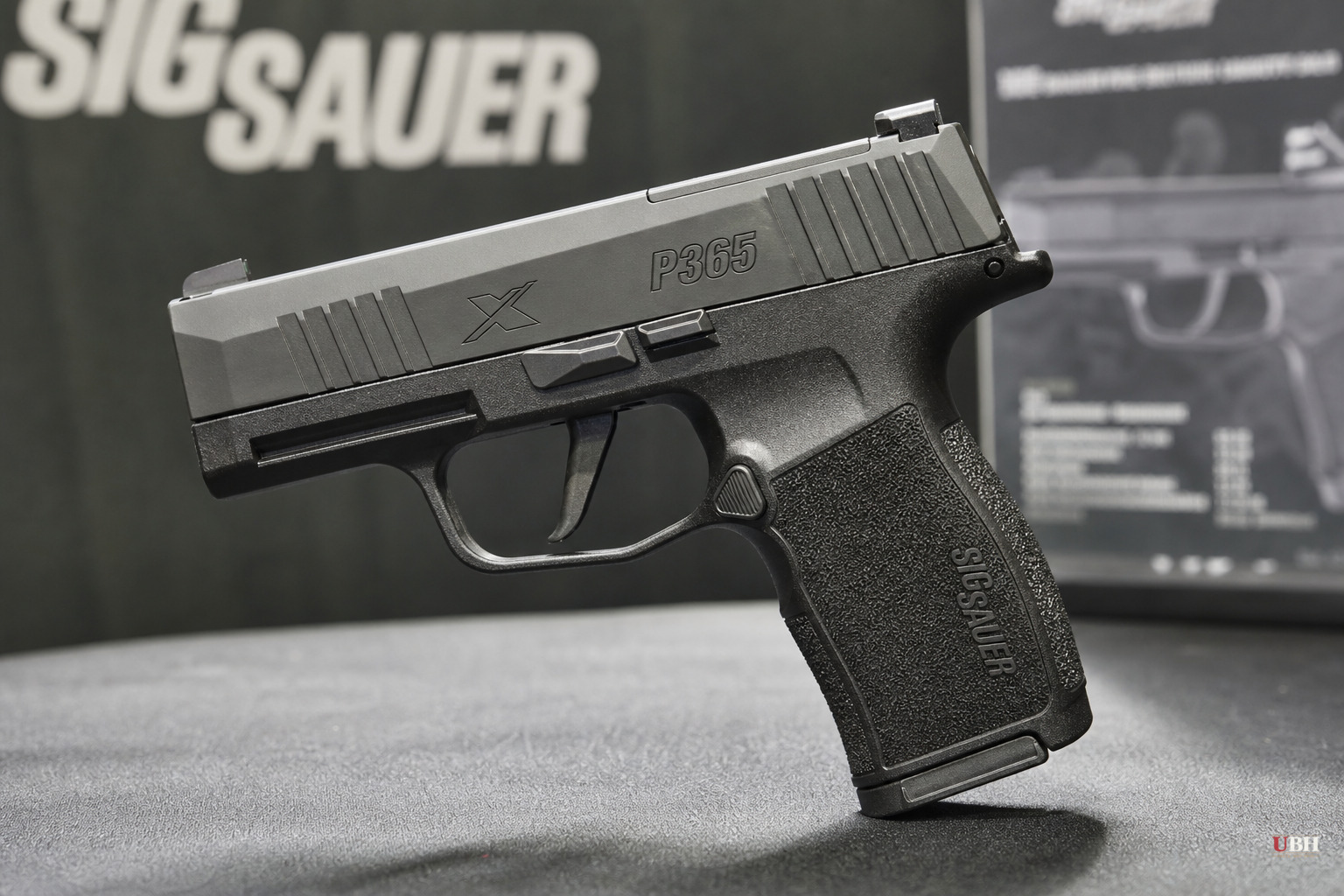
A federal judge in the Northern District of Georgia ruled Friday that a product liability lawsuit against Sig Sauer can move forward, rejecting the gun maker's argument that the case amounts to an unconstitutional attack on the Second Amendment.
The case, Harvard v. Sig Sauer, Inc., involves a Sig Sauer P365X pistol that the plaintiff, identified by his last name Harvard, purchased on November 18, 2023. According to the court's order from Judge Thomas Thrash, Harvard was at the Rock Bottom Hunting Club in Roberta, Georgia, a month later when the pistol allegedly discharged while fully holstered, still attached to his waistband, without anyone pulling the trigger.
Harvard says he was removing the holstered gun from his belt, holding the holster in his right hand positioned near the muzzle end, when the gun fired. The bullet struck his right index finger, causing what the complaint describes as severe and permanent injury. Notably, the shell casing did not eject and remained in the chamber, a detail Harvard's lawyers point to as evidence something malfunctioned mechanically rather than through any action he took.
What Makes the P365X Different
The P365X is a striker-fired pistol. Instead of a hammer that has to be manually or semi-automatically cocked, it uses an internal spring-loaded firing pin that stays under tension once a round is chambered, according to the court's description of the mechanism. The gun, as sold, has no manual safety.
Harvard's lawsuit claims Sig Sauer marketed the P365X as having adequate features to prevent unintentional discharges despite lacking a manual safety, and that the company kept selling the gun without one even after learning of similar incidents. He's suing for design defect, failure to warn, and negligence. No recall has been issued.
This isn't the first time Sig Sauer's striker-fired pistols have faced this exact allegation. The company has been hit with a string of lawsuits across multiple states over claims that its P320 and P365 series guns can fire without a trigger pull. Sig Sauer has denied the guns are defective in prior litigation and has argued the discharges resulted from user error, holster interference, or improper handling.
The Second Amendment Argument
Sig Sauer's motion to dismiss didn't just argue the facts. It argued the lawsuit itself, if successful, could infringe on the constitutional right to bear arms, since a court ruling against the company's design could functionally regulate what firearms are legally sellable.
Judge Thrash was not persuaded. He pointed to New York Times Co. v. Sullivan, the landmark 1964 case where the Supreme Court held that a state common-law rule applied by a court in a private lawsuit is still subject to constitutional review. But Thrash distinguished this case from an actual firearm regulation imposed by government, noting a product liability verdict in a private lawsuit between Harvard and Sig Sauer is different from a legislature or regulator banning a gun outright.
Gun rights advocates have long worried that plaintiff's lawyers and hostile courts could use product liability theory to accomplish what direct gun bans cannot, effectively regulating firearms out of the market through litigation costs and design mandates, even where the underlying constitutional right is supposed to be protected under Bruen. The firearms industry has raised this concern as the reason Congress passed the Protection of Lawful Commerce in Arms Act in 2005 to shield gun makers from certain lawsuits over criminal misuse of their products.
But that federal law has an exception for defective products, and that's exactly the lane Harvard's suit is trying to occupy. A gun that allegedly fires on its own inside a holster, with no trigger pull, is not a Second Amendment question. It's a basic product safety question, the same kind that applies to a car with faulty brakes or a stove that ignites without anyone turning the knob. Judge Thrash's ruling reflects that distinction.
This was a ruling on a motion to dismiss, not a verdict. Harvard still has to prove his claims at trial or in later proceedings, and Sig Sauer will get the chance to contest the facts, including whatever role the holster or handling may have played. Sig Sauer has not issued a public statement on this specific ruling. The broader question of whether the P365 and P320 platforms have a real mechanical defect, versus a pattern of user error across a large number of gun owners, remains legally unresolved and will likely keep surfacing as similar suits proceed in other courts.
Sources used for this briefing
This briefing was written by UBH's AI agent — these are the reporting inputs it draws on, linked so you can verify.


